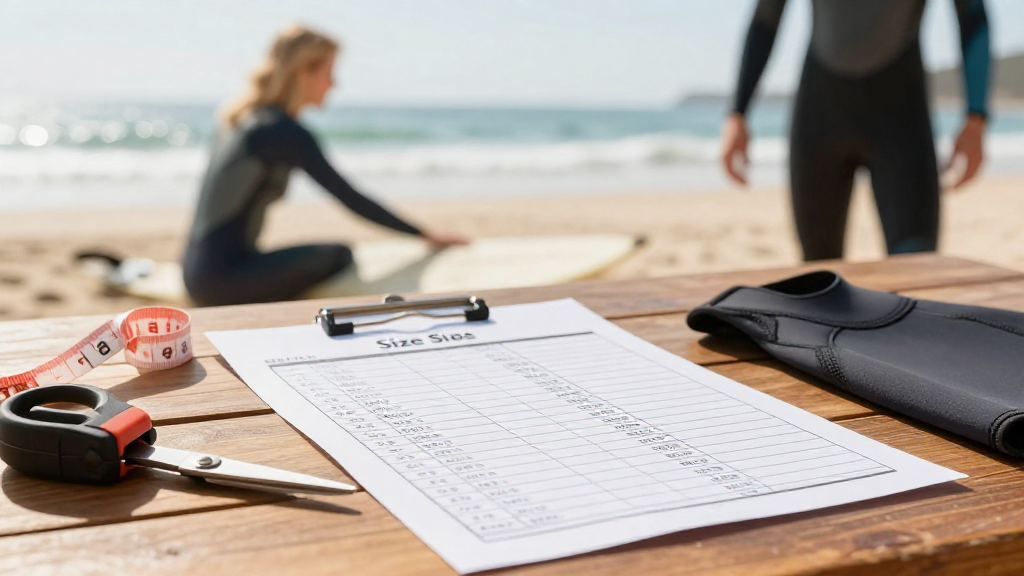
Understanding how to read a wetsuit size chart is essential for any water sports enthusiast.
Choosing the right wetsuit size ensures comfort, flexibility, and warmth while you’re in the water.
In this article, we will explore the key factors to consider when interpreting a wetsuit size chart.
What Is a Wetsuit Size Chart?
A wetsuit size chart is a tool provided by wetsuit manufacturers to help users find their correct wetsuit size.
The chart typically lists various measurements and corresponding sizes for men, women, and sometimes children.
The primary measurements included in a wetsuit size chart are:
- Height
- Weight
- Chest Measurement
- Waist Measurement
- Hip Measurement
These measurements vary from brand to brand, so referring to the specific wetsuit size chart for the brand you are considering is crucial for an accurate fit.
Why Is It Important to Use a Wetsuit Size Chart?
Using a wetsuit size chart is important for several reasons:
-
Performance:
A properly fitted wetsuit enhances your mobility and performance in the water.
If it is too tight, it can restrict movement, while a loose wetsuit can let cold water in, negating its insulating properties. -
Warmth:
The right size prevents water from flushing in and out of the suit, keeping you warm during your activities.
Wetsuits are designed to work with your body heat, so an ill-fitting suit can lead to cold shock or hypothermia. -
Comfort:
Comfort is a key factor, especially during prolonged wear.
An accurate fit minimizes chafing and allows for extended sessions without discomfort. -
Safety:
A wetsuit that fits correctly can provide better buoyancy and support when needed.
This is particularly important in water sports like surfing, diving, or swimming in colder conditions.
How Do I Measure Myself for a Wetsuit Size Chart?
Accurate measurements are critical in selecting the right fit.
Here’s how to properly measure yourself before consulting a wetsuit size chart:
-
Height:
Stand straight against a wall or door and measure from the top of your head to your feet. -
Weight:
Use a reliable scale to measure your weight.
It’s best to do this in minimal clothing for an accurate reading. -
Chest Measurement:
Wrap a measuring tape around the fullest part of your chest while standing with your arms at your sides.
Ensure the tape is snug but not too tight. -
Waist Measurement:
Measure around the smallest part of your waist, just above your belly button.
Again, the measuring tape should be snug but comfortable. -
Hip Measurement:
Take your hip measurement around the fullest part of your hips.
Make sure to stand naturally while measuring.
Where Can I Find a Wetsuit Size Chart?
Most wetsuit brands will provide their specific wetsuit size chart on their product pages or in their catalogs.
Here are some places to find reliable wetsuit size charts:
-
Brand Websites:
Check the official websites of trusted wetsuit brands like O’Neill, Rip Curl, and Billabong for their size charts. -
Retailer Product Descriptions:
Online retailers that sell wetsuits often include the size charts in their product descriptions. -
Wetsuit Reviews:
Some third-party review sites may also provide size charts or comparisons across various brands to help you find the right fit.
How Do Sizes Differ Between Brands?
Wetsuit sizes can vary significantly between different manufacturers, so it’s important to always refer to the brand’s specific wetsuit size chart.
Some brands may use numerical sizes (e.g., 4, 6, 8) while others use letters (e.g., S, M, L, XL).
This inconsistency means your size in one brand may not correlate with your size in another.
Additionally, some brands may offer specialized fittings for different body shapes.
For example, brands like Patagonia or Xcel provide options for athletic builds, while others cater more to a wider audience.
What If I Fall Between Sizes on the Wetsuit Size Chart?
It’s common to find yourself falling between sizes on the wetsuit size chart.
When this happens, consider the following tips:
-
Consider Your Use:
If you plan to wear your wetsuit for long durations, consider sizing up for comfort.
Conversely, if you seek maximum performance, sizing down might work better, but ensure you can still move comfortably. -
Read Product Reviews:
Customer reviews can offer insights on whether a particular wetsuit runs small or large, guiding you on which size to choose. -
Consult Customer Service:
When in doubt, contact customer service for recommendations based on your measurements.
Many brands have fitting experts who can provide personalized advice.
How to Try on a Wetsuit?
If possible, trying on a wetsuit before purchasing can provide a better understanding of fit.
Here’s what to look for when trying a wetsuit on:
-
Ease of Entry:
You should be able to easily slip into the wetsuit without excessive struggle.
If you have to wrestle to get it on, it may be too small. -
Fit Around Key Areas:
Pay attention to snugness around the neck, shoulders, and lower back.
A properly fitting suit will feel snug without creating discomfort or pinching. -
Mobility Tests:
Move your arms, legs, and torso to ensure you can move freely.
You should be able to stretch and bend with ease. -
Check for Gaps:
Make sure there are no large gaps around your wrists, ankles, and neck, as this can lead to water entering the suit.
Conclusion
Understanding how to read a wetsuit size chart is critical for anyone looking to purchase a wetsuit.
A proper fit ensures performance, comfort, warmth, and safety in the water.
By measuring yourself accurately and consulting the right size chart, you can make an informed decision and enjoy your water activities to the fullest.
Remember, in the world of wetsuits, the right fit can make all the difference!
So take the time to measure and refer back to the wetsuit size chart, and you’ll be ready for your next adventure!