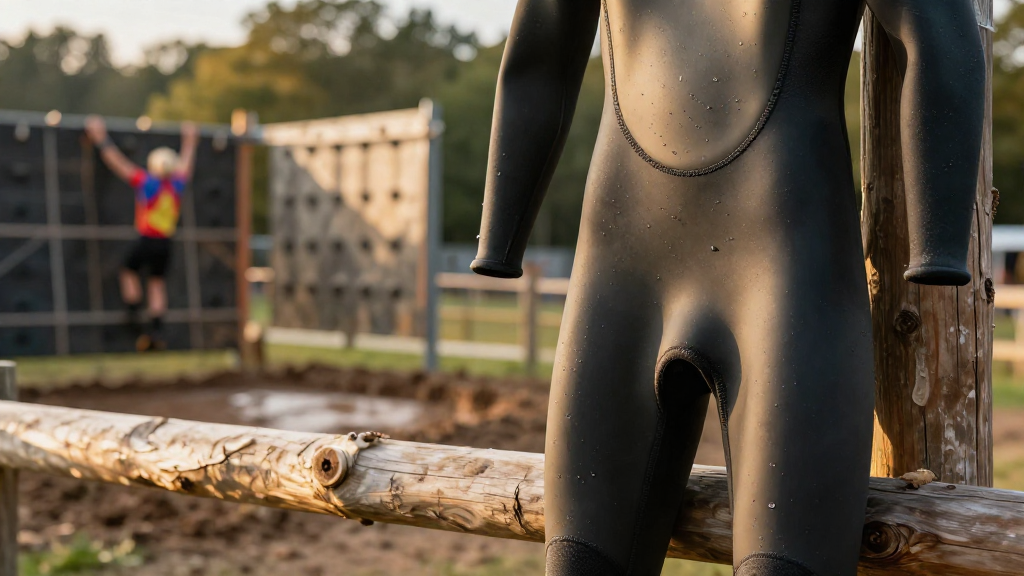
When preparing for an obstacle race, many might wonder if a wetsuit for obstacle races is a viable option.
What is a Wetsuit, and How Does it Work?
A wetsuit is a form-fitting garment made of neoprene designed to insulate the body against cold water.
Here’s how a wetsuit functions:
– Insulation: It keeps your body warm in cold conditions by trapping a thin layer of water between your skin and the suit.
– Buoyancy: This buoyancy can help swimmers to float and maintain a better body position in the water.
– Protection:
Wetsuits are not just for warmth; they also provide protection against abrasions, jellyfish stings, and other hazards you may encounter in water-based environments.
Are Wetsuits Beneficial for Obstacle Races?
While many participants might not consider the applicability of a wetsuit for obstacle races, several benefits can make it a good choice under certain conditions.
What Advantages Do Wetsuits Offer in Obstacle Races?
-
Temperature Regulation
Particularly for races held in cooler climates or those that include water obstacles, a wetsuit serves as a thermal barrier, shielding you from chilly temperatures. -
Improved Hydrodynamics
Although not all obstacle races are water-based, in events that require swimming through pools or navigating wet surfaces, a wetsuit can enhance your swimming efficiency due to its streamlined design. -
Protection from Obstacles
Wetsuits provide additional padding and protection against sharp objects or abrasive surfaces you may encounter during the race. -
Comfort and Confidence
The snug fit of a wetsuit helps many participants feel more secure in their movements.
What Should You Consider Before Using a Wetsuit for Obstacle Races?
Though a wetsuit for obstacle races can provide several benefits, it’s essential to weigh the drawbacks.
What Are the Disadvantages of Wetsuits in Obstacle Races?
-
Limited Mobility
Wetsuits can occasionally restrict movement, making it difficult to climb walls or navigate through tight spaces. -
Weight and Drag
A wetsuit adds weight, especially when wet. This added drag can hinder your speed and agility. -
Overheating
Depending on air and water temperatures, wearing a wetsuit for too long may cause you to overheat. -
Time-Consuming to Remove
After a race, especially one with minimal water sections, removing a wetsuit can be challenging.
Are There Specific Types of Wetsuits for Obstacle Races?
Not all wetsuits are created equal. When considering a wetsuit for obstacle races, choose one that fits your needs and the race conditions.
What Types of Wetsuits Are Commonly Used?
-
Full Wetsuits
These cover the body completely and are ideal for colder conditions. They provide maximum insulation but can restrict movement. -
Shorty Wetsuits
A shorty, or spring suit, features short sleeves and legs, offering flexibility and breathability. They’re suitable for moderate temperatures. -
Sleeveless Wetsuits
Perfect for warmer climates, these provide freedom of movement in the arms while still offering core insulation.
What Features Should You Look for in a Wetsuit for Obstacle Races?
When selecting a wetsuit for obstacle races, consider the following features:
- Thickness: Generally, 3mm to 5mm is suitable for colder waters.
- Flexibility: Look for suits with high-stretch materials for better ease of movement.
- Zippers: Opt for suits with a front or back zipper for easy removal, especially post-race.
- Reinforced Areas: Additional padding in high-wear areas can add durability.
Is a Wetsuit Necessary for Obstacle Races?
Ultimately, the necessity of a wetsuit for obstacle races varies based on individual preferences, the race type, and environmental factors.
When Should You Consider Wearing a Wetsuit?
-
Cold Conditions
If the race is in colder water or weather, wearing a wetsuit can improve comfort and performance. -
Water Obstacles
For races featuring significant water sections, such as swimming or wet slides, a wetsuit can be an asset. -
Safety
If you are concerned about overcoming rough terrain or water hazards, a wetsuit can offer some extra padding and protection.
When Might You Skip the Wetsuit?
-
Warm Weather
If the race takes place in warm conditions or if water obstacles are minimal, a wetsuit may lead to overheating. -
High Mobility Required
If the obstacle race involves a lot of climbing or agility challenges, the restricted movement a wetsuit may impose could be a drawback. -
Personal Comfort
If you are not accustomed to wearing a wetsuit, the initial discomfort might detract from your race experience.
How Do You Prepare for Using a Wetsuit in an Obstacle Race?
If you decide to go ahead with a wetsuit for obstacle races, preparation is key.
What Steps Should You Take?
-
Practice Before the Race
Familiarize yourself with movement in the wetsuit ahead of race day. -
Choose Proper Gear
Consider layering with appropriate racewear underneath that won’t cause discomfort when you put on the wetsuit. -
Train in Similar Conditions
If possible, train in water or environments that mirror race day to adapt ahead of time. -
Plan for Post-Race
Design a strategy for efficiently removing your wetsuit after the race, especially if transitioning to another activity is required.
Conclusion: Should You Use a Wetsuit for Obstacle Races?
In summary, while a wetsuit for obstacle races can offer significant benefits in specific conditions, it is essential to evaluate your race environment and personal preferences.
Here’s a final checklist:
– Understand the weather and water conditions of your race.
– Consider the type of obstacles you’ll face.
– Prepare adequately to ensure you can navigate the course effectively.
Making a well-informed decision will help ensure your obstacle race experience is both enjoyable and successful.