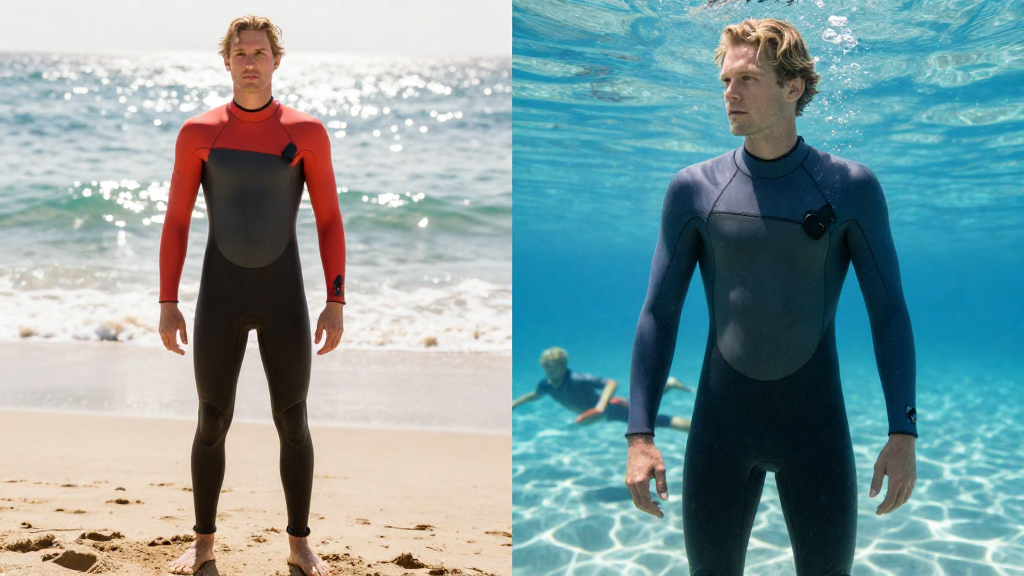
When it comes to choosing the right wetsuit for water sports, understanding the difference between surfing and diving wetsuit options is essential.
In this article, we’ll explore the distinct characteristics that set these two types of wetsuits apart, helping you make an informed decision for your aquatic adventures.
What Are Surfing Wetsuits Made For?
Surfing wetsuits are designed specifically for surfers who spend their time riding waves in varying temperatures.
Key features include:
-
Flexibility:
Surfing wetsuits are typically made from thinner materials, such as neoprene, which allow for greater movement and flexibility. -
Quick Drying:
These suits are engineered to dry quickly, helping to keep surfers comfortable during and after their sessions. -
Shorter Cuts:
Surfing wetsuits often come in short-sleeve or short-leg styles, allowing for ease of paddling and better airflow. -
Thermal Protection:
While thin, surfing suits are designed to provide adequate thermal insulation in cold waters without compromising mobility.
What About Diving Wetsuits?
Conversely, diving wetsuits cater to divers who want to maximize warmth and protection at greater depths.
Here’s what to know:
-
Thickness:
Diving wetsuits are generally thicker than surfing wetsuits. Thickness ranges from 3mm to 7mm, depending on water temperature and diving depth. -
Insulation:
These suits are crafted to maintain body heat even when submerged for extended periods. -
Full Coverage:
A diving wetsuit usually comes in full-suit styles, covering arms and legs to provide insurance against cold waters and stings from underwater creatures. -
Materials:
Some advanced models use layered materials that enhance thermal insulation without adding significant weight.
Why Are They Cut Differently?
The difference between surfing and diving wetsuit designs can also be seen in their cuts.
Here’s what you need to consider:
- Surfing Wetsuits:
- Generally have a more streamlined profile.
-
Focus on minimizing drag while paddling.
-
Diving Wetsuits:
- Often have a looser fit to accommodate for buoyancy in water.
- Includes additional protective features against marine life, rocks, or reefs.
Which One Offers Better Buoyancy?
Both surfing and diving wetsuits serve specific purposes regarding buoyancy.
- Surfing Wetsuits:
- Designed with minimal buoyancy in mind.
-
Allow surfers to dive under waves without difficulty.
-
Diving Wetsuits:
- Often come equipped with features that enhance buoyancy.
- Some include built-in flotation devices helpful during dives.
What About Zipper and Closure Systems?
The closure systems are another point of differentiation between these two wetsuit types.
- Surfing Wetsuits:
- Usually feature back zippers or chest zippers.
-
Chest zip suits often help reduce water ingress during wipeouts.
-
Diving Wetsuits:
- May come with full zipper systems, as well as optional entry points for ease of getting in and out.
- Designed to provide a snug fit to minimize any potential water entry.
Can You Use a Surfing Wetsuit for Diving?
Using a surfing wetsuit for diving is not recommended.
Here’s why:
-
Insufficient Insulation:
Surfing wetsuits may not provide the necessary thermal protection needed for extended periods underwater. -
Mobility Issues:
The designs prioritize flexibility that could hinder movement when diving. -
Durability Concerns:
Surfing suits might not be as durable as diving suits, especially in harsher underwater environments.
Are Diving Wetsuits Suitable for Surfing?
On the other hand, diving wetsuits are generally not ideal for surfing either.
Reasons include:
-
Reduced Flexibility:
The thickness of diving wetsuits may compromise the agility required for paddling and maneuvering on waves. -
Heat Retention:
Once out of the water, a diving wetsuit can lead to overheating while trying to surf. -
Weight:
Diving wetsuits could feel considerably heavier, making it challenging for surfers to remain buoyant and agile.
How Do Temperature Preferences Affect Wetsuit Choice?
The water temperature plays a crucial role in deciding which wetsuit you should choose.
- For warmer waters:
-
Surfing Wetsuit:
- Thin, short-sleeved styles (2mm or less).
-
Diving Wetsuit:
- Still consider thinner diving suits, but optional short styles could be used depending on personal preference.
-
For cooler waters:
-
Surfing Wetsuit:
- Generally 3mm to 4mm in thickness.
-
Diving Wetsuit:
- Might range from 5mm to 7mm depending on how deep and how long you intend to dive.
How Do Price Points Compare?
When accounting for budget, understanding the difference between surfing and diving wetsuit pricing can help in planning your purchase.
- Surfing Wetsuits:
- Generally more affordable, ranging from $100 to $400.
-
Prices vary based on thickness, quality, and brand.
-
Diving Wetsuits:
- Can be more expensive due to specialized materials and thermal features.
- Range from $200 to upwards of $800 depending on additional technologies or layering.
Summary: Finding the Right Wetsuit for Your Needs
Ultimately, recognizing the difference between surfing and diving wetsuit options is key to optimizing your experience in the water.
Keep these factors in mind:
-
Purpose:
Understand your primary activity—surfing or diving. -
Water Temperature:
Choose according to the conditions you’ll face most often. -
Fit and Comfort:
Prioritize mobility for surfing, and warmth and protection for diving. -
Budget:
Plan according to the price point that fits your needs.
With insights into these distinct wetsuit categories, you will be better equipped to make informed purchasing decisions that enhance your water sports experience. Whether you’re catching a wave or exploring the depths, choosing the appropriate wetsuit aligns with safety, comfort, and overall enjoyment in the water.