Cold water paddling demands more than a good price tag. The right kayak should help you stay stable, reduce fatigue, and give you the confidence to handle changing conditions.
In this roundup of the best kayaks for cold water, we focus on practical features that matter most: sit-inside protection, dependable stability, storage, and comfort for longer, cooler outings.
Best 10 Kayaks for Cold Water Picks for 2026
Tandem Value Pick
Intex Explorer K2 Inflatable Kayak Set
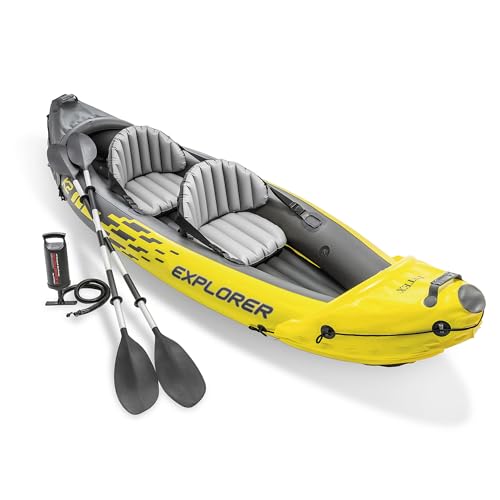
- Two-person inflatable kayak with 400 lb capacity
- Includes pump, paddles, seats, and carry bag
- Stable setup with removable skeg for easier tracking
Best For: Budget-minded pairs paddling calm lakes or mild rivers
Durable Solo Traveler
Advanced Elements StraitEdge Inflatable Kayak

- Heavy-duty PVC tarpaulin with RF welded seams
- Stable 116 x 35 inch inflated design
- Folds into a compact duffel bag for storage
Best For: Solo paddlers needing a stable, durable inflatable
Roomy Sit-Inside Choice
Perception Conduit 13 Sit-Inside Kayak

- Spacious cockpit for most paddlers
- Front and rear storage with watertight covers
- Leak-proof one-piece construction with built-in buoyancy
Best For: Larger paddlers wanting comfort and storage on calm water
Stable Inflatable Performer
NRS Star Raven I Inflatable Kayak

- Drop-stitch PVC floor inflates to 8-10 psi
- Padded folding seat improves comfort
- Bow and stern handles help with transport
Best For: Solo paddlers wanting a rigid-feeling, stable inflatable
Cold Water Touring Pick

- Sit-inside design for cooler conditions
- Adjustable Phase 3 Air Pro seat
- Rear hatch and dashboard storage
Best For: Solo paddlers wanting comfort and storage in a stable sit-inside kayak
Cold Water Whitewater Inflatable
Star Viper XL Inflatable Kayak

- Rigid drop-stitch floor
- Bow and stern flotation chambers
- Thigh straps for secure fit
Best For: Solo paddlers wanting an inflatable with whitewater-oriented control
Cold Water Tandem Recreational

- Tandem sit-on-top layout
- Two adjustable quick-release seat backs
- Storage hatch and bungee system
Best For: Pairs or families wanting a versatile recreational kayak
Cold-Weather Touring Pick
Inflatable Touring Kayak with Accessory Kit
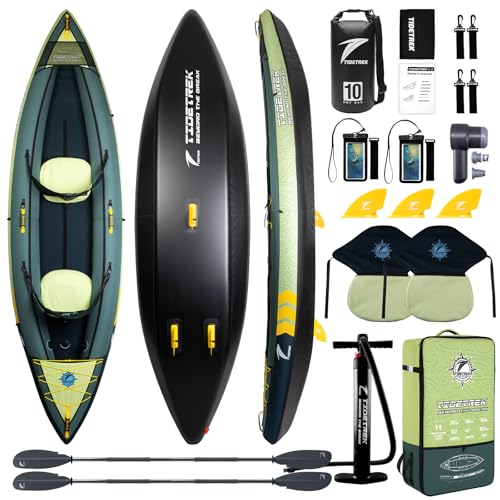
- Reinforced PVC bladder and 4-inch drop-stitch floor
- Includes electric and manual pumps plus dry bag
- Triple fin setup improves tracking and glide
Best For: Paddlers wanting a portable, stable inflatable for touring or fishing
Simple Tandem Option
Lifetime Kokanee Sit-On-Top Kayak

- UV-protected HDPE hard shell
- Two adjustable seat backs for solo or tandem use
- Multiple footrest positions and one storage hatch
Best For: Casual two-person paddling on calm water
Rough-Water Fishing Pick
Hydra 130 Offshore Fishing Kayak

- Bow rocker and precision-tracking hull for rough water
- Wide beam improves stability in coastal conditions
- Rear tankwell, sealed hatch, and gear tracks
Best For: Anglers and coastal paddlers needing a stable fishing kayak
Tandem Value Pick – Intex Explorer K2 Inflatable Kayak Set
If you’re looking for kayaks for cold water use where portability and easy setup matter, the Intex Explorer K2 is a practical tandem option for lakes and mild rivers. Its lightweight inflatable build, included pump, and carrying bag make it simple to bring along, while the stable design and removable skeg help it track better once you’re on the water.
Best For: Two paddlers who want an affordable, easy-to-transport kayak for calm water outings.
Pros:
- Two-person capacity with a 400 lb. maximum weight rating
- Inflates and deflates quickly with the included high-output pump and Boston valves
- Inflatable I-beam floor, side chambers, and removable skeg add stability and tracking
- Includes two paddles, two seats with backrests, grab handles, and a carry bag
Cons:
- Best suited to lakes and mild rivers rather than rough water
- Vinyl construction is focused on convenience more than premium durability
- Tandem setup may be less ideal if you usually paddle solo
This is a solid choice if you want a simple, packable tandem kayak for casual outings. It emphasizes convenience and stability over advanced performance, which makes it a straightforward pick for relaxed cold-water trips where easy transport is a priority.
Durable Solo Traveler – Advanced Elements StraitEdge Inflatable Kayak
For shoppers comparing kayaks for cold water, the Advanced Elements StraitEdge stands out as a rugged solo inflatable built around stability and durability. Its heavy-duty PVC tarpaulin, RF welded seams, and compact packed size make it a strong option when you want a kayak that can travel easily but still feels secure on the water.
Best For: Solo paddlers who want a durable, stable inflatable for remote or space-limited adventures.
Pros:
- Heavy-duty PVC tarpaulin with RF welded seams for durability
- Stable 116″ x 35″ inflated footprint
- Folds to a compact duffel-bag size for transport and storage
- Includes a folding seat for more comfortable longer paddles
Cons:
- Single-rider design only
- At 47 lbs, it’s not the lightest option to carry
- No accessories beyond the kayak and included seat are highlighted
The StraitEdge is a good fit if you value sturdiness and a confidence-inspiring feel over ultralight portability. It is especially appealing for paddlers who want a kayak that packs down well but still offers a broad, stable platform on diverse waters.
Roomy Sit-Inside Choice – Perception Conduit 13 Sit-Inside Kayak
If you’re shopping for kayaks for cold water and want a traditional sit-inside layout, the Perception Conduit 13 offers a roomy cockpit and practical storage. Its leak-proof one-piece construction, padded seat, and front/rear dry storage make it a sensible recreational kayak for calm conditions and longer outings.
Best For: Larger paddlers who want a comfortable sit-inside kayak for lakes, ponds, and calm coastal water.
Pros:
- Spacious cockpit designed to fit most paddlers comfortably
- Padded seat with adjustable height back for long-trip comfort
- Front and rear storage, including watertight covers for gear
- Leak-proof one-piece construction with built-in buoyancy for safety
Cons:
- At 51 lbs, it is heavier than many inflatable options
- Not intended for rough water
- Storage and comfort features add size over ultra-minimal designs
The Conduit 13 makes sense if you prefer a sit-inside kayak with more room and storage than a basic recreational model. It leans toward comfort and everyday usability, which is helpful when you want a steady boat for cooler-water paddling in calmer environments.
Stable Inflatable Performer – NRS Star Raven I Inflatable Kayak
For buyers focused on kayaks for cold water, the NRS Star Raven I is an inflatable solo kayak that emphasizes a stable position above the water and durable materials. Its drop-stitch floor, padded folding seat, and easy-carry handles make it a useful option when you want a secure-feeling boat that is still simple to move to and from the launch.
Best For: Solo paddlers who want a stable inflatable kayak with a rigid-feeling floor.
Pros:
- 4″ drop-stitch PVC floor inflates to 8-10 psi for a stable platform
- Padded folding seat provides a strong, comfortable paddling position
- Two straps secure the floor insert in place
- Bow and stern handles make carrying easier
Cons:
- Single-seat design only
- At 45 lbs, it is not especially light for carrying
- Details focus on stability and comfort more than storage or speed
The Star Raven I is a good match if you want an inflatable kayak that feels solid under you and is built around comfort and air retention. It is a straightforward pick for solo paddlers who value a stable ride and easy handling more than extra cargo capacity.
Cold Water Touring Pick – Wilderness Systems Pungo 105
If you want kayaks for cold water that still feel manageable on the water, the Wilderness Systems Pungo 105 is a practical sit-inside option with a stable hull, adjustable support, and smart storage. Its Phase 3 Air Pro seat adds ergonomic lower-back support, while the mesh-covered, vented foam helps improve airflow when you are layered up on cooler days.
Best For: Solo paddlers who want an efficient sit-inside kayak with comfort-focused seating and enough storage for day trips.
Pros:
- Stable hull design with best-in-class speed for its class
- Phase 3 Air Pro seat is fully adjustable with ergonomic lower-back support
- Rear Orbit hatch and sealed bulkhead add gear storage
- Dashboard includes a dry box, cup holders, and Slidetrax for accessories
Cons:
- At 47 lbs., it is not the lightest kayak to carry
- Only one seating position, so it is strictly a solo boat
Overall, the Pungo 105 stands out for paddlers who prioritize a dry, sit-inside layout and a comfortable cockpit for cool-weather outings. It balances efficiency, stability, and useful day-trip features well.
Cold Water Whitewater Inflatable – Star Viper XL Inflatable Kayak
For kayaks for cold water where you want an inflatable that can handle rougher conditions, the Star Viper XL brings a rigid-feeling drop-stitch floor, flotation chambers, and thigh straps for a more locked-in ride. The rugged PVC build is also designed to resist abrasion and slide over rocks more easily.
Best For: Solo paddlers looking for a durable inflatable kayak with whitewater-focused features and secure outfitting.
Pros:
- High-pressure drop-stitch floor adds rigidity
- Bow and stern chambers provide extra flotation
- Thigh straps help keep you secure for committed paddling
- Rugged PVC material is built to fight abrasion
Cons:
- Single-seat layout only
- Inflatable design may not appeal if you prefer a hard-shell feel
The Star Viper XL is a focused choice if you want portability without giving up features aimed at control and durability. Its setup is more specialized than a casual recreational boat, but that can be a plus when conditions get more demanding.
Cold Water Tandem Recreational – Lifetime Kokanee 10'6"
If you are comparing kayaks for cold water and want a simple sit-on-top option for shared outings, the Lifetime Kokanee offers a roomy tandem layout with adjustable seat backs and multiple footrest positions. Its UV-protected HDPE build and storage hatch make it a straightforward choice for recreational paddling.
Best For: Two paddlers who want a stable, easy recreational kayak with flexible seating and basic storage.
Pros:
- Seats up to two paddlers with solo or tandem use
- Two adjustable quick-release seat backs improve comfort
- Multiple footrest positions fit different-sized paddlers
- Includes a storage hatch plus bungee storage system
Cons:
- Heavier at 76 lbs., so carrying can be more difficult
- Sit-on-top design offers less enclosure than a sit-inside kayak
The Kokanee is best viewed as a practical recreational tandem rather than a technical cold-water boat. It is appealing if you value versatility, storage, and a simple setup for relaxed paddling.
Cold-Weather Touring Pick – Inflatable Touring Kayak with Accessory Kit
If you want kayaks for cold water that are easy to transport but still feel stable on the water, this inflatable touring model is worth a look. Its reinforced PVC bladder, 4-inch drop-stitch floor, and waterproof fabric construction are designed for rigidity and durability, while the included seat, pumps, fins, and dry bag make it a practical all-in-one setup for lake, river, and fishing trips.
Best For: Paddlers who want a lightweight inflatable option with strong stability and a full accessory kit for cold-water touring or fishing.
Pros:
- Drop-stitch floor and reinforced PVC bladder add rigidity and stability.
- Includes both an electric low-pressure pump and a dual-action manual pump for easier setup.
- Triple fin system helps tracking and straight-line glide.
- Waterproof backpack, seat fabric, dry bag, and phone bag add convenience on wet outings.
Cons:
- Inflatable design may not suit paddlers who prefer a rigid kayak feel.
- Single model has a lower 220 lb capacity than the tandem version’s 330 lb limit.
- At 29.1 lbs / 36.6 lbs, it is light for an inflatable, but still requires packing and inflation before use.
Overall, this is a versatile choice if you value portability, included gear, and a stable platform over a traditional hard-shell build. The 1-year hull and accessory warranties also add some peace of mind for regular use.
Simple Tandem Option – Lifetime Kokanee Sit-On-Top Kayak
For shoppers comparing kayaks for cold water, the Lifetime Kokanee is a straightforward sit-on-top option with a stable HDPE shell and room for two paddlers. The open design, adjustable seat backs, and multiple footrest positions make it an easy recreational pick for calm water outings, especially when you want a durable kayak without extra setup.
Best For: Casual paddlers who want a durable two-person kayak for relaxed trips on calm water.
Pros:
- UV-protected HDPE construction is built for durability.
- Seating capacity for two with adjustable quick-release seat backs.
- Multiple footrest positions help fit different paddlers.
- Includes a hatch for a bit of covered storage.
Cons:
- At 76 lbs, it is heavier to move and load than inflatable options.
- Recreational design is less specialized than fishing or touring kayaks.
- Only one hatch limits onboard storage space.
This kayak makes sense if you want a proven, no-fuss tandem boat for shared paddling. It leans more toward simplicity and durability than advanced performance features, which is often the tradeoff for an easygoing recreational model.
Rough-Water Fishing Pick – Hydra 130 Offshore Fishing Kayak
If you need kayaks for cold water with more confidence in rough conditions, the Hydra 130 is the most purpose-built option here. Its bow rocker, wide-beam stability, and precision-tracking hull are aimed at surf zones and coastal water, while the rear tankwell, sealed hatch, and Versa Console give you organized space for fishing gear and everyday essentials.
Best For: Anglers and coastal paddlers who want a stable sit-on-top kayak designed for rougher water and fishing setup flexibility.
Pros:
- Aggressive bow rocker helps tackle waves and rough water.
- Wide beam adds stability without sacrificing straightforward tracking.
- Rear tankwell, front sealed hatch, and Versa Console improve storage and organization.
- Integrated gear tracks make it easy to add rod holders or accessories.
Cons:
- No warranty is listed in the supplied details.
- At 75 lbs, it is not a lightweight kayak.
- Fishing-focused layout may be more than casual paddlers need.
For paddlers heading into coastal or surf conditions, this model offers the most water-ready hull and the most gear-friendly layout of the three. It is a strong fit when stability, storage, and customization matter more than portability.
How We Picked These Kayaks for Cold Water
We prioritized designs that make sense when the water is chilly: stable hulls, secure seating, useful storage, and options that are easy to control in less forgiving conditions. We also weighed portability, whether the kayak is sit-inside or sit-on-top, and how well each style supports relaxed, low-risk paddling.
Quick Comparison
For cold water, sit-inside kayaks usually offer better protection from spray and wind, while some sit-on-top models can work well when paired with proper cold-weather layers. Inflatable kayaks are attractive for portability, but they need extra attention to setup, durability, and water temperature management. Touring and recreational models tend to be the best fit for most buyers looking for predictable handling.
Key Buying Factors for Kayaks for Cold Water
Protection from Exposure
Look for a cockpit style that helps reduce water contact and wind exposure. A sit-inside layout is often the safest starting point for colder environments, especially if you plan longer trips or paddle in shoulder-season weather.
Stability and Confidence
In cold conditions, you want a kayak that feels reassuring the moment you get in. Wider beams and stable hull designs can help reduce wobble, which is especially valuable for newer paddlers or anyone launching from uneven shorelines.
Comfort and Fit
Cold water can make a small discomfort feel much bigger over time. Adjustable seats, supportive backrests, and enough legroom matter because you may be wearing thicker clothing or extra layers.
Storage and Trip Readiness
Dry storage, rear tankwells, and gear tracks become more important when you need to carry extra clothing, safety items, or day-trip essentials. A kayak that organizes your gear well is easier to use in changing weather.
Weight, Portability, and Transport
If you car-top or carry your kayak solo, portability can influence how often you actually use it. Inflatable models can be convenient, but hard-shell kayaks generally deliver more predictable performance and feel in cold water.
Who Should Buy Which Kayaks for Cold Water?
Choose a sit-inside recreational or touring kayak if you want the most straightforward cold-water setup for lakes, calm rivers, and cool-weather paddling. Pick a stable sit-on-top if you value easier entry and exit and plan to paddle in relatively mild conditions with the right layers. Consider an inflatable only if storage and transport are your biggest constraints, and you’re comfortable being extra selective about conditions. For anglers, a fishing kayak with strong stability and storage features is the best match.
As a rule, the best kayak is the one that matches your water temperature, launch conditions, and skill level—not just the one with the most accessories. For cold water, safety, stability, and comfort should lead the decision.