Choosing the right fins can make your first freediving sessions feel easier, smoother, and less tiring. The best beginner pair should help you move efficiently without feeling overly stiff or demanding.
In this roundup, we focus on options that are comfortable, practical, and suited to new divers who want confidence in the water from day one.
Best 10 Freediving Fins for Beginners Picks for 2026
Best for Easy Kicking
Cressi Gara 3000 Soft Freediving Fins

- Soft blade helps reduce leg fatigue
- Comfortable full-foot pocket
- Made in Italy by Cressi
Best For: Beginners who want a forgiving, low-effort freediving fin for longer sessions.
Best Stiff, Reactive Pick
MARES X-Wing Pro Freediving Fins

- Medium-hard blade for efficient, responsive kicking
- Comfortable foot pocket works with or without socks
- V-tip design improves tracking and stability
Best For: Beginner-to-intermediate divers who want a stiffer, more reactive fin for freediving and spearfishing.
Best for Easy, Comfortable Training

- Soft full-foot pocket for a comfortable beginner fit
- Lightweight and travel-friendly for easy packing
- Flexible blade supports smooth, low-effort kicking
Best For: Beginners who want a comfortable, easy-to-use fin for snorkeling and light recreational diving.
Best for Strong Thrust
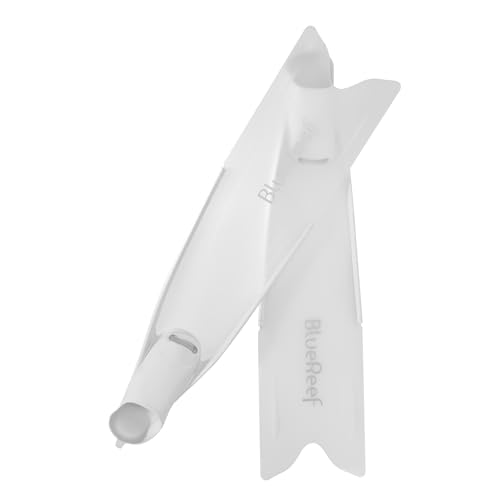
- Non-vented blades aim for stronger propulsion.
- Full foot fit offers a secure, comfortable feel.
- Durable thermoplastic build suits frequent use.
Best For: Beginners and casual divers who want a snug, power-focused fin.
Best Long-Blade Starter
Full Pocket Long Blade Diving Fins

- Long polypropylene blades for efficient propulsion
- Full-pocket TPR foot pocket for a secure fit
- Good entry point for beginners learning long-fin technique
Best For: Beginner freedivers and spearfishers who want an efficient long-blade full-foot fin.
Best for Skill Growth
Cressi Gara Modular Impulse Fins

- Interchangeable blades let the fin grow with your skills.
- 29-degree blade angle helps reduce effort on each kick.
- Comfort-focused foot pocket supports a secure fit.
Best For: Beginners who want an efficient freediving fin they can keep using as they improve.
Best with Extra Features
Full Pocket Long Blade Diving Fins
- Efficient long blade for easier kicking
- Secure full-pocket TPR foot pocket
- Simple beginner-friendly freediving setup
Best For: New freedivers and spearfishers who want an easy-to-use long-blade fin.
Best for Carrying Long Fins

- Fits most long freediving fins
- Durable nylon with YKK zipper
- Handle and shoulder strap for easy transport
Best For: Beginners who need a simple, protective bag for long freediving fins and basic gear.
Best for Durable Training
Seac Shout Long Fins for Freediving

- Comfortable with 2.5mm neoprene boots
- Efficient long blade for easier propulsion
- Made in Italy with tested quality control
Best For: Beginners who want a durable long fin for freediving, apnea, or spearfishing.
Best for Easy Kicking – Cressi Gara 3000 Soft Freediving Fins
If you want freediving fins for beginners that feel light on the legs, the Cressi Gara 3000 is a smart place to start. Its softer long blade is designed to move water efficiently with less muscle effort, which helps new divers stay comfortable during longer sessions.
Best For: Beginners who want a forgiving full-foot fin with an easy kick, especially for casual freediving and longer dives.
Pros:
- Soft long blade reduces leg strain and makes kicking feel easier
- Full-foot pocket is comfortable and can be worn barefoot or with neoprene socks
- Italian-made construction from a long-standing diving brand
Cons:
- Not the most powerful choice for advanced divers seeking maximum thrust
- Full-foot design is less adjustable than open-heel fins
Overall, the Gara 3000 is a practical pick if you’re comparing freediving fins for beginners and want something comfortable, efficient, and easy to live with. It trades raw stiffness for a smoother, less tiring swim, which is often the right call for new freedivers.
Best Stiff, Reactive Pick – MARES X-Wing Pro Freediving Fins
If you want freediving fins for beginners that lean more toward performance than soft flex, the Mares X-Wing Pro is a solid step up. Its medium-hard blade, V-tip stability, and comfortable foot pocket make it a practical choice for divers who want efficient power transfer and a more responsive kick.
Best For: Beginner-to-intermediate freedivers and spearfishers who want a stiffer fin with strong efficiency for surface swims and deeper training.
Pros:
- Medium-hard blade feels responsive without being overly specialized
- Comfortable foot pocket can be worn with or without neoprene socks
- V-tip helps reduce side-to-side slip while kicking
- Durable, performance-focused build for varied water conditions
Cons:
- Stiffer feel may be less forgiving for absolute first-time divers
- More performance-oriented than ultra-soft beginner fins
For freediving fins for beginners who already know they want a more reactive, efficient fin, the X-Wing Pro is a strong pick. It offers a good balance of comfort, control, and propulsion, but it makes the most sense if you’re okay with a firmer blade rather than a very easygoing starter option.
Best for Easy, Comfortable Training – Cressi Clio Full-Foot Fins
If you want freediving fins for beginners that feel light, forgiving, and easy to kick with, the Cressi Clio is a practical starting point. Its soft full-foot pocket, low-effort blade, and travel-friendly weight make it a solid choice for first-time snorkelers and casual underwater swimmers who value comfort over aggressive power.
Best For: Beginners who want a comfortable, easy-to-use fin for snorkeling, pool practice, and light recreational diving.
Pros:
- Soft full-foot pocket is comfortable and easy to slip on and off
- Lightweight design makes it simple to pack for travel
- Flexible blade offers smooth, low-effort kicking for new users
- Durable EVA/composite construction is built for long-term use
Cons:
- Not meant for high-performance freediving or strong current conditions
- Full-foot fit may be less versatile than adjustable strap fins
- Power is modest compared with longer, more technical freediving blades
As a starter-friendly option, the Clio fits freediving fins for beginners who want comfort and simplicity without a steep learning curve. It’s a sensible pick if your priorities are easy kick mechanics, lightweight carry, and dependable recreational use.
Best for Strong Thrust – Blue Reef Freediving Fins
If you want freediving fins for beginners that feel stable and deliver easy propulsion, the Blue Reef Freediving Fins are a straightforward pick. The full foot design helps create a secure fit, while the non-vented blade is built to push water efficiently for snorkeling, spearfishing, and entry-level diving.
Best For: Beginners who want a comfortable full-foot fin with strong thrust for casual freediving and snorkeling.
Pros:
- Non-vented blades help maximize thrust for smoother forward movement.
- Full foot design offers a secure, comfortable fit for many casual users.
- Durable thermoplastic construction is made for frequent water use.
- Works well for snorkeling, spearfishing, and beginner diving sessions.
Cons:
- Full foot fins are less adjustable than open-heel styles.
- May be more power-focused than some first-time users need.
For freediving fins for beginners, this Blue Reef pair makes sense if you care more about reliable push and a snug fit than extra adjustability. It’s a practical choice for learning the basics while still getting a fin that can handle more serious surface and underwater use.
Best Long-Blade Starter – Full Pocket Long Blade Diving Fins
If you want freediving fins for beginners that prioritize easy propulsion and a simple, full-foot fit, this long-blade option is worth a look. The polypropylene blades are built for efficiency, while the tear-resistant TPR foot pocket helps keep the kick-to-thrust transfer straightforward for new divers and spearfishers.
Best For: Beginner freedivers and spearfishers who want a long-blade fin with a secure full-pocket fit and efficient kick transfer.
Pros:
- Long polypropylene blades aim for strong thrust without adding unnecessary weight
- Full-pocket TPR foot pocket supports a secure, stable fit
- Larger blade area can make kicking feel easier for new divers
- Size guidance is based on foot length for more accurate fit selection
Cons:
- Long-blade fins can feel less compact and less travel-friendly than shorter options
- Fit depends on measuring carefully, so sizing is less forgiving than some beginner fins
As a practical pick for freediving fins for beginners, this model focuses on straightforward performance rather than extras, making it a solid entry into longer fin designs. It should appeal most to buyers who want an efficient, full-foot fin for pool practice, shallow dives, or spearfishing basics.
Best for Skill Growth – Cressi Gara Modular Impulse Fins
Cressi’s Gara Modular Impulse is a smart pick for freediving fins for beginners who want a fin that can adapt as their technique improves. The 29-degree blade angle is designed to reduce kicking effort and keep your body more streamlined, while the interchangeable blade system gives you room to upgrade later instead of replacing the whole fin.
Best For: Beginners who want a comfortable, efficient fin that can grow with their freediving skills over time.
Pros:
- Interchangeable blade system helps the fin evolve with your progress.
- 29-degree blade angle supports efficient, lower-effort kicking.
- Self-adjusting foot pocket aims for a secure, comfortable fit.
- Light polypropylene blade adds durability without excessive weight.
Cons:
- More advanced than a true entry-level “just-starting-out” fin.
- May be more fin than casual snorkel-only users need.
This is a strong option if you want freediving fins for beginners that won’t feel limiting after a season of practice. It balances comfort, control, and future upgrade potential better than many basic starter fins.
Best for Easy Power Transfer – Powerful Open Heel Diving Fins
If you’re comparing freediving fins for beginners, this open-heel pair is a practical pick thanks to its balanced flex, easy-adjust buckles, and efficient blade design. It’s built to help new divers get strong propulsion without needing advanced technique or excessive leg strain.
Best For: Beginners who want a forgiving fin with efficient kick response for snorkeling, pool practice, and casual freediving.
Pros:
- Dual-material blade keeps the fin light, flexible, and well-balanced.
- Channel Thrust design helps generate strong propulsion with less effort.
- One-finger-release buckles make fit adjustments quick and simple.
- Open-heel build adds versatility for snorkeling and warm-water use.
Cons:
- Open-heel design is less streamlined than dedicated long freediving fins.
- More of a versatile beginner fin than a specialized performance model.
Overall, this is a sensible option for freediving fins for beginners who want an easy transition into the water with solid power and minimal fuss. It favors comfort, adjustability, and efficient kicking over niche performance, which makes it a safe all-around choice for new divers.
Best with Extra Features – Full Pocket Long Blade Diving Fins
If you’re comparing freediving fins for beginners, this full-pocket long-blade option is a practical place to start. The polypropylene blade is built for easy propulsion, while the tear-resistant TPR foot pocket helps keep the fit secure and comfortable as you learn efficient kicking technique.
Best For: New freedivers and spearfishers who want a long-blade fin with a stable full-pocket fit and straightforward performance.
Pros:
- Long blade design helps generate efficient thrust with less effort
- Replaceable polypropylene blades keep the setup lightweight and simple
- Full-pocket TPR foot pocket offers a snug, secure feel in the water
- Good value for beginners who want a purpose-built freediving fin
Cons:
- Long blades can feel bulky for pool-only training or casual snorkeling
- Size selection depends on measuring foot length carefully
Overall, this is a solid entry-level choice if you want freediving fins for beginners that prioritize easy propulsion and a secure fit over high-end materials. It’s best suited to new divers who are ready for a true long-blade setup rather than a general-purpose swim fin.
Best for Carrying Long Fins – Cressi Long Fins Set Bag
Cressi Long Fins Set Bag - Freediving Scuba Gear Bag Made in Premium Material Quality Since 1946
Check Price On AmazonIf you’re shopping for freediving fins for beginners, a dedicated gear bag can make setup and transport much easier. The Cressi Long Fins Set Bag is sized to handle longer fins plus a mask and snorkel, with durable nylon construction and an easy-carry design for trips to the pool, beach, or training site.
Best For: Beginners who need a simple, protective bag for long freediving fins and basic gear.
Pros:
- Extra-long interior fits most long freediving fins comfortably
- Durable nylon build with a secure YKK zipper
- Top handle and adjustable shoulder strap make carrying easy
- Room for fins, mask, and snorkel in one bag
Cons:
- It’s a gear bag, not a fin set or performance accessory
- May be more bag than needed if you only carry compact gear
This is a practical pick for freediving fins for beginners who already have or plan to buy longer blades and want a straightforward way to store and transport them. It’s not the cheapest or most technical option, but it does the job well if protection, fit, and convenience matter most.
Best for Durable Training – Seac Shout Long Fins for Freediving
Seac Shout, Long Fins for Scuba Diving, Spearfishing and Freediving, Black, 9.5-10, Made in Italy
Check Price On AmazonIf you want freediving fins for beginners that feel stable, comfortable, and built to last, the Seac Shout is a solid long-fin option. Made in Italy and designed for freediving, apnea, and spearfishing, it focuses on easy comfort and efficient thrust rather than flashy extras.
Best For: Beginners who plan to use boots and want a reliable long fin for freediving, spearfishing, or apnea training.
Pros:
- Comfortable fit designed around 2.5mm neoprene boots
- Long blade delivers strong return thrust with less effort
- Available in multiple sizes and colors for easier fitting
- Individually verified and tested by Seac for quality control
Cons:
- Long-fin design may feel bulky for total first-timers
- Not the most compact option for travel or casual snorkeling
- Requires boot compatibility, so sizing needs attention
The Seac Shout is a practical pick if you’re shopping for freediving fins for beginners and want a straightforward long fin with a comfort-first fit. It’s especially appealing if you expect to progress into spearfishing or deeper freediving and want one pair that can grow with you.
How We Picked These Freediving Fins for Beginners
We prioritized comfort, manageable blade stiffness, fit consistency, and overall value for new divers. For Freediving Fins for Beginners, the goal is not maximum power at all costs; it is efficient propulsion with minimal leg fatigue and a forgiving feel during technique development.
Quick Comparison: What Matters Most
Beginner-friendly fins usually fall into a few broad categories: softer full-foot fins for easier kicking, longer blades for better glide, and modular or more performance-oriented designs for divers who expect to progress quickly. Full-foot models are often the simplest starting point, while open-heel designs can be useful if you need adjustability or plan to use them across multiple water activities.
Key Buying Factors for Freediving Fins for Beginners
Blade Stiffness
A softer or medium-soft blade is generally easier to use when you are still building leg strength and refining your kick. Very stiff blades can feel powerful, but they may punish poor technique and cause fatigue faster.
Foot Pocket Fit
Fit is critical. A snug but not tight foot pocket helps prevent blisters, slipping, and wasted energy. If the fin feels loose, power transfer suffers; if it is too tight, comfort and circulation can be affected.
Foot-Pocket Style
Full-foot fins are often the simplest choice for warm-water beginners because they are lightweight and streamlined. Open-heel fins can be more adjustable, but they are not always the most natural starting point for first-time freedivers.
Blade Length and Material
Longer blades can improve efficiency, but they also require more control. Composite or polymer blades often give beginners a forgiving, budget-friendly entry point, while advanced materials may be better once technique improves.
Use Case and Progression
If you are mainly doing pool practice, casual breath-hold sessions, or entry-level spearfishing, look for comfort first. If you already know you want to progress, a slightly more performance-oriented fin may save you from upgrading too soon.
Who Should Buy Which Freediving Fins for Beginners?
Choose softer full-foot fins if you want the easiest learning curve and the least fatigue. Choose medium-stiff long blades if you want room to grow and expect to spend more time practicing technique. Choose adjustable or modular fins if you need versatility, want to share gear, or prefer a setup that can adapt as your skills improve.
For most first-time buyers, the best Freediving Fins for Beginners are the ones that fit well, feel natural on the kick cycle, and match your main water conditions. Comfort and control usually matter more than chasing the most aggressive performance specs.