Choosing the right compass can make navigation drills easier, safer, and far more consistent underwater. The best options for training should be easy to read, stable at depth, and simple to orient quickly.
In this roundup of the best dive compasses for navigation training, we focus on models that balance visibility, mounting style, durability, and practical underwater use for new and experienced divers alike.
Best 10 Dive Compasses for Navigation Training Picks for 2026
Console Navigation Pick

- Liquid-filled, dampened design for stable heading control
- Luminous dial and side-view window aid low-light reading
- 360-degree ratcheting bezel supports course tracking
Best For: Console-based training and divers who want a readable, stable compass module
Wrist Training Pick
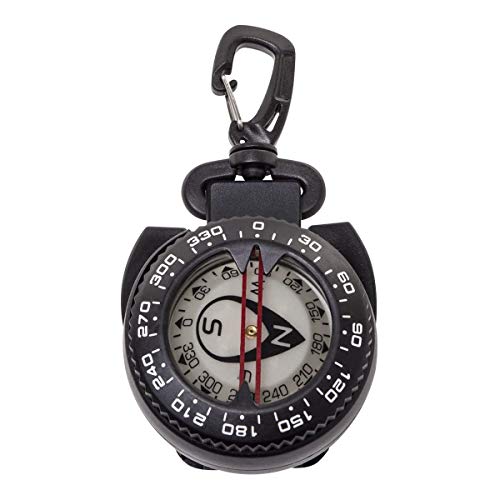
- Oil-filled module with scratch-resistant polycarbonate case
- Top and side reading design for quick reference
- Luminescent display and 360-degree ratcheting bezel
Best For: Wrist-mounted navigation drills and quick underwater heading checks
Flexible Mount Pick

- Large bearing indicators and high-visibility lubber line
- OceanGlo backing supports low-light visibility
- Offered in wrist, bungee, clipmount, hose mount, and module
Best For: Divers who want a readable compass in multiple mounting styles
Compact Depth-Rated Pick
Scuba Choice Diving Compass Module

- Aluminum build with corrosion resistance
- Glow-in-the-dark reading for low-light dives
- Compact design rated to 80m with 25-degree tilt tolerance
Best For: Travel-friendly training and divers who want a compact, durable compass module
Classic Accuracy Pick
Cressi Easy-to-Read Underwater Compass

- Luminous face with 10° intervals
- Gun-sight window for heading checks
- Moves well even when not level
Best For: Divers who want a trusted, readable compass for navigation training
Compact Hose-Mount Option

- Hose-groove clamp design
- Side window with magnification
- Luminous 360° rotatable dial
Best For: Divers who want a compact hose-mounted compass for navigation drills
High-Visibility Training Wrist Compass

- Large 2.3-inch face for easy reading
- 25° tilt technology for varied positions
- Depth-rated to 80 meters with wrist strap
Best For: Training dives and travel-friendly navigation practice
Dual-Read Bungee Dive Compass

- Glow dial with side-window magnification
- 360-degree ratcheting bezel and double pointer
- Bungee mount for wrist, arm, or suit
Best For: Multi-activity navigation training and surface-to-water use
Console Navigation Pick – Aqualung Compass Module
Aqualung Compass Module - Scuba Diving Navigation Compass Console - Northern Hemisphere
Check Price On AmazonIf you’re comparing dive compasses for navigation training, this Aqualung Compass Module is built around clear heading control and easy readability. The liquid-filled, dampened design, 30-degree increments, and 360-degree ratcheting bezel make it a practical choice for learning course-keeping in a variety of underwater conditions.
Best For: Divers who want a console-style compass module with high visibility and stable heading feedback for training and general navigation.
Pros:
- Luminous dial, large numbers, and fluorescent markings for low-light use
- Side-view window improves readability during course checks
- 360-degree ratcheting bezel supports precise heading adjustments
- Designed for easy integration into Aqualung dual-gauge consoles or save-a-dive kits
Cons:
- Engineered for Northern Hemisphere use
- Console-module design may not suit divers who prefer wrist or bungee mounting
For navigation practice, this model focuses on dependable orientation rather than extra complexity. The stable, easy-to-read layout should help divers build confidence in basic compass skills while keeping tracking straightforward.
Wrist Training Pick – Trident Retractor Compass
For divers looking at dive compasses for navigation training, this Trident Retractor Compass emphasizes quick reference and practical course alignment. Its oil-filled build, top-and-side reading design, and 360-degree ratcheting bezel are geared toward straightforward underwater navigation practice.
Best For: Divers who want a wrist-mounted compass with easy reference points for drills, training, and general underwater navigation.
Pros:
- Oil-filled compass module with scratch-resistant polycarbonate case
- Top and side reading design supports fast checks underwater
- Luminescent display and high-visibility lubber line for limited visibility
- Wrist mount with gate snap for secure carrying
Cons:
- Wrist-band style may not appeal to divers who prefer module or console setups
- Specification sheet lists an unusually light item weight, so exact carry feel may be minimal
This compass is a sensible pick for divers practicing headings, reciprocal courses, and quick course correction. The layout is simple and functional, which is useful when the goal is learning navigation basics rather than adding extras.
Flexible Mount Pick – Oceanic Maxview Compass
Among dive compasses for navigation training, the Oceanic Maxview stands out for adaptability and easy reading. Large bearing indicators, a high-visibility lubber line, and OceanGlo luminescent backing make it a practical option for divers who want a clear compass across different mount styles.
Best For: Divers who want one compass design available in multiple configurations for training and everyday use.
Pros:
- Large bearing indicators improve readability
- OceanGlo luminescent backing helps in low light
- Top or side reading with a large ratcheting bezel
- Available in wrist, bungee, clipmount, hose mount, and module configurations
Cons:
- Configuration choice adds an extra decision before purchase
- Product notes do not list depth rating or tilt tolerance
This is a versatile training-friendly compass for divers who may switch between setups or want a familiar instrument across multiple rigs. Its main strength is clarity, with mount flexibility adding real-world convenience.
Compact Depth-Rated Pick – Scuba Choice Diving Compass Module
If you’re shopping for dive compasses for navigation training, this Scuba Choice module is built for compact, durable use. The aluminum construction, glow-in-the-dark visibility, and 25-degree tilt tolerance make it suitable for divers practicing basic heading control in darker or more challenging environments.
Best For: Divers who want a lightweight, compact compass module with better tilt tolerance for training and travel.
Pros:
- Durable aluminum construction for corrosion resistance
- Glow-in-the-dark feature helps with low-light or night diving
- Depth-rated to 80m for a wide range of dive profiles
- Compact, lightweight design is easy to pack
Cons:
- 25-degree tilt tolerance is useful, but not as forgiving as some larger compass setups
- Wrist-mount format may not suit divers wanting a console-mounted instrument
This model is a strong choice for divers who want a straightforward training compass that won’t add bulk to their kit. Its small size and durable build make it especially practical for repeat use and travel-heavy dive plans.
Wrist-Mounted Training Pick – Scuba Compass, Waterproof 5ATM Wrist Model
If you’re comparing dive compasses for navigation training, this wrist-mounted model is built around simple underwater use: a large analog dial, luminous markings, and a side-reading window for easier heading checks. The 5ATM waterproof rating and no-battery design make it a practical choice for repeated practice sessions and general outdoor use.
Best For: Divers who want a wrist compass with clear readability, a rotating bezel, and hands-free access during navigation drills.
Pros:
- 50m waterproof rating for underwater use
- Large 2.36-inch analog dial with luminous display
- Side-reading window and red lubber line for heading alignment
- Rotating ratchet bezel with double pointer for marking heading and reciprocal heading
Cons:
- Wrist-mount format may not suit divers who prefer hose-mounted setups
- Analog-only design means no digital features
- Focused on navigation basics rather than advanced dive electronics
This is a straightforward, training-friendly compass with the features most divers need for practicing underwater orientation. The combination of a readable card, luminous face, and hands-free strap makes it a sensible entry point for navigation drills.
Classic Accuracy Pick – Cressi Easy-to-Read Underwater Compass
Among dive compasses for navigation training, this Cressi model stands out for its easy-to-read face and tracking-friendly design. The luminous card, 10° intervals, side viewing window, and rotating bezel are all aimed at helping you read headings more confidently in different underwater conditions.
Best For: Divers who want a proven wrist compass with clear markings and strong readability for training and general underwater navigation.
Pros:
- Magnetic card is designed to move extensively for reading even when not perfectly level
- Luminous face with 10° intervals for precise heading work
- Gun-sight window and red lubber line improve directional alignment
- Wide anatomical band supports wrist attachment
Cons:
- Wrist and hose mount setup may be more than some beginners need
- Plastic/ABS build is not as premium as metal-bodied options
- Compact size may feel small if you prefer a very large compass face
This is a well-rounded training compass with a strong focus on readability and heading control. If you want a familiar, no-frills underwater navigation tool from an established dive brand, it fits the role well.
Compact Hose-Mount Option – AOFAR AF-Q60C Dive Compass
If you’re shopping for dive compasses for navigation training and want a compact, mount-friendly design, the AOFAR AF-Q60C is built for that job. It combines a hose-groove clamp design with a side window magnification view, luminous dial, and a floating 360° scale for underwater heading work.
Best For: Divers who prefer a compact, hose-mounted compass with side-window reading and a rotating luminous dial.
Pros:
- Compact and lightweight for easy carry
- Side window readout with magnification for easier underwater reading
- Luminous rotatable dial with 360° scale
- Waterproof and shockproof construction
Cons:
- Hose clamp design may not suit divers who want a wrist-mounted compass
- Smaller size can be less comfortable for users who prefer a larger dial
- Limited information beyond core navigation features
This model is a practical pick for divers who want a compact tool that mounts neatly and still offers the key training features. The side-view magnification and luminous dial make it especially useful for practicing quick underwater heading checks.
Glow-Ready Bungee Navigator – Glow-in-the-Dark Bungee Compass
For dive compasses for navigation training, this bungee-mounted model is built for easy course keeping in low light and at depth. The glow-in-the-dark face, 360° rotating bezel, and red lubber line make it straightforward to practice headings, reciprocal bearings, and route following without constantly reaching for a light.
Best For: Divers and kayakers who want a readable, wrist- or gear-mounted compass for low-vis practice and everyday navigation drills.
Pros:
- Glow-in-the-dark face supports dawn, night, and low-visibility training.
- 360° rotating bezel with red lubber line helps with accurate heading work.
- Waterproof to 230 ft and CE-certified for scuba, technical diving, and kayaking.
- Elastic bungee mount fits over wetsuits and most gear sizes.
Cons:
- Optimized for the Northern Hemisphere, so it may not suit every region.
- Bungee setup may be less familiar than a traditional wrist strap for some users.
This is a practical training compass if you want simple readability and secure mounting. It focuses on visibility, depth tolerance, and fast reference points rather than extra features.
High-Visibility Training Wrist Compass – 2.3" Easy-Read Scuba Compass
Among dive compasses for navigation training, this wrist-mounted option emphasizes a large, easy-to-read display and tilt tolerance so students can focus on route work instead of constantly correcting the instrument. Its 25° tilt capability, high-contrast markings, and depth rating make it a solid pick for repeated underwater drills.
Best For: Divers who want a straightforward wrist compass for training sessions, travel, and frequent recreational dives.
Pros:
- Large 2.3-inch display improves underwater readability.
- 25° tilt technology helps keep readings accurate in different body positions.
- Depth-rated to 80 meters and built for cold-to-tropical conditions.
- Adjustable 15-inch wrist strap keeps it secure and hands-free.
Cons:
- No glow-in-the-dark face is listed in the supplied details.
- Wrist strap design may not appeal to divers who prefer bungee mounting.
This model is a strong choice if your training priority is easy reading and dependable direction checks. It balances portability, durability, and simple operation without adding extra complexity.
Dual-Read Bungee Dive Compass – Glow Dial Marine Navigator
If you’re comparing dive compasses for navigation training, this bungee-mounted unit stands out for its clear side-window readout and large ratcheting bezel. The glow dial, red lubber line, and side magnification make it easier to practice accurate bearing work in the water, at the surface, or on other outdoor trips.
Best For: Divers who want a versatile training compass that also works well for sailing, kayaking, and surface navigation.
Pros:
- Luminous dial and magnified side window support low-light readability.
- 360-degree ratcheting bezel and double pointer help with heading and reciprocal heading practice.
- Bungee cord mount secures easily to wrist, arm, wetsuit, or drysuit.
- 5ATM waterproof ABS housing is built for underwater and surface use.
Cons:
- 5ATM waterproofing is listed, but no specific depth rating is provided.
- ABS construction may feel more utilitarian than metal-bodied alternatives.
This is a versatile pick for learners who want clear directional references and flexible mounting. It suits training sessions where you may move between underwater navigation and surface activities.
How We Picked These Dive Compasses for Navigation Training
We focused on the features that matter most when practicing underwater navigation: readability, bearing accuracy, tilt tolerance, build quality, and how securely the compass mounts to your gear. For training use, a clear bezel and easy-to-follow lubber line are especially important because they reduce hesitation and help reinforce good habits.
We also favored compasses that are practical in real dive conditions, including glow-in-the-dark or luminescent displays, waterproof construction, and mounting choices such as wrist, bungee, console, clip, or hose options.
Quick Comparison
Most Dive Compasses for Navigation Training fall into a few categories. Wrist and bungee models are popular for fast access and hands-free reading. Console and module styles are useful for divers who want an integrated setup. Hose-mounted and clip-on designs can work well for travel or for divers who prefer a streamlined rig. The right choice depends on how you plan to practice, how often you dive, and whether you want maximum convenience or a more fixed instrument position.
Key Buying Factors for Dive Compasses for Navigation Training
Readability
Large digits, high-contrast markers, and luminous elements make it easier to track headings in low light or murky water. If you are learning navigation, readability should be a top priority.
Tilt Tolerance and Stability
Underwater trim is not always perfect, so a compass that stays readable at an angle is helpful. Higher tilt tolerance can make training less frustrating and more realistic.
Mounting Style
Wrist and bungee mounts are usually best for frequent heading checks. Console units offer a more integrated option, while hose or clip mounts may suit divers who want to keep the compass accessible without wearing it on the wrist.
Durability and Depth Rating
Look for a rugged housing, reliable sealing, and a depth rating that exceeds your normal diving needs. Training compasses should hold up to repeated handling and gear packing.
Bezel Feel and Markings
A smooth, precise rotating bezel helps you set and hold headings accurately. Clear degree markings are especially valuable when practicing reciprocal headings, square patterns, and natural navigation skills.
Who Should Buy Which Dive Compasses for Navigation Training?
If you are new to navigation drills, choose a simple, high-visibility model with strong luminescence and an easy-to-read dial. If you already use a streamlined setup, a bungee or wrist compass often offers the fastest access. Divers who prefer integrated gear may be happier with a console or module-style option. For travel, backup use, or occasional training, a compact hose-mounted or clip-on compass can be a practical choice.
For most divers, the best Dive Compasses for Navigation Training are the ones that you can read quickly, wear comfortably, and trust in imperfect conditions. Focus on clarity and consistency first, then choose the mount and style that match your kit.