Choosing the right compass can make a huge difference when you are still learning underwater navigation. The best beginner picks are simple to read, easy to mount, and reliable in low-visibility conditions.
Below, we focus on dive compasses for beginners that balance accuracy, durability, and ease of use so you can build confidence on every dive.
Best 10 Dive Compasses for Beginners Picks for 2026
Hose-Mount Compact Pick
AOFAR AF-Q60C compact hose-mount compass

- Side-window readout with magnification
- Luminous rotatable dial for low light
- Waterproof, shockproof, and compact
Best For: Beginners who want a simple hose-mount compass
Classic Wrist Compass
Cressi easy-read wrist compass

- Readable in all conditions
- Luminous face with 10° intervals
- Gun-sight window and rotating bezel
Best For: Beginners who prefer a wrist-mounted compass
Adjustable Wrist Starter
AOFAR AF-Q60A adjustable wrist compass

- Adjustable wrist strap design
- Side-window reader with magnification
- Luminous, waterproof, and compact
Best For: Beginners who want a secure wrist-mounted option
Low-Light Navigation Pick
Trident retractor compass with visibility aids
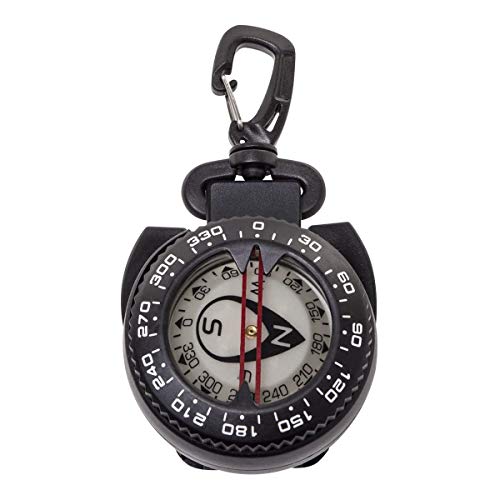
- Oil-filled module for stable reading
- Luminescent display and high-visibility lubber line
- Ratcheting 360° bezel with reciprocal points
Best For: Beginners diving in low-light or limited-visibility conditions
Easy-Read Navigator

- Large bearing indicators for easier reading
- OceanGlo backing helps in low light
- Multiple mounting configurations available
Best For: New divers who want a clear, adaptable compass
Compact Metal Pick
Scuba Choice Dive Compass Module

- Glow-in-the-dark display for low light
- Aluminum body for durability
- Compact size is easy to pack
Best For: Beginner divers who need a rugged, portable module
Wrist-Worn Starter

- Wrist mount keeps it easy to check
- Glow feature supports night dives
- Top and side readings improve usability
Best For: New divers and outdoor users wanting a simple wrist compass
Beginner Wrist Compass

- Large 2.3" readable face
- 25-degree tilt for accuracy
- Secure adjustable wrist strap
Best For: New divers who want a clear wrist compass with simple handling
Clip-On Access Compass
Scuba Choice Retractable Dive Compass

- Clip-on design for BCD or gear
- Retracts from 31.5" to 7"
- Glow-in-the-dark dial
Best For: Beginners who want a compact clip-on compass they can grab fast
Hose-Mount Compact Pick – AOFAR AF-Q60C compact hose-mount compass
If you want dive compasses for beginners that stay simple and compact, the AOFAR AF-Q60C is built around easy underwater handling. Its hose groove design, luminous rotatable dial, and side-window readout are meant to make navigation more approachable when you are still learning headings and turns.
Best For: Beginner divers who want a compact hose-mount compass with straightforward side reading and good visibility.
Pros:
- Side window with magnification helps you read it from the side underwater.
- Luminous, rotatable dial supports use in low light conditions.
- Floating compass dial and 360° scale allow readings from multiple angles.
- Compact, waterproof, and shockproof design fits diving use well.
Cons:
- Hose-clamp mounting may not suit divers who prefer a wrist setup.
- Smaller size can be less familiar for users who want a larger compass face.
Overall, this is a practical entry-level option if you want a durable compass that keeps the learning curve low. The design focuses on readable navigation rather than extra complexity, which is exactly what many new divers need.
Classic Wrist Compass – Cressi easy-read wrist compass
Among dive compasses for beginners, the Cressi underwater compass stands out for its easy-to-read layout and forgiving card movement. It is designed to stay readable in all conditions, with a luminous face, side window, and a rotating bezel that helps you mark headings without overcomplicating things.
Best For: New scuba divers who want a familiar wrist-mounted compass with clear markings and multiple reading angles.
Pros:
- Compass card moves extensively, so reading stays accurate even if not perfectly level.
- Gun-sight window and top reading option improve heading checks.
- Luminous face with 10° intervals supports visibility and precision.
- Rotating ratchet bezel and red lubber line make marking headings easier.
Cons:
- Wrist mount may feel bulkier than compact hose-mounted designs.
- More features can take a little practice for total beginners.
This is a strong all-around choice if you want a classic scuba compass that is easy to interpret in real underwater conditions. It offers enough guidance features to help new divers build confidence without feeling overly technical.
Adjustable Wrist Starter – AOFAR AF-Q60A adjustable wrist compass
If you are comparing dive compasses for beginners, the AOFAR AF-Q60A is a straightforward wrist option with beginner-friendly features like a side-window reader and luminous dial. Its adjustable strap and compact size make it easy to wear while still offering the core tools needed for basic underwater navigation.
Best For: Beginner divers who want a wrist strap compass that is compact, readable, and easy to wear.
Pros:
- Adjustable wrist strap helps it fit securely.
- Side-window reader with magnification supports easier underwater reading.
- Luminous, rotatable dial and 360° scale improve usability.
- Waterproof and shockproof construction suits diving conditions.
Cons:
- Wrist strap style may not appeal to divers who prefer hose mounting.
- Compact size can be harder to manipulate with thick gloves.
This model keeps things practical for new divers who want a no-nonsense wrist compass. It emphasizes visibility, accuracy, and a secure fit, which are the main priorities when you are learning to navigate underwater.
Low-Light Navigation Pick – Trident retractor compass with visibility aids
For dive compasses for beginners, the Trident Retractor Compass adds a few helpful visibility cues that can make underwater navigation easier to follow. Its oil-filled module, side reading window, luminescent display, and ratcheting bezel are aimed at giving you clear bearings in limited visibility and low light.
Best For: Beginner divers who want a wrist compass with strong visibility features and easy bearing reference.
Pros:
- Oil-filled module is designed for accurate, stable reading.
- Top and side reading design with a gun-sight window supports quick checks.
- Luminescent display and high-visibility lubber line help in low light.
- Ratcheting 360° bezel and reciprocal index points make heading work easier.
Cons:
- More navigation markings may take some getting used to for first-time users.
- Wrist-band style may not suit divers looking for a hose-mounted compass.
This is a capable option if you want a beginner compass that still includes several advanced visibility aids. It is especially appealing when you expect to dive in darker conditions or want more reference points while learning basic navigation.
Easy-Read Navigator – OCEANIC Maxview Compass
If you’re comparing dive compasses for beginners, the OCEANIC Maxview is built around visibility and flexibility. Its large bearing indicators, high-visibility lubber line, and OceanGlo luminescent backing make it easier to keep your heading in low light, while the top-or-side reading layout gives you more than one way to check direction underwater.
Best For: New divers who want a clear, easy-to-read compass they can configure to match their gear setup.
Pros:
- Large bearing indicators and a high-visibility lubber line make readings easier to see.
- OceanGlo luminescent backing helps with low-light visibility.
- Available in wrist, bungee, clipmount, hose mount, and module configurations.
- Ratcheting bezel supports top or side reading.
Cons:
- Several configuration options may make the buying decision less straightforward for first-time buyers.
- At 4.8 ounces, it is not the lightest option here.
Overall, this is a strong beginner-friendly pick if readability matters most. The durable rubber boot adds protection, and the lifetime warranty gives extra peace of mind for divers who want a compass they can keep using as their skills improve.
Compact Metal Pick – Scuba Choice Dive Compass Module
For dive compasses for beginners, the Scuba Choice Diving Compass Module stands out for compactness and straightforward durability. Its glow-in-the-dark display helps in dark water, while the 25° tilt tolerance and 80M depth rating make it a practical navigation tool for recreational dives and beyond.
Best For: Beginner divers who want a small, rugged module compass that is easy to pack and reliable underwater.
Pros:
- Glow-in-the-dark visibility supports low-light and night use.
- Aluminum construction adds durability and corrosion resistance.
- 80M max depth rating covers a wide range of recreational diving.
- Compact 2.33-inch size makes it easy to carry in a gear bag.
Cons:
- Module format may be less convenient if you prefer a wrist-mounted compass.
- Extremely small weight and size may feel less substantial to some users.
This is a practical pick for divers who value portability without giving up useful dive features. The tilt tolerance and depth rating make it feel more capable than a basic starter accessory, especially if you expect to grow into different dive conditions.
Wrist-Worn Starter – SAEKODIVE Glow Wrist Compass
If you want dive compasses for beginners that are simple to wear and quick to check, this wrist compass is a very approachable option. It offers top and side readings, a red lubber line, glow-in-the-dark visibility, and a 360° rotating ratchet bezel, so you can orient yourself without juggling extra gear.
Best For: New divers, snorkelers, or kayak users who want a wrist-mounted compass with easy visibility.
Pros:
- Wrist-mount design keeps the compass easy to access.
- Glow-in-the-dark feature helps during night dives.
- Top and side readings improve usability.
- CE approved with a high angle tilt and no underwater depth limitation listed.
Cons:
- One-size-fits-all sizing may not be ideal for every wrist.
- Plastic-based construction may not feel as premium as aluminum alternatives.
As a starter compass, this model keeps the learning curve low with familiar wrist mounting and easy-to-read markings. It’s also versatile enough for other outdoor uses, which makes it a sensible choice if you want one compass that can do more than scuba.
Beginner Wrist Compass – Scuba Choice Diving Compass
If you’re shopping for dive compasses for beginners, this wrist-mounted option keeps navigation simple with a large 2.3″ display and easy-to-read markings. It is built for low-light visibility, comfortable all-day wear, and dependable direction tracking during recreational dives.
Best For: New divers who want a straightforward wrist compass with a clear face and secure fit.
Pros:
- Large high-visibility display is easier to read underwater.
- 25-degree tilt technology helps maintain accuracy in different dive positions.
- Adjustable 15″ wrist strap keeps it secure and hands-free.
- Depth-rated to 80 meters for recreational and deeper dives.
Cons:
- Wrist mount may not appeal to divers who prefer clip-on gear.
- No glow-in-the-dark feature is listed in the supplied details.
This is a practical choice if you want a simple compass that stays visible and stable while you learn basic underwater navigation. Its focus on readability and secure mounting makes it especially beginner-friendly.
Glow-Read Bungee Compass – SAEKODIVE Dive Compass
For dive compasses for beginners, a clear luminous face can make underwater navigation feel less intimidating, and this bungee-mounted model is built around that idea. It adds a 360\u00b0 rotating bezel, a red lubber line, and top/side reading so you can check direction quickly in different positions.
Best For: Beginners who want a readable, glow-in-the-dark compass that fits over wetsuits and gear.
Pros:
- Glow-in-the-dark face improves visibility in low light and night dives.
- Top and side reading with a red lubber line makes direction checks easier.
- Bungee mount fits over wetsuits and gear for flexible wear.
- Waterproof to 230 ft and CE-certified for scuba, technical diving, and kayaking.
Cons:
- Optimized for the Northern Hemisphere only.
- Bungee style may feel less familiar than a standard wrist strap.
This is a strong pick if visibility is your top priority and you want a compass that stays readable without extra fuss. The bungee setup and luminous dial make it easy to keep close at hand while learning navigation basics.
Clip-On Access Compass – Scuba Choice Retractable Dive Compass
If you want dive compasses for beginners that are easy to keep within reach, this clip-on model is designed for fast access on a BCD or other gear. The retractable cord, glow-in-the-dark dial, and compact size make it a simple tool for checking bearings without adding much bulk.
Best For: New divers who prefer a clip-on compass that stays handy on a BCD or gear.
Pros:
- Convenient clip-on design attaches easily to a BCD or gear.
- Retractor extends to 31.5″ and retracts to 7″ for easy use.
- Glow-in-the-dark dial supports low-visibility navigation.
- Compact, lightweight design is suitable for beginners and experienced divers.
Cons:
- Clip-on format may be less immediate than a wrist-mounted compass.
- Smaller 2.5″ diameter may feel less prominent than larger display styles.
This is a practical choice if you want a compass that lives on your gear and is easy to reach when needed. Its retractable setup and luminous markings make it especially useful for divers still getting comfortable with underwater direction checks.
How We Picked the Best Dive Compasses for Beginners
For Dive Compasses for Beginners, we prioritized readability, mounting versatility, tilt tolerance, glow features, and build quality. We also favored models that are compact enough for casual diving but still large enough to track a bearing without confusion.
Since new divers often need a tool that feels intuitive from the first use, we looked for clear lubber lines, bold degree markings, and designs that reduce fumbling with the instrument underwater.
Quick Comparison
The simplest beginner choice is usually a wrist or bungee-mounted compass with a large face and strong luminous markings. If you want hands-free convenience, a retractable clip or hose-mounted option can work well, especially for divers who prefer keeping the compass secured to their BCD or console.
For improving confidence in navigation, larger viewing windows and higher tilt tolerance are especially helpful when your trim is not perfectly steady.
Key Buying Factors for Dive Compasses for Beginners
Readability
Look for oversized numbers, high-contrast markings, and a clear rotating bezel. A compass that is easy to read in dim water is more valuable than one packed with features you may not use yet.
Mounting Style
Wrist mounts are straightforward for learning because the compass stays in your line of sight. Bungee mounts offer a secure fit over a wetsuit or drysuit. Hose-mounted and retractable options can be convenient if you prefer a streamlined setup.
Glow and Visibility
Luminescent markers help when dives get darker or visibility drops. For new divers, glow-in-the-dark elements can reduce hesitation and make course corrections easier to learn.
Durability and Depth Rating
Choose a compass built for repeated use, saltwater exposure, and the depth range you expect to dive. Rugged housings and oil-filled designs are common because they remain stable underwater.
Tilt Tolerance
Beginners often angle the compass more than experienced divers. A higher tilt tolerance can make the reading more stable if your wrist position changes while swimming.
Who Should Buy Which Dive Compasses for Beginners?
If you want the easiest starting point, choose a wrist-mounted model with a large face and bright markings. If you already dive with a strong gear setup and want less wrist clutter, a hose or retractable mount may be a better fit. For divers who plan to keep improving their navigation skills, a compass with strong visibility, a rotating bezel, and good tilt performance is the most versatile choice.
In short, the best Dive Compasses for Beginners are the ones that remove uncertainty: clear to read, simple to secure, and dependable in real underwater conditions.