If you want better traction, light protection, and a more comfortable fit in the tropics, the right dive boots for warm water can make a big difference.
Below, we’ve rounded up 10 practical options for snorkeling, scuba, and other water sports, with an eye toward comfort, sole design, and the right level of warmth.
Best 10 Dive Boots for Warm Water Picks for 2026
Lightweight Travel Pick
CRESSI Ibiza 3mm Dive Boots for Warm Water

- Lightweight 3mm neoprene construction
- Anti-slip rubber sole for traction
- Heel design fits open-heel fins
Best For: Travel-friendly warm-water divers using open-heel fins
Rugged Fin-Strap Option

- Extended heel protects the fin strap
- Aggressive vulcanized sole adds grip
- Lightweight neoprene with stitched seams
Best For: Divers wanting rugged traction in warm water
Flexible Beach-to-Boat Pick
Phantom Aquatics Enclave 3.0 Dive Boots

- 3mm neoprene for warm-water insulation
- Hard sole protects against rocks and shells
- Glued and blind-stitched seams add durability
Best For: Snorkelers and casual divers needing flexible protection
Comfort-First Coldto-Warm Crossover

- 5mm neoprene adds extra insulation
- Wide toecap improves comfort
- Side zip simplifies entry and exit
Best For: Divers who want extra warmth and easy on-off
Compact Warmth Pick
Seaskin 3mm Neoprene Diving Boots

- 3mm neoprene for light warmth
- Anti-slip sole for wet surfaces
- Zipper and heel shaped for fins
Best For: Divers wanting an easy-on boot for warm-water use
All-Purpose Water Boot

- 5mm neoprene for added warmth
- Hard rubber sole for rocky walks
- Built for open-heel fins
Best For: Divers and boaters who need warmth with extra foot protection
Warm-Weather Comfort Choice

- 3mm neoprene with light thermal protection
- Anti-slip outsole plus inner grip layer
- Toe cap and heel support for protection
Best For: Active water users who want traction and comfort in warm conditions
Warm-First Basic Boot

- 3mm neoprene helps retain warmth in warm water
- Anti-slip rubber sole adds traction on wet surfaces
- Neoprene and nylon provide basic underfoot protection
Best For: Casual warm-water divers who want simple, versatile booties
Comfort Fit Dive Boot

- Few seams and smart placement help reduce chafing
- Ergonomic footbed adds support and stability
- Treaded sole and reinforced areas improve protection
Best For: Divers who want comfort, support, and easy-on convenience
Adjustable Grip Boot
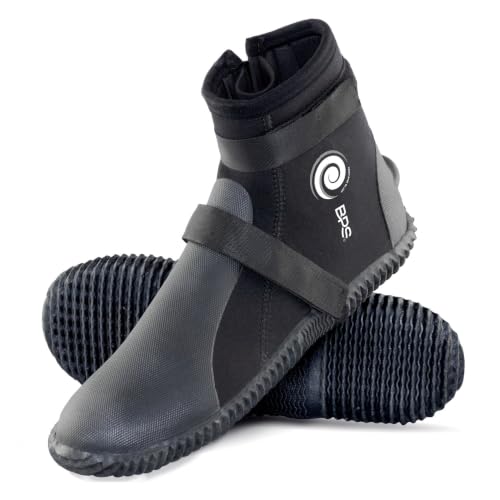
- Two Velcro straps help fine-tune fit and limit water entry
- Vulcanized rubber sole improves grip on wet surfaces
- Fin-friendly heel ridge helps keep fins secure
Best For: Users who want adjustable fit and dependable traction
Lightweight Travel Pick – CRESSI Ibiza 3mm Dive Boots for Warm Water
If you want dive boots for warm water that stay light and comfortable, the CRESSI Ibiza 3mm is built for easy packing and all-around water sports use. The super elastic neoprene offers a comfortable fit, while the anti-slip rubber sole and fin-strap heel design make it practical for scuba, snorkeling, and other open-heel fin setups.
Best For: Divers and travelers who want a lightweight 3mm boot with secure fin compatibility.
Pros:
- Lightweight design works well for travel and outdoor water sports
- Super elastic neoprene adds comfort around the foot
- Heel shape is designed to fit open-heel fins securely
- Full rubber sole helps with traction and slip resistance
Cons:
- 3mm thickness may be better for mild water temperatures than colder conditions
- Pull-on style does not include a zipper for quick entry
The Ibiza 3mm is a straightforward warm-water option if your priority is comfort, low weight, and dependable fin use. It is a practical boot for divers who want something simple, durable, and easy to rinse after each session.
Rugged Fin-Strap Option – XS Scuba 3 mm Tropic Boots
For dive boots for warm water with a tougher feel, the XS Scuba 3 mm Tropic Boots focus on protection, grip, and fin-strap support. The lightweight neoprene build, extended heel, and aggressive SureGrip vulcanized rubber sole make them a solid pick when you want dependable traction and a boot that stands up to regular use.
Best For: Divers who want a rugged 3mm boot with strong sole grip and fin-strap protection.
Pros:
- Extended heel helps protect the fin strap
- Aggressive SureGrip vulcanized rubber sole improves traction
- Lightweight neoprene keeps the boot practical for water use
- Glued and double blind stitched construction adds durability
Cons:
- No zipper is listed, so entry may be less convenient than zip-up boots
- 3mm thickness is more suited to warmer or moderate waters than cold dives
The Tropic Boots are a sensible warm-water choice if grip and durability matter as much as comfort. They are especially appealing for divers who want a simple, rugged boot with a secure fin-strap interface.
Flexible Beach-to-Boat Pick – Phantom Aquatics Enclave 3.0 Dive Boots
If you’re shopping for dive boots for warm water that can also handle beach and surf use, the Phantom Aquatics Enclave 3.0 offers a flexible 3mm short-boot design. Its nylon-2 neoprene build aims to balance comfort and movement, while the hard sole adds grip and protection against rocks, shells, and other hazards.
Best For: Snorkelers, surfers, and divers who want a flexible warm-water boot with a protective hard sole.
Pros:
- 3mm neoprene construction provides insulation for cooler warm-water sessions
- Flexible short-boot design supports movement
- Hard sole improves grip and underfoot protection
- Glued and blind-stitched seams add strength and water resistance
Cons:
- Zipper closure may not be necessary for buyers who prefer the simplest pull-on design
- Minimal cushioning may not suit users wanting a softer feel underfoot
This is a versatile option if you want one boot for snorkeling, surfing, kayaking, and casual diving. It is built more for protection and flexibility than plush cushioning, which fits many warm-water outings well.
Comfort-First Coldto-Warm Crossover – Mares Classic 5mm Dive Boots
The Mares Classic 5mm is a thicker choice for dive boots for warm water if you want extra insulation and a roomier feel. It uses 5mm neoprene, a wide toecap, and a leveled rubber sole, plus a side zip that makes it easier to get on and off before and after the dive.
Best For: Divers who want more insulation than a typical warm-water boot and value easy entry.
Pros:
- 5mm neoprene offers more insulation than standard 3mm warm-water boots
- Wide toecap supports natural toe movement
- Leveled rubber sole helps with stability and traction
- Side zip makes donning and doffing easier
Cons:
- Thicker 5mm build may feel warmer than needed in very warm water
- Heavier feel than lighter 3mm alternatives is likely
This model makes sense if your warm-water dives sometimes border on cooler conditions or you simply prefer a thicker boot. It trades some of the lightness of thinner options for extra insulation and a more substantial fit.
Compact Warmth Pick – Seaskin 3mm Neoprene Diving Boots
Seaskin 3mm Neoprene Diving Boots Mens Womens | Anti-Slip Rubber Sole Wetsuit Boots for Water Sports
Check Price On AmazonIf you want dive boots for warm water that still give a bit of insulation, the Seaskin 3mm neoprene boots are a practical low-bulk option. They’re built for scuba, snorkeling, kayaking, and similar water sports, with a zip closure that makes them easy to get on and off.
Best For: Divers and snorkelers who want a simple 3mm boot with easy entry and fin-friendly heels.
Pros:
- 3mm neoprene offers light warmth without feeling overly thick.
- Glued blind stitching is designed to help retain warmth underwater.
- Anti-slip rubber sole adds footing on wet surfaces.
- Rubber heel is shaped to work well with dive fins.
Cons:
- 3mm thickness is lighter than heavier cold-water boots.
- Best fit may depend on matching the listed men’s/women’s sizing.
Overall, this is a straightforward warm-water boot for people who value comfort, fin compatibility, and easy wear over maximum insulation. It covers the basics well for casual diving and other water activities.
All-Purpose Water Boot – Isla 5mm Neoprene Crew Boots
For dive boots for warm water, the Isla crew boot offers more coverage than a thin boot while staying versatile across diving, snorkeling, sailing, boating, and surfing. Its 5mm neoprene build, hard rubber sole, and zip closure make it a practical choice when you want warmth plus solid walking protection.
Best For: Water-sports users who want a warm, rugged boot that can handle rocks and open-heel fins.
Pros:
- 5mm neoprene provides more warmth than lighter boot options.
- Hard rubber sole is suited for walking on rocks and wet surfaces.
- Heel design helps fit open-heel fins and reduce strap slipping.
- Zipper from sole to ankle makes entry and exit easier.
Cons:
- Thicker 5mm construction may feel less minimal than 3mm boots.
- Rugged sole can be more boot-like than a soft neoprene slipper.
This is a strong pick if your warm-water outings include shore entries, rocky areas, or mixed-use boating days. It leans toward protection and versatility rather than the lightest possible feel.
Warm-Weather Comfort Choice – 3mm Neoprene Dive Boots
These dive boots for warm water focus on comfort, grip, and protection in a lighter 3mm package. They’re designed for scuba diving, snorkeling, kayaking, beach use, and other water activities, with materials and support features aimed at keeping your feet stable and comfortable.
Best For: People who want a versatile 3mm boot with extra traction and foot protection for active water days.
Pros:
- 3mm neoprene provides flexibility, softness, and thermal protection.
- Anti-slip rubber outsole helps on rocks, decks, and sandy areas.
- Reinforced toe cap and heel support add protection from debris.
- Flexible ankle opening makes the boots easier to put on and remove.
Cons:
- Warmth is geared toward 50°F to 62°F water rather than colder conditions.
- Size selection requires checking the product chart carefully.
For warm-water users who still want added grip and a more protective build, this model strikes a balanced middle ground. It’s especially appealing if you split time between water entries, boats, and beach terrain.
Warm-First Basic Boot – XUKER 3mm Neoprene Booties
If you want dive boots for warm water with a simple, practical fit, the XUKER 3mm neoprene booties cover the basics well. They use neoprene and nylon to add a thermal layer, while the anti-slip rubber sole helps on sand, beach entries, and wet surfaces. Just note that like most neoprene boots, they are not fully waterproof, so some water will enter and warm-water comfort matters more than sealing out every drop.
Best For: Divers and snorkelers who want lightweight 3mm booties for warm-water sessions, beach use, and general water sports.
Pros:
- 3mm neoprene helps create a thermal isolation layer to reduce heat loss.
- Anti-slip rubber sole adds grip for sand, beach, and wet surfaces.
- Thick neoprene and nylon offer basic protection from rocks and reef edges.
- Works for snorkeling, swimming, scuba diving, surfing, kayaking, and more.
Cons:
- Not totally sealed, so water will come inside.
- Protection is solid, but not a substitute for a heavy-duty rock boot.
For warm-water use, this is a straightforward bootie that focuses on comfort, traction, and moderate protection rather than advanced features. It makes sense if you want a versatile, no-fuss pair for casual diving and mixed water activities.
Comfort Fit Dive Boot – Aqualung Superlow 3mm Boots
For dive boots for warm water that still prioritize fit and foot protection, the Aqualung Superlow 3mm boots are built around comfort and easy wear. Their seam placement is meant to reduce chafing, and the anatomical footbed adds support while helping prevent excess water retention. The slip-resistant sole and reinforced zones make them a strong pick when you want a more refined boot for boat entries, shore exits, and regular scuba use.
Best For: Divers who want a comfortable 3mm warm-water boot with better support, easy entry, and reliable foot protection.
Pros:
- Few seams and smart seam placement help reduce chafing.
- Ergonomic footbed and outsole improve support and stability.
- Thick treaded sole with puncture-resistant felt inner layer protects against rocks and shells.
- YKK zipper and articulated cuff make them easier to put on and take off.
Cons:
- At 3mm, they are warm-water focused rather than built for colder conditions.
- They may be more boot than needed if you only want the lightest possible footwear.
This is a well-rounded warm-water option if comfort and protection matter as much as warmth. The boot feels designed for repeated use, especially for divers who want less rubbing and better stability around the water.
Adjustable Grip Boot – BPS Neoprene Dive Boots
If you are comparing dive boots for warm water and want a snugger fit, the BPS neoprene booties add extra adjustability that can help manage water entry. Two Velcro straps are used to tighten the top and secure the foot, while the hard vulcanized rubber sole is built for grip on wet surfaces. The fin-friendly heel ridge is also useful if you wear fins often, making these a practical choice for mixed water sports.
Best For: Divers and water-sports users who want adjustable, fin-friendly booties with a grippy sole.
Pros:
- Top Velcro strap helps reduce water entry and keep the zipper from riding down.
- Second strap across the foot reduces extra space and improves fit.
- Hard-wearing vulcanized rubber sole offers strong grip and control.
- Fin-friendly heel ridge helps prevent swim fins from slipping off.
Cons:
- Like all dive booties, they still let water in.
- Fit depends on using the size chart carefully.
This model stands out for adjustability, which can be helpful if you dislike loose booties or want more security around your fins. It is a solid choice when you want warm-water comfort with a more dialed-in fit.
How We Picked These Dive Boots for Warm Water
We focused on boots that make sense in warm conditions: thinner neoprene options, dependable grip, flexible construction, and easy compatibility with fins, boards, and rocky shore entries. We also looked for a mix of low-profile and more protective designs so there’s an option for different foot shapes and activity levels.
Quick Comparison
For the lightest feel, 3mm boots are usually the best starting point. If you want more cushion, a sturdier sole, or extra protection on rough entries, 5mm models are better. A few picks sit in the middle with a comfort-first fit, while others prioritize durability and toe protection for mixed-use water sports.
Key Buying Factors for Dive Boots for Warm Water
Thickness
In warm water, 3mm is the most versatile choice because it balances comfort, light insulation, and fin compatibility. Five-millimeter boots can still work well if you run cold, dive rocky areas, or want more padding. Heavier options are usually better reserved for cooler water or extra abrasion protection.
Sole Type and Grip
Look at whether the boot uses a soft, flexible sole or a thicker hard sole. Soft soles are easier for fin pockets and feel more natural for snorkeling and swimming. Harder soles offer better support on docks, rocks, and uneven entries, but they can feel bulkier.
Fit and Entry Style
A snug fit helps prevent bunching, heel lift, and blisters. Side zips, wide toe boxes, and easy-on collars can make a big difference if you plan to wear the boots frequently or have wider feet.
Protection and Versatility
If you’ll mostly be on sand or boat decks, prioritize comfort and drainage. If you’ll walk across shells, lava rock, or rough shorelines, choose more abrasion resistance and toe protection. The best Dive Boots for Warm Water are the ones that match your entry conditions, not just the temperature.
Who Should Buy Which Dive Boots for Warm Water?
Choose 3mm boots if you want the most balanced warm-water option for snorkeling and general scuba use. Choose 5mm boots if you need more cushioning, a firmer sole, or extra protection on rocky entries. If you are focused on easy fin use and a lighter feel, pick a low-profile design with a flexible sole. If your dives involve long walks to the water or mixed terrain, a more rugged boot will usually be worth the added bulk.
In short, match thickness, sole style, and fit to how you actually enter the water. That’s the simplest way to choose a pair that stays comfortable and useful all season long.