Shore diving asks more from your gear than boat diving does. You need boots that can handle rocky entries, slippery ramps, uneven sand, and long walks to the water without sacrificing comfort or fin control.
This roundup of dive boots for shore diving focuses on dependable traction, neoprene thickness, sole stiffness, and ankle support so you can choose a pair that fits your local conditions and diving style.
Best 10 Dive Boots for Shore Diving Picks for 2026
Warm-Water Shore Entry Pick
Cressi 3mm Neoprene Anti-Slip Boot

- 3mm neoprene for lighter warm-water use
- Anti-slip sole for wet shore entries
- Rubber heel and toe cap add durability
Best For: Warm-water shore divers needing a lighter boot
Rocky Shoreline Protector
SCUBAPRO Delta 5mm Diving Boot

- 5mm neoprene for added warmth
- Rubberized armor protects top and bottom
- Sturdy outsole and anti-slip tread aid rocky entries
Best For: Divers tackling rocky shorelines and wet decks
Versatile Shore-and-Rock Choice

- 5mm neoprene for warmth and comfort
- Hard rubber sole handles rocks and pebbles
- Heel design helps with open-heel fins
Best For: Divers needing one boot for shore entries and fins
Heavy-Duty Cold-Water Entry Boot
Phantom Aquatics Rapido Propel 6.5mm
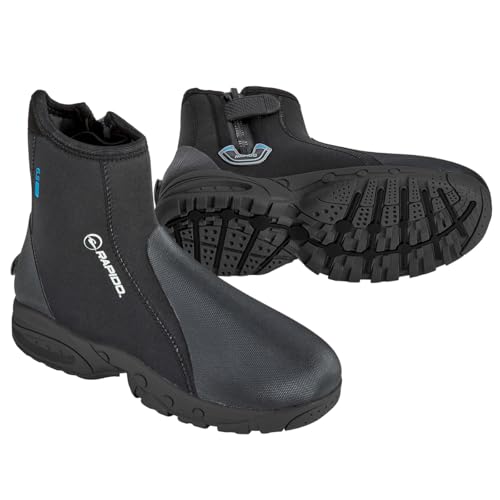
- 6.5mm neoprene for cold-water warmth
- Molded hard sole boosts protection
- Reinforced toe and heel improve durability
Best For: Cold-water shore divers needing rugged protection
Lightweight Shore Dive Boot

- 3mm super elastic neoprene
- Anti-slip rubber sole
- Open-heel fin friendly heel design
Best For: Lightweight shore entries, travel, and open-heel fins
Warmth-First Shore Dive Boot
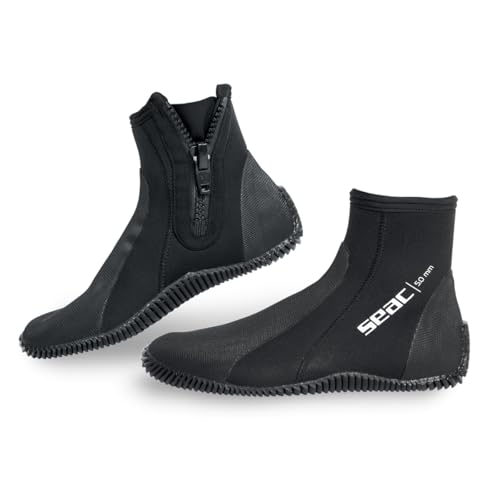
- 5mm neoprene for cooler water
- Side zip for easy on and off
- Semi-rigid anti-slip sole
Best For: Cooler shore dives and divers wanting extra warmth
Low-Cut Shore Dive Boot
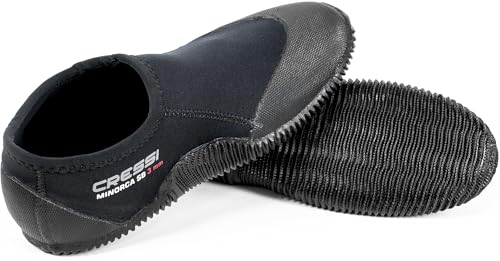
- 3mm low-cut neoprene build
- Rubber sole for traction on wet surfaces
- Heel and toe caps add durability
Best For: Warm-water shore dives and divers who want a shorter boot
Reinforced Warmth

- 5mm neoprene for added warmth
- Reinforced toe and heel for durability
- Rubber sole for grip on wet shore entries
Best For: Warm, protective shore-diving use
Balanced Comfort
3mm Zip Dive Boots with Heel Support

- 3mm neoprene for flexible comfort
- Anti-slip sole with rubberized protection
- Heel ridge helps keep fins secure
Best For: Moderate-temperature shore diving with easy on-off fit
Secure Fit
BPS Hard-Sole Neoprene Dive Boots
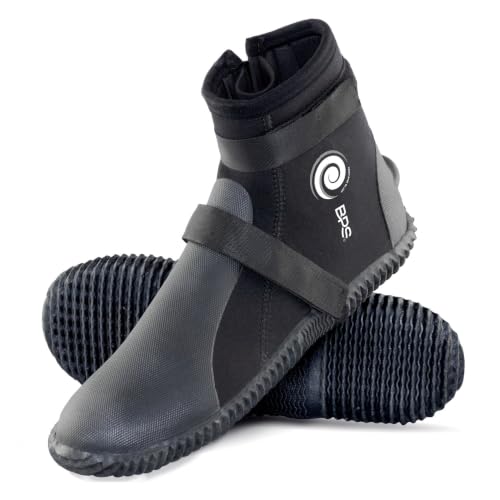
- Dual Velcro straps help limit water entry
- Vulcanized rubber sole for grip and control
- Fin-friendly heel ridge improves hold
Best For: Snug shore dives with extra fit control
Warm-Water Shore Entry Pick – Cressi 3mm Neoprene Anti-Slip Boot
Cressi Minorca Long 3 mm Crew Diving Boots, Black/Black, US Men's 11 • US Ladies' 12
Check Price On AmazonIf you want dive boots for shore diving in milder conditions, the Cressi Minorca is a straightforward 3mm option with a tall neoprene build and anti-slip sole. It is designed for a range of water sports, but the rubber heel and toe cap plus the zipper closure make it especially practical for short walks to the entry point and easy on/off between dives.
Best For: Warm-water shore divers who want a lighter boot with basic protection and easy wear.
Pros:
- 3mm neoprene keeps the boot lighter for warm-water use.
- Anti-slip sole helps on wet surfaces during shore entries.
- Rubber heel and toe cap add durability.
- Zipper closure makes donning and doffing easier.
Cons:
- 3mm thickness offers less insulation than heavier boots.
- Not the most rugged option for very rocky entries.
This is a solid no-fuss choice if your shore diving is mostly in warmer water and you value comfort over maximum protection. It should suit divers who want a durable, lighter boot that still handles slippery surfaces reasonably well.
Rocky Shoreline Protector – SCUBAPRO Delta 5mm Diving Boot
The SCUBAPRO Delta is a strong all-around option for dive boots for shore diving when the entry area is rocky or uneven. Its 5mm neoprene, rubberized protective armor, and sturdy flexible outsole are built to handle top and bottom impact protection, while the revised ankle diameter and contoured top improve fit and zipper ease.
Best For: Divers who need dependable protection on rocky shore entries and wet surfaces.
Pros:
- Rubberized armor adds top and bottom protection.
- Sturdy outsole helps on rocky shorelines.
- Anti-slip tread improves stability on boat decks.
- Full-cut design is made for a comfortable, cramp-free fit.
Cons:
- 5mm construction is thicker than lighter warm-water boots.
- More boot than you need for easy sandy entries.
If your shore dives involve rough terrain, this boot is built with that use case in mind. It balances warmth, protection, and practical fit features well for divers who want a more robust boot without going all the way to a heavy cold-water model.
Versatile Shore-and-Rock Choice – Cressi Isla 5mm Water Boots
For dive boots for shore diving that also need to handle rocks and pebbles, the Cressi Isla is a practical 5mm option. The hard rubber sole, anti-slip tread, and heel shape designed for open-heel fins make it useful for mixed entry conditions, while the zip from sole to ankle keeps it easy to put on and take off.
Best For: Divers who want a versatile boot for shore entries, rocks, and open-heel fins.
Pros:
- 5mm neoprene helps keep feet warm.
- Hard rubber sole is built for walking on rocks.
- Anti-slip sole suits wet surfaces.
- Heel design helps prevent fin strap slipping.
Cons:
- Harder sole may feel less flexible than lighter boots.
- Better suited to protection than minimal-pack travel.
This is a strong middle-ground boot for divers who split time between shore entries and rougher footing. If you need one pair that supports both walking in and fin compatibility, the Isla covers those basics well.
Heavy-Duty Cold-Water Entry Boot – Phantom Aquatics Rapido Propel 6.5mm
If your dive boots for shore diving need maximum underfoot protection, the Phantom Aquatics Rapido Propel is built for rugged conditions. The 6.5mm neoprene, molded hard sole, reinforced toe and heel, and heavy-duty YKK zipper make it a better fit for rough shore entries, wet docks, boat decks, shells, and colder water sessions.
Best For: Cold-water shore divers who need a rugged boot with strong protection and grip.
Pros:
- 6.5mm neoprene adds warmth for cold-water use.
- Molded hard sole offers strong underfoot protection.
- Reinforced toe and heel improve durability.
- Non-slip tread helps on rough ground and wet surfaces.
Cons:
- Bulkier than lighter boots for casual warm-water dives.
- Best suited to compatible open-heel fins that fit thicker boots.
This model makes sense when shore entries are rough and water temperatures are lower. It is the most protection-focused boot in this group, so it is a good pick if durability and warmth matter more than keeping gear light and flexible.
Lightweight Shore Dive Boot – Cressi Ibiza 3mm
If you want dive boots for shore diving that stay light, comfortable, and easy to pair with open-heel fins, the CRESSI Ibiza 3mm is a practical pick. The super elastic neoprene and anti-slip rubber sole make it a good fit for entry and exit over rough surfaces while still giving you the fin support you need in the water.
Best For: Divers who want a lightweight 3mm boot for shore entries, travel, and open-heel fins.
Pros:
- 3mm super elastic neoprene for comfort and flexibility
- Anti-slip rubber sole helps on wet or smooth surfaces
- Heel design fits open-heel fins and helps reduce strap slipping
- Lightweight build works well for travel and general water sports
Cons:
- Pull-on design may be less convenient than zip boots
- 3mm insulation is lighter than thicker cold-water options
Overall, this is a straightforward shore-diving boot when you value comfort, fin compatibility, and a lighter feel over maximum thermal protection. It keeps the design simple while still covering the key needs for recreational scuba and other water sports.
Warmth-First Shore Dive Boot – Seac Regular 5mm
For dive boots for shore diving in cooler water, the SEAC 5mm Regular focuses on warmth and walking comfort. Its 5 mm neoprene helps with lower temperatures, while the semi-rigid anti-slip sole is built to make shore walks and general movement more stable.
Best For: Divers who want extra thermal protection and a practical side-zip boot for shore entries.
Pros:
- 5mm neoprene adds thermal protection in cooler water
- Side zip makes the boots quick to put on and take off
- Semi-rigid anti-slip sole supports walking on shore surfaces
- Inside lining helps protect the foot when zipping
Cons:
- Thicker build may feel bulkier than 3mm options
- Not the lightest choice if you prioritize travel packing
This is a sensible pick if your shore dives start with a walk over rocks, sand, or other uneven ground and you want more insulation than a thinner boot provides. It balances comfort and traction with the added convenience of a side zipper.
Low-Cut Shore Dive Boot – Cressi Minorca Short 3mm
If you want dive boots for shore diving with a shorter, less bulky feel, the Cressi Minorca Short 3mm is designed to stay comfortable without overbuilding the boot. Its low-cut profile, anti-slip rubber sole, and fin-friendly construction make it a useful option for a range of water sports and easy shoreline entries.
Best For: Divers who prefer a short boot with good fin control and wet-surface traction.
Pros:
- 3mm neoprene keeps the boot relatively light and flexible
- Low-cut short design is less bulky than taller boots
- Rubber sole helps avoid slipping on wet or smooth surfaces
- Rubber heel and toe cap add strength and durability
Cons:
- Less thermal protection than 5mm boots
- Pull-on style may not suit everyone who wants quick entry
For warmer conditions or divers who want a compact boot for shore access, this model keeps things simple and functional. It is a practical choice when you want durability and traction without moving to a heavier, taller boot.
Reinforced Warmth – Mares 5mm Side-Zip Dive Boots
If you want dive boots for shore diving that prioritize warmth and protection, the Mares Trilastic 5mm boots are built for rocky entries, slippery exits, and colder water. The 5mm neoprene construction adds insulation, while the reinforced toe and heel help guard against abrasions when you’re walking over rough entry points.
Best For: Divers who need a warmer boot with strong protection for shore entries and exits.
Pros:
- 5mm neoprene adds warmth for cold-water dives.
- Reinforced toe and heel improve durability on rocky terrain.
- Rubber sole offers grip and foot protection on wet surfaces.
- Side zip makes them easier to put on and take off.
Cons:
- Thicker 5mm build may feel bulkier than lighter boots.
- Not the lightest option if you prefer minimal footwear.
Overall, this is a practical shore-diving boot if your priority is comfort, abrasion resistance, and reliable traction. The fin strap lug is a useful detail for keeping your fins steady during the dive.
Balanced Comfort – 3mm Zip Dive Boots with Heel Support
For dive boots for shore diving when you want a lighter feel than thick winter boots, this 3mm neoprene pair focuses on comfort, grip, and fin stability. The anti-slip sole, rubberized protective armor, and heel ridge are all aimed at making wet entries safer and helping your fins stay secure.
Best For: Divers who want a flexible 3mm boot with solid traction and easy zipper access.
Pros:
- 3mm neoprene keeps the boot flexible and comfortable.
- Anti-slip sole and rubberized armor add protection on wet surfaces.
- Heel ridge helps prevent swim fins or flippers from slipping off.
- Easy-grip zipper and top strap help secure the fit.
Cons:
- Less insulation than 5mm or 7mm alternatives.
- Best suited to moderate water temperatures rather than colder dives.
This is a good middle-ground option if you want shore-diving boots that are easier to move in while still offering practical protection. The added arch support and heel air bubble are nice comfort touches for longer sessions.
Secure Fit – BPS Hard-Sole Neoprene Dive Boots
These dive boots for shore diving are designed to reduce water entry and keep your feet snug, which is especially helpful when you’re moving over sand, rocks, or wet launch areas. The adjustable Velcro straps at the top and across the foot work with the hard-wearing rubber sole to improve security and traction.
Best For: Divers who want a snug, fin-friendly boot with strong grip and adjustable closure.
Pros:
- Adjustable Velcro straps help minimize water entry and stabilize fit.
- Hard-wearing vulcanized rubber sole offers grippy control.
- Fin-friendly heel ridge helps stop fins from slipping off.
- Stretchy neoprene construction aims for a cozy, secure feel.
Cons:
- All dive boots let some water in, according to the product notes.
- Fit depends on checking the size chart carefully.
For shore divers who value a locked-in feel, this model stands out for its double-strap approach and slip-resistant sole. It’s a practical pick when you want protection and control without giving up flexibility.
How We Picked the Best Dive Boots for Shore Diving
We focused on the features that matter most at the shoreline: secure footing, durable soles, thermal protection, and a fit that works well with open-heel fins. Models with reinforced toes, heel cups, and dependable closures scored better for repeated entry and exit over rocks, ladders, and rough pavement.
We also considered thickness options, because Dive Boots for Shore Diving need to balance warmth with flexibility. Thicker boots help in colder water and on abrasive entries, while thinner boots can feel lighter and improve fin feel in warmer conditions.
Quick Comparison
If you want the simplest shortcut, think in terms of conditions. Choose 3mm boots for warm-water shore dives, 5mm for most temperate conditions, and 6.5mm to 7mm when extra insulation or more rugged protection is a priority. Harder soles are better for rocky access, while softer soles usually feel more comfortable on longer swims and easier entries.
Best Use Cases at a Glance
- Warm water and light shore access: 3mm boots with flexible soles
- Most all-around shore diving: 5mm boots with balanced support
- Cold water or rough terrain: thicker neoprene and stiffer soles
Key Buying Factors for Dive Boots for Shore Diving
Sole type: A grippy rubber sole helps on wet rocks and ramps. Hard soles add protection and stability, while more flexible soles can improve comfort and packability.
Neoprene thickness: Match thickness to water temperature and the length of your surface walk. Thicker boots increase warmth, but they can feel bulkier in fins.
Ankle and heel support: Shore dives often mean more walking, so a boot with a secure heel cup and stable ankle area can reduce fatigue and improve fin placement.
Toe and heel reinforcement: These features help boots last longer when you scrape against rocks, ladders, or boat edges after a shore entry.
Closure and fit: Side zips make donning easier, especially if you wear thick socks or have a higher instep. A snug fit matters more than an extra millimeter of neoprene if you want good fin control.
Fin compatibility: Make sure the boot works with your open-heel fins. A bulky boot can be comfortable on land but awkward in the fin pocket if the sole or toe box is too large.
Who Should Buy Which Dive Boots for Shore Diving?
If you dive rocky coasts or colder shore sites, prioritize thicker boots with hard soles and reinforced protection. If you mainly dive mild-water beaches, a 3mm to 5mm boot with a reliable anti-slip sole may be the better everyday choice. Divers who want one versatile pair for travel and local use should look for a middle-ground 5mm option with a secure fit and enough stiffness for controlled finning.
In short, the best Dive Boots for Shore Diving are the ones that match your entry conditions, temperature, and fin system—not just the thickest pair available.