Choosing the right dive boots can make a bigger difference than many divers expect. The best pair improves fin fit, reduces chafing, adds traction, and helps keep your feet comfortable from entry to exit.
In this roundup of the best dive boots for scuba diving, we focused on practical features that matter in the water: neoprene thickness, sole grip, ankle coverage, zipper design, and versatility across conditions.
Best 10 Dive Boots for Scuba Diving Picks for 2026
Italian-Built All-Rounder
Cressi 3mm Tall Neoprene Boots

- 3 mm tall neoprene boot for multi-sport use
- Anti-slip sole with rubber heel and toe cap
- Zipper closure for easier on and off
Best For: Divers needing a durable, versatile boot for mixed water activities
Warm-Water Minimalist

- Low-cut 3 mm neoprene/nylon design
- Slip-on style with no zipper
- Ultra-grip rubber sole for light protection
Best For: Tropical divers and snorkelers who want a simple low-profile boot
Heavy-Duty Shore Walker

- 5 mm neoprene for added warmth and protection
- Hard rubber anti-slip sole for rocky surfaces
- Heel design works with open-heel fins
Best For: Divers needing more warmth and shore protection on rough entries
Lightweight Travel Pick

- 2 mm neoprene for lightweight comfort
- Low-cut ankle-high design for flexibility
- Non-slip sole and compact packable size
Best For: Traveling divers who want a light warm-water boot
Comfort-Focused Warm Water Boots
Aqualung Superlow 3mm Dive Boots

- 3mm neoprene for warm-water scuba use
- Few seams and ergonomic footbed improve comfort
- Grip sole, toe caps, and puncture layer boost protection
Best For: Warm-water divers who want comfort and easy entry
Cold-Water Comfort Pick

- 5mm neoprene adds warmth and flexibility
- Wide toecap improves comfort over longer dives
- Leveled sole and side zip support easy use
Best For: Cooler-water divers who want warmth and a roomier fit
Lightweight Fin-Compatible Boots

- Lightweight 3mm boot for travel and warm water
- Heel design works with open-heel fins
- Full non-slip sole adds grip and durability
Best For: Travel divers who need open-heel fin compatibility
Classic Comfort Pick
Mares 3mm Neoprene High Top Dive Boots
- 3mm neoprene for warmth and flexibility
- Wide toecap helps reduce pressure points
- Leveled sole and side zip improve usability
Best For: Divers wanting a comfortable, easy-to-use 3mm boot
Grip and Protection Pick
3mm Neoprene Dive Boots with Anti-Slip Sole

- Anti-slip rubber outsole improves wet-surface traction
- Reinforced toe cap and heel support add protection
- 3mm neoprene balances warmth and flexibility
Best For: Divers wanting versatile traction and extra foot protection
Secure Fit Pick
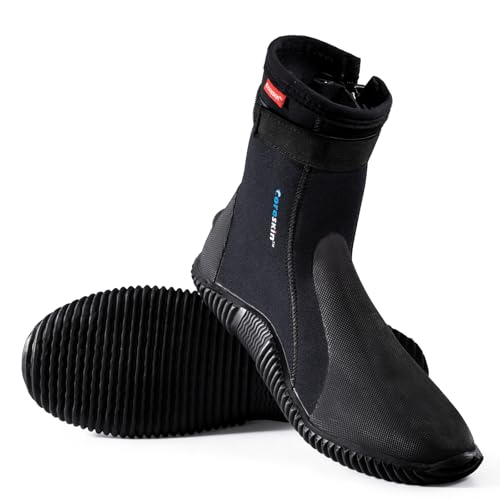
- Heel ridge helps keep fins from slipping
- Adjustable strap reduces water entry
- Triple-glued, double-blind-stitched build boosts durability
Best For: Divers who want fin security and an easy zipper fit
Italian-Built All-Rounder – Cressi 3mm Tall Neoprene Boots
Cressi Minorca Long 3 mm Crew Diving Boots, Black/Black, US Men's 10 • US Ladies' 11
Check Price On AmazonIf you want dive boots for scuba diving that can also handle snorkeling, rafting, and other water sports, the Cressi Minorca is a practical 3 mm option. Its tall neoprene build, zipper closure, and anti-slip sole make it a solid pick when you need foot protection, warmth, and easy on-off use.
Best For: Divers who want a durable, versatile tall boot for warm-to-moderate water and mixed water activities.
Pros:
- 3 mm neoprene construction for lightweight thermal protection
- Rubber heel and toe cap add extra durability
- Zipper closure makes entry and removal easier
- Anti-slip sole suits wet decks and shore entries
Cons:
- Tall boot design may feel bulkier than low-cut styles
- Designed mainly for general water sports rather than minimalist travel packing
This is a dependable do-it-all boot if you want a more protective fit without moving to a thicker cold-water model. It stands out for durability and broad use across different water activities.
Warm-Water Minimalist – SCUBAPRO Delta 3mm Short Boot
For dive boots for scuba diving in warm destinations, the SCUBAPRO Delta keeps things simple with a low-cut, zipper-free design. The 3 mm nylon/neoprene build and ultra-grip rubber sole give you basic protection without the stiff feel of heavier boots.
Best For: Tropical divers and snorkelers who prefer a light, low-profile boot that works well with adjustable fins.
Pros:
- Slip-on, zipper-free design is quick and easy to use
- 3 mm low-cut construction keeps the boot lightweight
- Ultra-grip rubber sole adds foot protection without stiffness
- Comfortable choice for warm-water diving and snorkeling
Cons:
- Low-cut style provides less ankle coverage than tall boots
- Not the warmest option for colder conditions
This boot is a strong fit if you value simplicity, packability, and comfort over maximum coverage. It’s a straightforward warm-water option that stays out of the way underwater.
Heavy-Duty Shore Walker – Cressi Isla 5mm Water Boots
When you need dive boots for scuba diving plus extra shore protection, the Cressi Isla is built for tougher conditions. Its 5 mm neoprene construction, hard rubber sole, and fin-friendly heel design make it a strong choice for rocky entries, canyoning, and cooler-water comfort.
Best For: Divers who want more warmth and traction for rocky shore entries, open-heel fins, and mixed water sports.
Pros:
- 5 mm neoprene offers more thermal protection than thinner boots
- Hard rubber anti-slip sole is suited to rocks and wet surfaces
- Heel shape is designed to work well with open-heel fins
- Zipper from sole to ankle makes them easier to put on and remove
Cons:
- Thicker build may feel less nimble than 2 mm or 3 mm boots
- Heavier-duty design is less compact for travel
This is a practical boot if your dives start from rough terrain or you want more warmth than a warm-water boot can offer. It balances protection, traction, and fin compatibility well.
Lightweight Travel Pick – Mares Equator 2mm Ankle Boots
If you’re shopping for dive boots for scuba diving and want the lightest, easiest-to-pack option here, the Mares Equator is worth a look. Its 2 mm neoprene build, low-cut ankle-high profile, and non-slip rubber sole are aimed at warm-water comfort and easy travel.
Best For: Traveling divers who want a light, flexible boot for warm-water diving, snorkeling, and boat use.
Pros:
- 2 mm neoprene keeps the boot lightweight and flexible
- Low-cut ankle-high design allows more freedom of movement
- Non-slip rubber sole provides traction on wet surfaces
- Compact size makes it easy to pack in a dive bag or suitcase
Cons:
- Thin construction offers less thermal protection than thicker boots
- Low-cut profile gives less coverage than tall dive boots
This model makes sense if portability and comfort matter more than maximum insulation. It’s the most travel-friendly option in the group and a clean fit for warmer destinations.
Comfort-Focused Warm Water Boots – Aqualung Superlow 3mm Dive Boots
If you want dive boots for scuba diving that prioritize comfort and easy entry, the Aqualung Superlow 3mm is built around a low-chafe fit. Its seam placement, ergonomic footbed, and slip-resistant sole make it a practical choice for warm-water dives, boat entries, and general recreational use.
Best For: Divers who want a comfortable 3mm boot with strong foot protection and easy on/off access.
Pros:
- Few-seam construction helps reduce chafing and irritation.
- Ergo footbed and outsole are shaped for natural support and stability.
- Thick treaded sole with puncture-resistant felt layer adds foot protection.
- Deep-grip sole and reinforced toe and heel caps improve traction and durability.
Cons:
- 3mm thickness is better suited to warmer water than colder conditions.
- May be more boot than needed if you only want a minimal fin sock.
Overall, this is a well-rounded option for divers who value comfort, protection, and dependable grip in a 3mm boot. The zipper and articulated cuff also make it easier to get on and off before and after the dive.
Cold-Water Comfort Pick – Mares Classic 5mm Dive Boots
For dive boots for scuba diving in cooler conditions, the Mares Classic 5mm focuses on warmth, comfort, and steady footing. The thicker neoprene construction, wide toecap, and leveled sole make it a solid everyday boot for divers who want reliable insulation and a traditional side-zip design.
Best For: Divers looking for a warmer 5mm boot with a roomy toe area and stable sole.
Pros:
- 5mm neoprene adds insulation for cooler water dives.
- Wide toecap allows more natural toe movement and reduces pressure points.
- Leveled rubber sole provides stability and traction on slippery surfaces.
- Side zip makes donning and doffing quick and convenient.
Cons:
- Thicker 5mm build may feel bulkier than 3mm options.
- Less focused on low-profile warmth than lightweight travel boots.
This is a straightforward, functional choice if warmth and support matter more than minimal bulk. It should fit well for regular scuba use when you expect cooler water or want a little extra insulation.
Lightweight Fin-Compatible Boots – CRESSI Ibiza 3mm Dive Boots
The CRESSI Ibiza 3mm is a lightweight option for dive boots for scuba diving when you want comfort, travel-friendly sizing, and fin compatibility. Its super elastic neoprene, non-slip full sole, and heel design for open-heel fins make it a practical match for recreational water sports and scuba trips.
Best For: Divers who use open-heel fins and want a lightweight 3mm boot for travel or warm-water use.
Pros:
- Lightweight design is suitable for travel and outdoor water sports.
- Super elastic neoprene is made for comfort and flexibility.
- Heel shape is designed to work with open-heel fins.
- Full non-slip sole adds traction and durability.
Cons:
- 3mm thickness offers less insulation than 5mm boots.
- Pull-on design may be less convenient than zippered options.
For divers who care about fin fit and keeping things light, this boot is easy to justify. It balances comfort and grip well, especially if your dives are mostly warm-water or travel-oriented.
Classic Comfort Pick – Mares 3mm Neoprene High Top Dive Boots
If you want dive boots for scuba diving that feel familiar and straightforward, these Mares 3mm neoprene boots focus on comfort, warmth, and simple handling. The wide toecap, leveled sole, and side zip make them a practical option for divers who want reliable footing and easy on-and-off use.
Best For: Divers who want a comfortable, easy-to-wear 3mm boot with a stable sole and roomy toe box.
Pros:
- 3mm neoprene construction offers insulation and flexibility for cooler water.
- Wide toecap helps reduce pressure points and supports natural toe movement.
- Leveled rubber sole adds stability and traction on slippery surfaces.
- Side zip makes gearing up and taking them off more convenient.
Cons:
- Designed as a straightforward boot, so it does not add extra specialty features.
- The 3mm build may be less suited to colder conditions than thicker boots.
Overall, this is a solid no-nonsense choice if you want dependable dive boots for scuba diving with a balanced mix of comfort, grip, and convenience. It is a good fit for everyday recreational use where easy entry and steady footing matter.
Grip and Protection Pick – 3mm Neoprene Dive Boots with Anti-Slip Sole
These dive boots for scuba diving are built for comfort, grip, and extra protection in and out of the water. The 3mm neoprene construction, anti-slip rubber outsole, and reinforced toe cap make them a versatile option for swimmers and water sports users who want dependable footing and a secure feel.
Best For: Divers and water sports users who want a versatile boot with strong traction and added foot protection.
Pros:
- 3mm neoprene provides flexibility, softness, and thermal protection.
- Anti-slip rubber outsole helps on wet decks, rocks, and sandy surfaces.
- Reinforced toe cap and heel support add protection against sharp debris.
- Laminated inner layer helps keep the foot from slipping inside the boot.
Cons:
- Fit depends on careful sizing, so measuring against the size chart matters.
- May be more boot than needed if you only want a basic dive shoe.
As a multi-purpose water boot, this model stands out for secure traction and all-around protection. It is a practical pick if you want one pair that can handle scuba diving, snorkeling, kayaking, and beach use without feeling overly specialized.
Secure Fit Pick – 3mm Tall Zippered Dive Boots
If your priority is a boot that stays secure with fins, these dive boots for scuba diving are designed with a tall zippered build and a ridge at the heel to help keep flippers from slipping off. The 3mm neoprene, anti-slip sole, and adjustable top strap make them a strong all-around option for water activities.
Best For: Divers who want a secure-fitting boot with fin stability and easy zipper access.
Pros:
- 3mm neoprene offers flexibility and durable comfort.
- Heel ridge helps reduce fin or flipper slippage.
- Adjustable top strap helps limit water entry and keep the zipper in place.
- Triple-glued, double-blind-stitched construction adds durability.
Cons:
- Requires careful sizing for the best fit, especially when worn with socks.
- The secure, structured build may feel more substantial than simpler boots.
For divers who value retention and structure, this is a well-thought-out boot that focuses on secure fit and protection. It makes sense for scuba diving and other water sports where you want the boot to stay put and work smoothly with fins.
How We Picked These Dive Boots for Scuba Diving
We prioritized boots that balance comfort, durability, and function for real-world diving. That means a secure but not overly tight fit, soles that work on wet decks and rocky entries, and neoprene options suited to different water temperatures. We also looked for designs that pair well with common open-heel fins.
Quick Comparison
As a general rule, 2mm to 3mm boots are better for warm water, boat diving, and travel, while 5mm boots are a stronger choice for colder conditions or longer surface intervals. Taller boot cuts can add ankle support and protection, while low-cut styles are usually easier to slip on and pack.
Key Buying Factors for Dive Boots for Scuba Diving
Neoprene Thickness
Thickness affects warmth and flexibility. Lighter boots move more easily and dry faster, but they offer less insulation. Thicker boots provide more thermal protection and cushioning, though they can feel bulkier inside fins.
Sole Type and Traction
A grippy rubber sole helps on ladders, docks, and boat decks. If you expect shore entries or uneven terrain, look for more protective soles with better underfoot support.
Fit and Closure
A proper fit should feel snug without pinching. Zippered boots are easier to don and doff, while pull-on styles can reduce bulk. If you use open-heel fins, make sure the boot height and sole thickness still allow a secure fin pocket fit.
Ankle Coverage and Toe Protection
Higher-cuff designs can improve stability and reduce rub from fins. Reinforced toe boxes and heel sections are useful if you walk over rocks or need extra protection during entries and exits.
Who Should Buy Which Dive Boots for Scuba Diving?
If you dive mostly in warm water, look for thinner, low-bulk Dive Boots for Scuba Diving that prioritize comfort and easy fin compatibility. If you dive in colder water or want more protection on shore entries, choose a thicker boot with a sturdier sole and more ankle coverage.
Travel divers often benefit from lighter 2mm or 3mm options, while frequent shore divers and colder-water divers are usually better served by 3mm to 5mm boots with stronger grip and a more protective build. Match the boot to your typical diving conditions, fin style, and how much walking you do before and after the dive.