If you’re choosing carbon freediving fins for deep diving, the right pair can make every kick more efficient, reduce fatigue, and help you stay streamlined on long descents.
This roundup focuses on 10 strong options for divers who want better power transfer, control, and comfort without overbuying features they won’t use.
Best 10 Carbon Freediving Fins for Deep Diving Picks for 2026
Best for Serious Depth Training
Pure Carbon Fiber Freediving Fins

- Carbon fiber/epoxy blades for efficient power transfer
- 20-degree angle for smooth, controlled kicking
- Soft, medium, and hard stiffness options
Best For: Experienced freedivers and spearfishers who want performance-oriented carbon fins for deeper sessions.
Best for Easy-Kick Training

- Soft blade reduces leg fatigue on long dives
- Full-foot pocket fits barefoot or with neoprene socks
- Made in Italy with a comfortable freediving design
Best For: Freedivers who want an easy-kicking, comfort-first fin for training and longer sessions.
Best Pure Carbon Performance
Camo Pure Carbon Freediving Blades

- 100% carbon fiber + epoxy resin construction
- 20-degree blade angle for efficient kicking
- Soft, medium, and hard stiffness options
Best For: Freedivers and spearfishers seeking responsive carbon blades for deeper dives.
Best for Control

- Responsive three-material construction
- Comfortable soft foot pocket
- Good for deep skin-diving and training
Best For: Freedivers seeking a high-control long fin with a responsive, comfortable feel.
Best Pure Carbon Blade
Pure Carbon Fiber Freediving Blades

- 100% carbon fiber + epoxy resin construction
- 20-degree angle for efficient kicking
- Soft, medium, and hard stiffness options
Best For: Divers seeking high-response blades for deeper freedives and spearfishing.
Best for Lightweight Travel

- Lightweight and travel-friendly
- Soft full-foot pocket for comfort
- Durable EVA blade for recreational use
Best For: Travelers and casual snorkelers who want a comfortable, easy-to-pack fin.
Best for Custom Fit

- Carbon-fiber/fiberglass blade with epoxy resin construction
- 20-degree angle for a smoother kicking position
- Soft, medium, and hard stiffness options
Best For: Divers who want a performance-oriented carbon fin and can take the time to size the foot pocket correctly.
Best Modular Upgrade
Cressi Gara Modular Impulse Fins

- Interchangeable blades support skill progression and customization
- 29-degree blade angle promotes efficient, low-effort kicking
- Comfort-focused foot pocket with strong power transfer
Best For: Divers who want a versatile, upgrade-friendly fin for deeper freediving sessions.
Best for Blade Customization
Ocean Pure Carbon Freediving Fins

- Carbon-fiber and epoxy blade construction
- 20-degree blade angle for efficient kicking
- Multiple stiffness options for different body weights
Best For: Freedivers who want a tuned carbon fin and are comfortable choosing sizing carefully.
Best Simple Pick
Cressi Gara Modular Impulse Turbo Fins
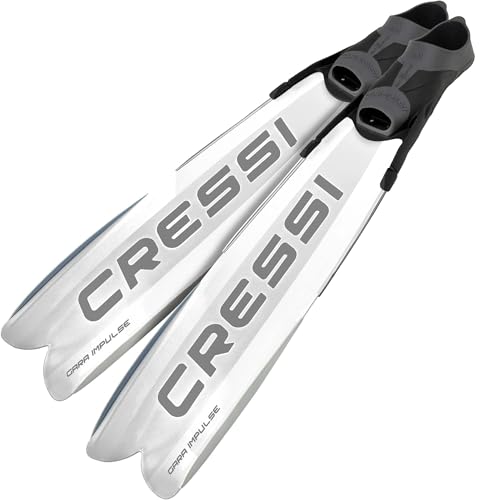
- 29-degree blade angle for efficient kicking
- Interchangeable blades: polypropylene, fiberglass, or carbon
- Wider foot pocket with cut-to-fit insoles
Best For: Intermediate to advanced divers who want a fin system that can evolve with their skills.
Best for Serious Depth Training – Pure Carbon Fiber Freediving Fins
Leaderfins Pure Carbon Fiber Freediving and Spearfishing Fins (EU 43-44 / US 9-10, Medium Stiffness)
Check Price On AmazonBuilt for divers who want efficient propulsion and a responsive feel, these carbon freediving fins for deep diving combine a carbon-fiber/epoxy blade with a 20-degree angle for smooth kick mechanics. They are a strong option if you want a performance-oriented fin for deeper sessions and spearfishing use, but sizing and stiffness selection matter.
Best For: Experienced freedivers and spearfishers who want lightweight carbon blades for deeper, more efficient dives.
Pros:
- Carbon fiber and epoxy blade construction for a lively, high-performance feel
- 20-degree blade angle supports efficient kicking and comfort in the water
- Multiple stiffness options help match fin response to body weight and style
Cons:
- Foot pocket sizing requires careful checking against the brand’s guide
- Import tax or duty may apply depending on your location
Overall, these are aimed at divers who prioritize performance over simplicity. If you already know your fit and stiffness preferences, they can be a strong pick among carbon freediving fins for deep diving.
Best for Easy-Kick Training – Cressi Gara 3000 Soft Fins
CRESSI Gara 3000 LD, Black, us man 11/12.5 | us Lady 12/13.5 | EU 46/47, BH135146
Check Price On AmazonIf you want carbon freediving fins for deep diving but prefer a softer, more forgiving feel, the Cressi Gara 3000 is a smart alternative. Its long blade is designed to move water efficiently with less leg effort, making it a practical choice for long sessions, training dives, and newer freedivers building technique.
Best For: Freedivers who value comfort, easy kicking, and a lighter workload over maximum stiffness.
Pros:
- Soft long blade helps reduce fatigue on extended dives
- Full-foot pocket feels secure and comfortable barefoot or with neoprene socks
- Cressi’s 3-material molding improves flexibility in the foot area
- Made in Italy with a proven freediving-focused design
Cons:
- Not a carbon blade, so it won’t deliver the same snap or efficiency as high-end carbon freediving fins
- Soft flex is less ideal for divers who want maximum power in very deep conditions
Overall, the Gara 3000 is a comfort-first fin that still performs well for freediving and scuba use. If you’re comparing carbon freediving fins for deep diving, this model stands out as a lower-effort option for technique work, longer dives, and buyers who want a gentler ride.
Best Pure Carbon Performance – Camo Pure Carbon Freediving Blades
Leaderfins Camo Pure Carbon Freediving and Spearfishing Blades (Medium Stiffness)
Check Price On AmazonIf you want carbon freediving fins for deep diving with a true performance-first feel, these Camo Pure Carbon blades are built around 100% carbon fiber with epoxy resin and a 20-degree angle for efficient power transfer. They’re aimed at divers who want a responsive blade and are willing to match stiffness to body weight and diving style.
Best For: Freedivers and spearfishers who want lightweight, high-performance carbon blades for deeper, more efficient dives.
Pros:
- 100% carbon fiber construction for a stiff, responsive feel
- 20-degree blade angle helps support efficient kicking mechanics
- Multiple stiffness options make it easier to match your body weight
- Good choice for divers building a dedicated deep-diving setup
Cons:
- Foot pocket compatibility needs to be confirmed before buying
- Import tax or duty may add extra cost
- Sold as blades, so you’ll need compatible pockets and assembly
For divers comparing carbon freediving fins for deep diving, this model stands out for its pure carbon build and tuning options, but it’s best suited to buyers who already know their fit and stiffness needs. If you want a purpose-built blade rather than an all-in-one fin, it’s a strong performance-oriented pick.
Best for Control – Cressi Gara 2000 HF Long Fins
If you want carbon freediving fins for deep diving-style performance without moving to a full carbon blade, the Cressi Gara 2000 HF is a practical pick. Its three-material construction aims to balance responsiveness, comfort, and control, making it a strong option for divers who value efficient thrust and a stable feel underwater.
Best For: Freedivers who want a responsive long fin with good control, especially for deep skin-diving and mixed-use training.
Pros:
- Three-material build for a responsive, efficient kick
- Soft foot pocket helps transfer power comfortably
- Works well with or without neoprene socks
- Suitable for deep skin-diving and some scuba use
Cons:
- Not a true carbon blade fin
- May be less specialized than top-tier competition models
For buyers comparing carbon freediving fins for deep diving, this model stands out as a durable, high-control alternative that emphasizes comfort and reactivity over pure exotic-material performance. It’s a smart choice if you want long-fin efficiency with a more forgiving feel.
Best Pure Carbon Blade – Pure Carbon Fiber Freediving Blades
If you want carbon freediving fins for deep diving with a strong, efficient kick, these pure carbon fiber blades are built for serious performance. The 20-degree angle and stiffness options make it easier to match the blade to your body weight and diving style, while the carbon/epoxy construction keeps the setup responsive underwater.
Best For: Divers who want lightweight, high-response blades for deeper freedives and spearfishing, and are willing to match them with compatible foot pockets.
Pros:
- 100% carbon fiber + epoxy resin construction for excellent responsiveness
- 20-degree blade angle supports efficient kicking mechanics
- Available in soft, medium, and hard stiffness to suit different body weights
- Good fit for dedicated freediving and spearfishing setups
Cons:
- Foot pocket compatibility needs to be confirmed before buying
- Import tax or duty may be the buyer’s responsibility
- Blade-only purchase means you’ll need the rest of the fin setup separately
For divers comparing carbon freediving fins for deep diving, this blade set stands out for its true carbon build and stiffness choices rather than extra frills. It’s a practical pick if you want performance first and are comfortable dialing in the right pocket and flex match.
Best for Lightweight Travel – Cressi Clio Full Foot Fins
If you want an easy-going fin for snorkeling, pool work, or casual underwater recreation, the Cressi Clio is a practical alternative to heavier carbon freediving fins for deep diving. It is light, comfortable, and simple to use, with a soft full-foot pocket and an EVA blade that adds durability and responsive kickback for recreational sessions.
Best For: Snorkelers, travelers, and beginner divers who want a lightweight full-foot fin for relaxed water use.
Pros:
- Very lightweight, making it easy to pack for trips
- Soft full-foot pocket feels comfortable and slips on easily
- EVA blade is durable and offers decent responsiveness
- Long-running model with a proven track record
Cons:
- Not designed for serious deep freediving performance
- Less powerful than carbon freediving fins for deep diving
- Best suited to recreational use rather than technical diving
The Clio is a smart pick if comfort and portability matter more than max performance. It won’t replace carbon freediving fins for deep diving, but for casual snorkeling and travel-friendly use, it delivers reliable performance at an easygoing level.
Best for Custom Fit – Carbon Fiber Freediving Fins
Leaderfins Carbon Fiber Freediving and Spearfishing Fins (EU 43-44 / US 9-10, Medium Stiffness)
Check Price On AmazonIf you want carbon freediving fins for deep diving with a performance-first build, this model is worth a close look. The carbon-fiber and fiberglass blade aims to balance responsiveness and efficiency, while the 20-degree angle is designed to help streamline the kick on deeper descents.
Best For: Divers and spearfishers who want a carbon-blade fin with multiple stiffness options and are willing to size carefully for the foot pocket fit.
Pros:
- Carbon fiber, fiberglass, and epoxy resin blade for a lightweight performance feel
- 20-degree blade angle supports a more natural kicking motion
- Multiple stiffness options: soft, medium, and hard
- Good fit for both freediving and spearfishing use
Cons:
- Foot pockets require careful sizing and are not like regular shoes
- Import tax or duty may apply
- Less beginner-friendly if you are unsure about fin stiffness selection
For divers comparing carbon freediving fins for deep diving, this is a strong option if you value blade construction and tuning the stiffness to your body weight. The main tradeoff is fit precision, so double-check sizing before you buy.
Best Modular Upgrade – Cressi Gara Modular Impulse Fins
If you want carbon freediving fins for deep diving but prefer a more affordable, adaptable setup, the Cressi Gara Modular Impulse is a smart alternative. Its 29-degree blade angle, interchangeable blade system, and efficient power transfer make it a practical option for divers who want a fin that can grow with their skills.
Best For: Freedivers who want a versatile, upgrade-friendly fin with strong efficiency and control for deeper sessions.
Pros:
- 29-degree blade angle helps reduce kick effort and improve alignment underwater
- Modular design lets you swap blades as your diving needs or skills change
- Self-adjusting foot pocket aims for a balance of comfort and power transfer
- Rondine tail and side ribs improve control and directional stability
Cons:
- Polypropylene blades won’t match the snap or lightness of true carbon blades
- Not the best choice for divers who want a top-end performance-only fin
Overall, this is a well-rounded pick for divers comparing carbon freediving fins for deep diving and deciding whether modular versatility matters more than maximum stiffness. It offers solid performance without locking you into a single blade setup.
Best for Blade Customization – Ocean Pure Carbon Freediving Fins
Leaderfins Ocean Pure Carbon Freediving and Spearfishing Fins (Medium, EU 43-44 / US 9-10)
Check Price On AmazonFor divers shopping for carbon freediving fins for deep diving, the Ocean Pure Carbon Freediving and Spearfishing Fins stand out for their epoxy-resin and carbon-fiber blade construction, 20-degree angle, and multiple stiffness options. They’re a strong pick if you want a tuned fin feel rather than a one-size-fits-all setup, but sizing matters because the foot pockets are not like regular shoes.
Best For: Freedivers and spearfishers who want a carbon fin with selectable stiffness and are willing to follow the size guide carefully.
Pros:
- Carbon-fiber and epoxy blade for a responsive, efficient kick
- 20-degree blade angle helps support a natural swimming position
- Stiffness options let you match the fins to body weight and diving style
Cons:
- Foot pocket sizing requires careful attention to the manufacturer’s guide
- Import tax or duty may be the buyer’s responsibility
Overall, these fins are a smart fit for divers who value performance tuning and carbon construction over plug-and-play convenience. If you’re comparing carbon freediving fins for deep diving, the adjustable stiffness range makes this model especially useful for dialing in the right balance of power and comfort.
Best Simple Pick – Cressi Gara Modular Impulse Turbo Fins
If you want carbon freediving fins for deep diving but also want room to grow, the Cressi Gara Modular Impulse Turbo is a smart modular option. Its angled blade is designed to improve kick efficiency, and the interchangeable blade system lets you upgrade or swap materials as your diving style progresses.
Best For: Intermediate to advanced freedivers and spearfishers who want a versatile fin they can adapt over time.
Pros:
- 29-degree blade angle helps reduce effort on longer kicks.
- Modular design accepts polypropylene, fiberglass, or carbon fiber blades.
- Wider foot pocket and included insoles help improve fit with or without neoprene socks.
- Made in Italy by a long-established freediving brand.
Cons:
- Not a true carbon-blade fin out of the box.
- Wider foot pocket may feel roomy for some divers without socks.
- Better suited to experienced users than absolute beginners.
For buyers comparing carbon freediving fins for deep diving, this model stands out more for flexibility than for a pure carbon-performance setup. It’s a practical pick if you want a fin that can start simple and be upgraded as your diving needs become more demanding.
How We Picked the Best Carbon Freediving Fins for Deep Diving
We focused on Carbon Freediving Fins for Deep Diving that balance stiffness, responsiveness, comfort, and build quality. Priority went to blades that support efficient propulsion, plus foot-pocket designs that help maintain a secure fit with minimal drag. We also considered whether a fin suits training, spearfishing, or deeper recreational dives.
Quick Comparison
In general, stiffer carbon blades favor experienced divers who want maximum transfer and speed, while slightly softer options can feel easier on the legs during longer sessions. Modular designs are a smart choice if you want to tune performance over time. Full-carbon models usually deliver the sharpest response, while blade-and-pocket systems may offer more flexibility and value.
Key Buying Factors for Carbon Freediving Fins for Deep Diving
Blade Stiffness
Stiffness changes how much effort each kick requires. More stiffness can improve thrust and depth efficiency, but only if your technique and leg strength can support it. If you’re unsure, avoid going overly stiff on your first pair.
Fit and Foot Pocket Comfort
A secure foot pocket matters as much as the blade. Poor fit can cause hotspots, wasted energy, and cramping. Look for a snug heel hold, the right sock thickness compatibility, and enough comfort for long sessions.
Blade Length and Responsiveness
Longer blades can provide smoother propulsion, but they also add leverage and demand control. For deep diving, responsive blades that recover quickly often feel more efficient than simply choosing the longest fin available.
Material and Construction
True carbon construction is prized for light weight, snap, and energy return. If you’re comparing Carbon Freediving Fins for Deep Diving, check whether the blades are pure carbon or carbon composite, since that can affect feel, durability, and price.
Modular Vs. Fixed Designs
Modular fins are useful if you want to swap blades as your goals change. Fixed designs can be simpler and may offer a more direct performance feel, which many experienced divers prefer.
Who Should Buy Which Carbon Freediving Fins for Deep Diving?
If you’re a beginner or still refining your technique, start with a more forgiving setup rather than the stiffest carbon blade. Intermediate divers often benefit most from a balanced carbon fin that delivers efficiency without feeling punishing. Advanced divers, especially those doing deeper dives or regular spearfishing, may prefer a more responsive or stiffer option for stronger propulsion and tighter control.
If versatility matters, choose a modular fin. If pure performance is the priority, look for a dedicated carbon blade and a foot pocket that matches your dive style and sock thickness.