If you ride with Komoot, the right bike computer can make route-following faster, clearer, and far less distracting. The best models turn turn-by-turn guidance into a glanceable, handlebar-friendly experience.
In this roundup, we focus on bike computers with Komoot support, prioritizing navigation quality, display visibility, battery life, and everyday usability for road, gravel, commuting, and e-bike riders.
Best 10 Bike Computers with Komoot Picks for 2026
Premium Navigation Flagship
Garmin Edge 1050 Premium Cycling Computer

- 3.5-inch vivid touchscreen with responsive course creation
- Road hazard alerts, live locations, and group ride messaging
- ClimbPro, power guide, and adaptive coaching support
Best For: Riders who want a high-end GPS bike computer with advanced navigation and training tools
Affordable Route Helper
iGPSPORT BSC500 Touchscreen Bike Computer

- Imports routes from Komoot, Strava, and other sources
- 3.3-inch touchscreen with button backup
- Voice navigation, turn reminders, and climbing planning
Best For: Riders who want a touchscreen GPS computer with route import support and voice guidance
Premium Ride Command Center
Wahoo ELEMNT ACE Cycling Computer

- 3.8-inch touchscreen with press, pinch, and swipe control
- Ready-To-Ride Dashboard simplifies pre-ride setup
- Pressure sensor adds live AirBoost and AirDrag metrics
Best For: Riders who want a premium GPS computer with a large display and app-based control
Compact Offline Navigator
iGPSPORT BSC300T GPS Bike Computer
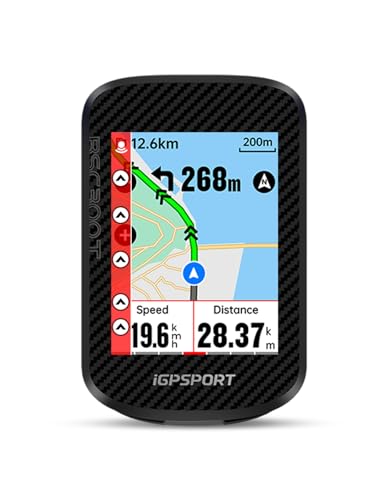
- Supports Komoot route sharing plus offline map download
- Off-course warning and route preview for navigation
- ANT+ and Bluetooth compatibility for common sensors
Best For: Riders who want a small GPS bike computer with offline maps and route-sharing support
Premium Navigation Pick
Wahoo ELEMNT Bolt V3 GPS Cycling Computer

- Imports Komoot routes automatically
- Turn-by-turn prompts with LED and audio cues
- Supports live tracking and ANT+ radar
Best For: Compact, reliable Komoot navigation
Best Value Route Sync
iGPSPORT BSC200S GPS Bike Computer

- Komoot route import and one-touch navigation
- 2.4-inch color display with 25-hour battery
- IPX7 waterproof and sensor-friendly
Best For: Budget-minded riders wanting easy route import
Exploration Upgrade
Wahoo ELEMNT ROAM V3 GPS Cycling Computer

- Komoot route import with turn-by-turn guidance
- Dual-band GPS for tougher riding environments
- 2.8-inch touchscreen for easier map viewing
Best For: Long rides and riders wanting a larger screen
Compact GPS Pick
CYCPLUS Wireless GPS Bike Computer G1

- Fast GPS positioning with basic ride metrics
- Automatic backlight and tempered-glass screen
- Wireless IPX6 build with 50+ hour battery
Best For: Riders wanting a simple GPS computer for everyday ride tracking
Navigation and Training Pick

- Imports routes from Komoot and Strava
- Dual-band GPS with rerouting and saved-point navigation
- 3.5-inch touchscreen plus climb and training tools
Best For: Route-focused cyclists who want Komoot support and navigation features
Touchscreen Value Pick
COOSPO Color Touchscreen GPS Bike Computer CS600

- Color touchscreen with auto-backlight
- Route navigation plus breadcrumb trail support
- IPX7 waterproofing and 36-hour battery
Best For: Cyclists who want a touchscreen GPS computer with navigation and app sync
Premium Navigation Flagship – Garmin Edge 1050 Premium Cycling Computer
If you want bike computers with komoot-style route planning flexibility plus a premium onboard experience, the Garmin Edge 1050 is built for riders who value navigation, training, and live ride awareness. Its vivid 3.5-inch touchscreen, built-in speaker, and detailed cycling metrics make it a strong choice for long rides, event prep, and everyday riding where fast access to maps and prompts matters.
Best For: Riders who want a high-end GPS bike computer with advanced navigation, coaching, and smart ride features.
Pros:
- Large 3.5-inch color touchscreen with responsive on-device course creation.
- Supports road hazard alerts, live locations, group ride messaging, and incident detection with a compatible smartphone.
- Built-in speaker adds workout and navigation prompts plus an on-device bike bell.
- Strong training tools, including ClimbPro, power guide, and adaptive coaching with compatible sensors.
Cons:
- Premium feature set may be more than casual riders need.
- Some connected ride features require a compatible smartphone and Garmin Connect.
- Battery life drops from up to 60 hours in battery saver mode to up to 20 hours in demanding use.
The Edge 1050 is best viewed as a top-tier all-rounder: it combines navigation, performance data, and smart connectivity in one polished unit. If you want a feature-rich computer that can handle serious training and complex routes, it stands out immediately.
Affordable Route Helper – iGPSPORT BSC500 Touchscreen Bike Computer
For riders comparing bike computers with komoot-friendly route importing, the iGPSPORT BSC500 offers a practical touchscreen option with offline navigation support and voice prompts. It focuses on easy route handling, clear ride data, and climbing guidance, making it a useful pick for cyclists who want navigation features without moving into a premium price tier.
Best For: Riders who want a touchscreen GPS computer with route import support and voice navigation.
Pros:
- Supports route imports from third-party apps such as Strava and Komoot.
- 3.3-inch touchscreen plus button control gives flexible operation on the bike.
- Voice navigation and turn reminders help reduce screen checking.
- Includes dual-band, multi-satellite positioning and iClimb 2.0 climbing planning.
Cons:
- Screen is smaller than premium large-display competitors.
- Battery life is not specified in the supplied notes.
- Navigation and training features are strong, but less upscale than flagship units.
The BSC500 makes sense if your priority is straightforward route import and dependable navigation tools. It delivers a lot of practical ride guidance for the money, especially for cyclists who like planning routes through third-party platforms.
Premium Ride Command Center – Wahoo ELEMNT ACE Cycling Computer
If you want bike computers with komoot-compatible route workflows and a polished control experience, the Wahoo ELEMNT ACE is aimed at riders who value simplicity on the bars and rich data after the ride. Its 3.8-inch display, touchscreen controls, and all-in-one Wahoo app integration make it a strong fit for cyclists who want an easy-to-manage system for maps, metrics, and ride setup.
Best For: Riders who want a premium GPS computer with a large display and app-centered ride management.
Pros:
- 3.8-inch display with press, pinch, and swipe controls for easy use.
- Ready-To-Ride Dashboard reduces setup time before rides.
- Pressure sensor tracks air resistance and shows live AirBoost and AirDrag metrics.
- Works with the Wahoo app for centralized personalization and control.
Cons:
- Battery life is rated at 30 hours, which is solid but not class-leading.
- Heavier than some compact bike computers at 208 g.
- Advanced aero features may be more than some riders need.
The ELEMNT ACE is a good pick for riders who want a modern interface and meaningful performance insights without a cluttered experience. It feels built around fast setup and clean day-to-day use, especially for cyclists who like managing everything from one app.
Compact Offline Navigator – iGPSPORT BSC300T GPS Bike Computer
For riders searching for bike computers with komoot route support, the iGPSPORT BSC300T is a compact navigation-focused option with offline maps and off-course alerts. It is designed for cyclists who want practical route handling, multi-satellite positioning, and broad device compatibility without a bulky unit on the bars.
Best For: Riders who want a small GPS bike computer with offline maps and route-sharing support.
Pros:
- Supports route sharing and data export to Komoot and Strava through the app.
- Offline map download and route preview help with navigation away from mobile data.
- Off-course warning and real-time tracking are useful for group rides.
- Works with ANT+ and Bluetooth devices, including speed, cadence, heart rate, and smart trainers.
Cons:
- 2.4-inch screen is smaller than many competitors.
- Battery life is listed at 20 hours, which may limit long multi-day use.
- Type-C cable is not included in the box.
The BSC300T is a sensible choice if you want route navigation features in a compact package. It emphasizes offline mapping and course awareness, which makes it especially appealing for riders who value simple, dependable guidance.
Premium Navigation Pick – Wahoo ELEMNT Bolt V3 GPS Cycling Computer
If you want bike computers with komoot support that feel built for fast, reliable route handling, the Wahoo ELEMNT BOLT V3 is a strong pick. It automatically imports Komoot routes, gives turn-by-turn prompts, and adds top LED and audible cues so you can stay focused on the road instead of the screen.
Best For: Riders who want compact navigation, automatic route syncing, and clear on-bike prompts for Komoot routes.
Pros:
- Automatically downloads Komoot routes when accounts are synced
- On-device turn-by-turn navigation with LED and audible turn alerts
- On-demand route generation from the device or companion app
- Supports live tracking, smart notifications, and ANT+ radar integration
Cons:
- 2.3-inch LCD screen is smaller than the ROAM’s 2.8-inch display
- Buttons-only control may feel less flexible than touchscreen units
- Designed more for route guidance than large-map viewing
The BOLT V3 is a practical choice if you value compact size and dependable route prompts over a bigger screen. For riders using Komoot routes regularly, it keeps navigation streamlined and low-fuss.
Best Value Route Sync – iGPSPORT BSC200S GPS Bike Computer
Among bike computers with komoot compatibility, the iGPSPORT BSC200S focuses on practical navigation and simple wireless syncing. It can import Komoot routes, supports one-touch navigation from saved points, and adds turn reminders plus direction guidance for everyday riding.
Best For: Riders who want an affordable GPS computer with Komoot route import, a clear color display, and straightforward navigation tools.
Pros:
- Imports routes from Komoot, Strava, and Ride with GPS
- One-touch navigation from saved points in the app
- 2.4-inch color screen with semi-transparent, semi-reflective display
- Up to 25-hour battery life and IPX7 waterproofing
Cons:
- Screen and interface are more basic than premium Wahoo units
- Type-C cable is not included in the box
- Navigation features are useful, but less advanced than higher-end models
The BSC200S is a solid value option if you mainly want Komoot route support and a readable display without paying for a flagship unit. It covers the core essentials well for regular training and casual route following.
Exploration Upgrade – Wahoo ELEMNT ROAM V3 GPS Cycling Computer
If you want bike computers with komoot support and a larger display for route-focused rides, the Wahoo ELEMNT ROAM V3 is the most exploration-friendly option here. It automatically generates turn-by-turn prompts from Komoot and other route sources, while dual-band GPS is designed to improve accuracy in challenging environments.
Best For: Riders who want a bigger screen, stronger navigation confidence, and automatic Komoot route handling for longer rides.
Pros:
- Automatically imports Komoot routes and other route files
- Dual-band GPS for improved accuracy in dense or obstructed areas
- 2.8-inch touchscreen for easier map viewing
- On-demand route generation from the device or companion app
Cons:
- Larger and heavier than the BOLT V3
- Likely more than some riders need for simple route following
- Buttons and touchscreen may be unnecessary if you prefer a very simple computer
The ROAM V3 makes the most sense when route clarity and navigation confidence matter more than keeping the unit small. For Komoot users planning longer or more complex rides, it offers the most comfortable viewing experience of the three.
Compact GPS Pick – CYCPLUS Wireless GPS Bike Computer G1
If you want a straightforward bike computers with komoot setup without paying for a full navigation screen, the CYCPLUS G1 keeps things simple. It focuses on core ride data, fast GPS positioning, automatic backlight visibility, and a wireless, compact design that is easy to mount and live with day to day.
Best For: Riders who want a lightweight, basic GPS bike computer for ride tracking and everyday visibility.
Pros:
- Dynamic GPS positioning for route tracking, ride time, distance, mileage, clock, and altitude.
- Automatic backlight and tempered glass help with readability in sun or low light.
- Wireless, IPX6 waterproof design keeps handlebar clutter down and handles rain well.
- Large 1200mAh battery is rated for 50+ hours of use.
Cons:
- No map navigation features or Komoot import mentioned in the product notes.
- Small 2.0-inch display is more practical than flashy.
- Best suited to data tracking rather than advanced route planning.
The G1 is a good fit if you mainly want reliable ride stats and long battery life in a simple package. It is less about navigation and more about clean, no-fuss cycling data.
Navigation and Training Pick – iGPSPORT BiNavi Bike Computer
The iGPSPORT BiNavi is aimed at riders who want bike computers with komoot compatibility and real route guidance, not just speed and distance. Its 3.5-inch touchscreen, map navigation, and dual-band GPS make it a strong option for riders who rely on imported routes, on-device rerouting, and climbing support.
Best For: Riders who want Komoot route imports, turn-style navigation, and training features in one device.
Pros:
- Supports importing road books from third-party apps such as Komoot and Strava.
- Dual-band GPS and five satellite systems improve navigation accuracy and positioning.
- Includes route navigation, saved point navigation, and automatic rerouting when off course.
- Touchscreen, music control, climb tips, and training analysis add everyday convenience.
Cons:
- At 103 g, it is heavier than simpler head-unit style computers.
- Battery life is rated at 35 hours, which is solid but not class-leading here.
- Its advanced feature set may be more than casual riders need.
BiNavi stands out for riders who want a navigation-first computer with training extras layered on top. If Komoot is part of your planning routine, this model is built to make route handling much easier.
Touchscreen Value Pick – COOSPO Color Touchscreen GPS Bike Computer CS600
The COOSPO CS600 is a practical choice for riders looking at bike computers with komoot-style route use, especially if they want a color touchscreen and easy wireless syncing. It combines route navigation, customizable data screens, and broad ecosystem support in a weather-sealed unit that is built for daily training and longer rides.
Best For: Riders who want a color touchscreen GPS computer with route navigation and app syncing.
Pros:
- 2.4-inch color touchscreen with auto-backlight for easier visibility in changing light.
- Built-in route navigation with route upload and breadcrumb trail support.
- Syncs with the COOSPORIDE app and can auto-sync ride data to Strava and TrainingPeaks.
- IPX7 waterproofing, 36-hour battery life, and support for bike radar and other accessories.
Cons:
- Does not include extra sensors or extension mounts in the box.
- At 120 g, it is not the lightest option here.
- Komoot import is not specifically listed in the notes.
The CS600 is best for riders who want a balance of navigation, app connectivity, and a bright touchscreen display. It offers plenty of versatility without pushing into the highest-end price tier.
How We Picked the Best Bike Computers with Komoot
We focused on models that make Komoot navigation practical on real rides, not just technically compatible. That means reliable route syncing, easy route transfer, readable screens, responsive controls, and enough battery life for long days out. We also considered mounting flexibility, waterproofing, and whether the device suits performance riders, commuters, or riders who want a larger map-first display.
Quick Comparison
At a glance, the lineup splits into three useful groups: premium all-rounders with large, bright displays; midrange navigation-focused units that balance features and value; and compact budget options for riders who want core GPS tracking without paying for advanced mapping extras. If you ride complex routes often, prioritize map clarity and cue visibility over raw feature count.
Key Buying Factors for Bike Computers with Komoot
Navigation Experience
Look for smooth Komoot route import, clear off-course prompts, and easy-to-read turn cues. If you ride unfamiliar roads or trails, a strong map interface matters more than a basic breadcrumb line.
Screen Size and Visibility
Larger color touchscreens are easier to use for navigation, especially in dense city riding or on technical routes. Smaller units can still work well if you mostly want simple directions and ride data.
Controls and Connectivity
Touchscreens are convenient, but physical buttons can be better in rain, gloves, or rough terrain. Also check Bluetooth and ANT+ support if you plan to pair heart rate straps, power meters, radar, or e-bike systems.
Battery Life and Durability
Long battery life is essential for endurance rides, bikepacking, and back-to-back training sessions. Waterproofing is also worth a close look if you ride year-round.
Who Should Buy Which Bike Computers with Komoot?
Choose a premium model if you want the best navigation, the clearest display, and the most polished ride experience. Pick a midrange Komoot-compatible computer if you want dependable mapping and training features without overspending. Go budget if your priority is simple route guidance, speed, distance, and basic tracking for shorter rides or everyday commuting.
If you are mainly using Komoot to stay on route, aim for the most readable display you can afford. If you want a training hub as well, look for strong sensor support, customizable data fields, and easy syncing with your broader cycling apps and devices.