The best wetsuit boots under $100 can make cold-water sessions more comfortable while protecting your feet from rocks, rough surfaces, fins, and slippery launch points. This roundup compares practical options across thicknesses, sole designs, toe styles, and intended activities.
Whether you need lightweight booties for warm-water snorkeling or sturdier dive boots for uneven shore entries, focus on fit, traction, insulation, and compatibility with your fins before choosing.
Best 10 Wetsuit Boots Under 100 Picks for 2026
Durable Tall Pick

- Tall 3mm neoprene construction
- Anti-slip sole with reinforced heel and toe
- Zipper closure for easier entry
Best For: General diving, snorkeling, and water sports
Board-Feel Favorite
O'Neill Ninja 3mm Split Toe Boot

- Anatomical split-toe design
- Textured sole for traction and board feel
- Adjustable ankle strap and watertight seams
Best For: Surfing, paddleboarding, and active water sessions
Rock-Ready Choice

- Warm 5mm neoprene construction
- Hard anti-slip rubber sole
- Heel design helps secure open-heel fins
Best For: Cold-water diving and rocky shore access
Flexible Water-Sock Pick

- Stretchy 3mm neoprene construction
- Adjustable high-cut ankle design
- Reinforced anti-slip rubber-print sole
Best For: Beach activities, swimming, and recreational snorkeling
Best All-Around Protection
Cressi Isla Neoprene Water Boots

- 5 mm or 7 mm neoprene options
- Hard anti-slip rubber sole
- Heel design supports open-heel fins
Best For: Multi-sport water use and rocky shore access
Best Flexible Short-Zip Design

- 5 mm neoprene insulation
- Four-inch ankle-friendly zipper
- High-traction blue sole
Best For: Flexible footwear for multi-sport water activities
Best Lightweight 3mm Option
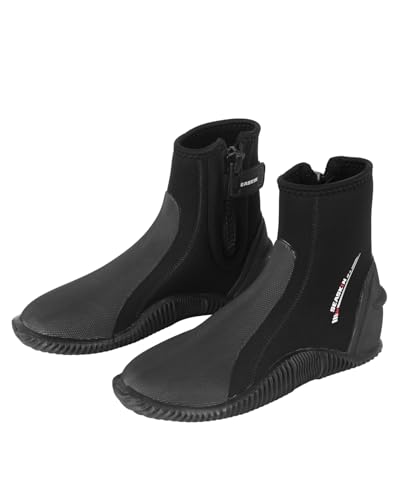
- 3 mm neoprene construction
- Anti-slip soles for foot protection
- Fin-compatible rubber heels
Best For: Diving, snorkeling, and kayaking with lighter coverage
Flexible 5mm Protection

- Warm 5mm neoprene construction
- Anti-slip sole protects against rough surfaces
- Zippered fit with open-heel fin compatibility
Best For: Cold-water diving and mixed water sports
Tall Zippered Coverage

- 5mm neoprene for warmth and flexibility
- Tall zippered profile supports a snug fit
- Rubber sole and fin-friendly heel design
Best For: Divers wanting adjustable full-coverage booties
Lightweight 3mm Versatility

- Flexible 3mm neoprene construction
- Adjustable ankle drawstring for fit
- Slip-resistant rubber sole for varied water sports
Best For: Warm-weather activities and flexible everyday water use
Durable Tall Pick – Cressi 3mm Anti-Slip Boots
Cressi Minorca Long 3 mm Crew Diving Boots, Black/Black, US Man's 8 • US Ladies' 9
Check Price On AmazonIf you need wetsuit boots under 100 for general water sports, the Cressi Minorca offers a tall 3mm neoprene design with a rubber anti-slip sole. Its zipper closure makes these boots practical for repeated use in activities such as snorkeling, scuba diving, rafting, and windsurfing.
Best For: Divers, snorkelers, and water-sports users who want tall boots with a supportive sole and easy zip entry.
Pros:
- 3mm neoprene provides warmth and flexibility for various water activities.
- Anti-slip sole with rubber heel and toe caps helps improve traction and durability.
- Side zipper simplifies putting the boots on and taking them off.
- Backed by a stated two-year limited warranty.
Cons:
- The tall design may feel excessive for users seeking low-cut water socks.
- The supplied listing identifies a specific size, so confirm availability before ordering.
The Cressi is a practical all-around choice when ankle coverage, reinforced construction, and straightforward entry matter more than a minimalist profile.
Board-Feel Favorite – O'Neill Ninja 3mm Split Toe Boot
Among wetsuit boots under 100, the O’Neill Ninja stands out for its split-toe shape and textured sole. The 3mm UltraFlex neoprene is designed for stretch, while watertight seams, an ankle strap, and Krypto Armor over the foot add performance-focused protection.
Best For: Surfers, paddleboarders, and other users who prioritize grip, board feel, and a secure fit.
Pros:
- Split-toe anatomy supports natural movement and increased board contact.
- Micro-diamond textured sole is designed for traction and sensitivity underfoot.
- UltraFlex neoprene offers stretch and comfort for cold-water sessions.
- Adjustable ankle strap and watertight seams help limit water entry.
Cons:
- Split-toe construction may not suit users who prefer a conventional rounded toe.
- The snug fit requires careful sizing; the supplied guidance recommends sizing down when between sizes.
This is a performance-oriented boot for active sessions where secure footing and board feedback are especially important.
Rock-Ready Choice – Cressi Isla 5mm Water Boots
For shoppers comparing wetsuit boots under 100 for colder water or rough shore access, the Cressi Isla uses 5mm neoprene and a hard rubber sole. The zippered design is intended for scuba diving, snorkeling, sailing, surfing, and walking across rocks or pebbles.
Best For: Divers and canyoning enthusiasts who need extra warmth and a sturdy anti-slip sole.
Pros:
- 5mm neoprene helps keep feet warm during water activities.
- Strong rubber sole is designed for traction on wet surfaces and rocky ground.
- Heel shape helps keep open-heel fin straps from slipping.
- Zipper running from the sole to the ankle supports easier on-and-off use.
Cons:
- The 5mm construction is likely bulkier than thinner water socks.
- The supplied product information lists a 2-pound item weight, which may matter to travelers.
The Isla makes the most sense when warmth and foot protection take priority over lightweight, barefoot-style flexibility.
Flexible Water-Sock Pick – OMGear 3mm High-Cut Booties
If you are looking for wetsuit boots under 100 with a lighter, sock-like feel, OMGear’s 3mm high-cut water socks are a flexible option. They combine stretchy neoprene, an adjustable ankle strap, and a reinforced rubber-print sole for beach activities, swimming, snorkeling, and scuba diving.
Best For: Beachgoers and recreational water-sports users who want flexible foot coverage with sand resistance and basic traction.
Pros:
- 3mm neoprene with four-way stretch supports a flexible, bare-feet feel.
- High-cut design and adjustable strap help limit sand and small debris entry.
- Reinforced rubber-print sole provides abrasion resistance and traction.
- Flatlock stitching is designed for durability and stretch.
Cons:
- Minimal cushioning may provide less protection than hard-soled diving boots.
- Flatlock seams are described as more suitable for spring, summer, and autumn than glued blind stitching.
Choose these booties when flexibility and a low-profile feel are more valuable than maximum warmth or heavy-duty rock protection.
Best All-Around Protection – Cressi Isla Neoprene Water Boots
For shoppers comparing wetsuit boots under 100, the Cressi Isla stands out with thick neoprene, a hard rubber sole, and features designed for several water sports. Its built-in sole helps protect feet on rocks and pebbles, while the heel design helps keep open-heel fin straps in place.
Best For: Scuba diving, snorkeling, canyoning, surfing, boating, and walking on rocky or wet surfaces.
Pros:
- 5 mm or 7 mm neoprene options help provide warmth.
- Strong anti-slip rubber sole adds protection on wet surfaces and rocks.
- Special heel design helps prevent open-heel fin straps from slipping.
- Covered by a 2-year limited warranty.
Cons:
- The thicker construction may feel warmer and less streamlined than thinner boots.
- The supplied listing information identifies the model as 7 mm, so buyers should verify the selected thickness.
The Cressi Isla is a versatile choice when foot protection matters as much as warmth. Its rugged sole makes it particularly practical for rocky entries, canyoning, and general shore use.
Best Flexible Short-Zip Design – Hydroleap 5mm Scuba Boots
Among wetsuit boots under 100, these 5 mm Hydroleap boots are a practical option for warm, protected feet without the stiffness associated with a full-length zipper. The short zipper is designed to reduce ankle pressure, while the rugged sole provides traction on wet and slippery surfaces.
Best For: Diving, snorkeling, surfing, kayaking, sailing, boat decks, and rocky shorelines.
Pros:
- 5 mm neoprene provides thermal insulation and protection from sharp underwater hazards.
- Four-inch zipper is designed for easier entry and improved ankle flexibility.
- High-traction sole helps grip wet decks, tide pools, and mossy rocks.
- Blue soles add visibility and a distinctive look.
Cons:
- The short zipper may not offer the same opening range as a full-length zipper.
- The notes do not specify a warranty or included accessories.
Choose this model if ankle comfort and flexible movement are priorities. Its combination of 5 mm neoprene and a grippy sole makes it suitable for varied aquatic activities and wet entry points.
Best Lightweight 3mm Option – Seaskin Neoprene Diving Boots
Seaskin 3mm Neoprene Diving Boots Mens Womens | Anti-Slip Rubber Sole Wetsuit Boots for Water Sports
Check Price On AmazonIf you are looking for wetsuit boots under 100 with a lighter 3 mm construction, the Seaskin diving boots offer warmth, basic foot protection, and fin-friendly details. Glued blind stitching helps retain warmth underwater, while the zipper is intended to make them easier to put on and remove.
Best For: Diving, snorkeling, kayaking, and users who prefer a lighter neoprene boot.
Pros:
- 3 mm neoprene helps keep feet warm underwater with a lighter profile.
- Anti-slip soles help protect feet from injury and improve traction.
- Rubber heels are designed to fit with dive fins.
- Zipper design supports easier on-and-off use.
Cons:
- Thinner 3 mm neoprene may provide less insulation than 5 mm or 7 mm boots.
- The supplied details do not mention a hard sole for extended rocky shore walking.
The Seaskin is a straightforward choice for diving and snorkeling when you want moderate insulation and fin compatibility without a heavier boot. Consider a thicker model if maximum warmth is your main priority.
Flexible 5mm Protection – Skyone Neoprene Dive Boots
For shoppers comparing wetsuit boots under 100, these 5mm Skyone dive booties emphasize warmth, foot protection, and a flexible fit. The zipper helps adjust the ankle fit, while the rubber sole is designed for traction on rocky or sharp surfaces.
Best For: Scuba diving, snorkeling, surfing, sailing, kayaking, and beach activities where thicker neoprene and full-foot coverage are useful.
Pros:
- 5mm neoprene provides warmth and a soft, flexible fit.
- Anti-slip rubber sole helps protect feet from rocks and sharp objects.
- Heel design accommodates open-heel fins and helps prevent strap slipping.
- Glued and blind-stitched construction is designed for durability.
Cons:
- Not completely waterproof; intended as diving equipment to pair with wetsuits.
- Available sizing is listed as US sizes 4–12, so careful size selection is important.
This is a practical choice if you want a warmer, heavier-duty bootie for varied water sports. Its zipper, fin-compatible heel, and protective sole make it especially versatile for recreational diving and shoreline activities.
Tall Zippered Coverage – Skyone 5mm Wetsuit Dive Boots
These 5mm Skyone boots are a strong option for shoppers seeking wetsuit boots under 100 with tall coverage and an adjustable zipper. Their neoprene construction, thermal materials, and rubber sole are suited to water activities where warmth, traction, and fin compatibility matter.
Best For: Divers, snorkelers, surfers, and boaters who prefer a zippered 5mm boot with full coverage and a flat, moderate-cushioning design.
Pros:
- 5mm neoprene offers flexible insulation for cooler water.
- Tall zippered design supports an adjustable, snug ankle fit.
- Anti-slip rubber sole helps shield feet from sharp or rough surfaces.
- Rear heel design helps hold open-heel fin straps in place.
Cons:
- Water resistant but not completely waterproof.
- Size range is listed as US sizes 4–12; fit should be checked carefully.
Choose this model if a zipper and taller profile are priorities. It combines the warmth of 5mm neoprene with a durable, fin-friendly design for regular recreational water use.
Lightweight 3mm Versatility – Skyone Neoprene Surf Booties
For those comparing wetsuit boots under 100, these 3mm Skyone booties offer a lighter alternative to thicker dive boots. They use stretchy neoprene, an ankle drawstring, and a durable rubber sole for water sports ranging from snorkeling and surfing to kayaking and beach outings.
Best For: Warm-weather or active water use when you want flexible 3mm coverage, foot protection, and an adjustable fit.
Pros:
- 3mm neoprene is soft, stretchy, and designed for a comfortable snug fit.
- Ankle drawstring allows fit adjustment and may help reduce foot fatigue.
- Slip-resistant rubber sole helps protect against rocks and rough coral.
- Glued and blind-stitched seams are designed for frequent use.
Cons:
- Thinner 3mm construction may provide less insulation than 5mm alternatives.
- Listed sizing is US 6–11, with the internal marking using women’s sizes.
- Not completely waterproof; designed to accompany wetsuits.
This model makes sense for shoppers who prioritize mobility and broad multi-sport use over maximum insulation. The drawstring and lightweight neoprene suit active outings where a flexible boot is more important than a thick cold-water profile.
How We Picked the Best Wetsuit Boots Under 100
We selected boots that cover the most common recreational water-sports needs, including scuba diving, snorkeling, surfing, rafting, swimming, and beach use. The lineup includes 3mm and 5mm neoprene models, split-toe designs, soft water socks, and boots with harder rubber or anti-slip soles.
Our comparison emphasizes practical specifications shoppers can verify: neoprene thickness, sole construction, closure style, traction, intended conditions, and sizing considerations. Because fit and use vary widely, no single boot is ideal for every activity.
Quick Comparison
| Feature | What to look for | Best suited to |
|---|---|---|
| 3mm neoprene | Flexible, lighter insulation | Warm water, snorkeling, surfing |
| 5mm neoprene | More warmth and cushioning | Cooler water and longer sessions |
| Hard or rubber sole | More protection and traction | Rocky entries, diving, shore use |
| Split toe | Improved foot control and reduced slipping | Surfing and board sports |
| Soft water sock | Lightweight and packable | Sand, pools, and casual water use |
Key Buying Factors for Wetsuit Boots Under 100
Thickness and Warmth
Choose 3mm boots for warmer conditions or when flexibility matters most. A 5mm pair offers more insulation and cushioning, but may feel bulkier and require fins with additional foot-pocket space.
Sole Protection and Grip
Anti-slip rubber soles are valuable on wet decks, rocks, boat ramps, and shorelines. Soft-soled booties are lighter but provide less protection against sharp surfaces. If you frequently walk between the beach and water, prioritize a durable sole.
Fit, Toe Design, and Closure
Boots should feel snug without compressing your toes or creating pressure points. A split toe can improve control, while a round-toe design may feel more natural for general use. Zippers make some tall boots easier to put on, but they should close smoothly and sit comfortably under a wetsuit.
Fin Compatibility
Try to match boot thickness and sole bulk with your fins. A thicker boot may require a larger fin pocket, while a low-profile water sock may work with standard footwear designed for bare feet.
Who Should Buy Which Wetsuit Boots Under 100?
- For warm-water snorkeling: Choose a flexible 3mm boot or lightweight water sock with dependable traction.
- For cooler water: Look for 5mm neoprene and a snug fit that limits water exchange.
- For rocky shore entries: Select a hard- or rubber-soled dive boot with strong anti-slip tread.
- For surfing: Consider a split-toe design for board feel and reduced foot movement inside the boot.
- For occasional beach and pool use: A low-cost, lightweight bootie is usually sufficient and easier to pack.
Before ordering, check the manufacturer’s size chart, measure your foot while wearing the socks you plan to use, and confirm the return policy. These steps are especially important when choosing between similarly priced wetsuit boots.