The best wetsuit boots for warm water protect your feet from sharp rocks, hot sand, rough surfaces, and fin irritation without adding unnecessary bulk. The right pair should balance lightweight insulation with reliable traction and a secure fit.
We compared 10 options across thicknesses, sole designs, closures, and intended uses to help you choose comfortable footwear for diving, snorkeling, surfing, beach sports, and other water activities.
Best 10 Wetsuit Boots for Warm Water Picks for 2026
Durable Tall Pick
Cressi 3mm Anti-Slip Sole Boots

- 3mm neoprene with tall coverage
- Anti-slip sole and reinforced heel and toe
- Zipper closure for easier entry
Best For: Active water sports and rocky shore entries
Warm-Water Movement Pick
O'Neill Superfreak 2mm Split Toe Boot

- Lightweight 2mm FluidFlex neoprene
- Split-toe design for natural movement
- Textured rubber sole for traction
Best For: Surfing and other warm-water board sports
Maximum Protection Pick
SCUBAPRO Delta 5mm Diving Boot

- Protective 5mm neoprene construction
- Rubberized armor for top and bottom coverage
- Anti-slip, non-marking deck tread
Best For: Rocky shorelines and boat-based diving
Lightweight Water-Sock Pick
OMGear 3mm High-Cut Neoprene Socks

- Flexible 3mm neoprene with four-way stretch
- Adjustable high-cut ankle design
- Reinforced anti-slip rubber-print sole
Best For: Swimming, snorkeling, and beach activities
Reliable Fin Protection

- 3mm neoprene insulation
- Anti-slip soles
- Fin-friendly rubber heels
Best For: Divers and snorkelers wanting supportive, zipper-entry booties
Soft Warmth and Flexibility
XUKER Fleece-Lined Water Socks

- 3mm neoprene with fleece lining
- Flexible ergonomic design
- Textured coated soles
Best For: Beach activities and water sports where soft warmth matters
All-Season Traction

- Stretchy 3mm neoprene
- Glued blind stitching
- Textured non-slip sole
Best For: Multi-sport users needing traction and mid-calf coverage
Rugged Warm-Water Coverage
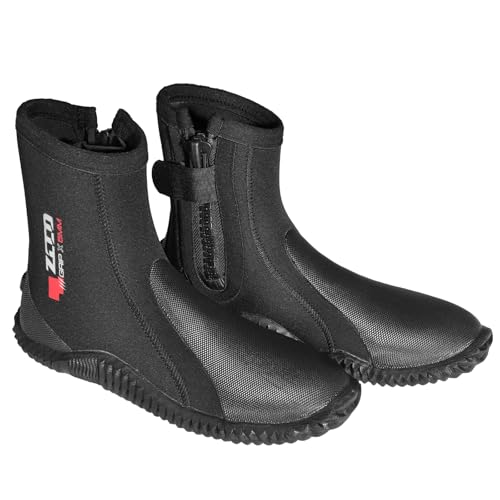
- 5MM neoprene provides stretch and insulation
- Anti-slip sole protects feet on rough surfaces
- Heel design helps secure open-heel fin straps
Best For: Divers and water-sports users wanting full coverage and rugged foot protection
Lightweight Beach Comfort
XUKER 3MM Neoprene Water Socks
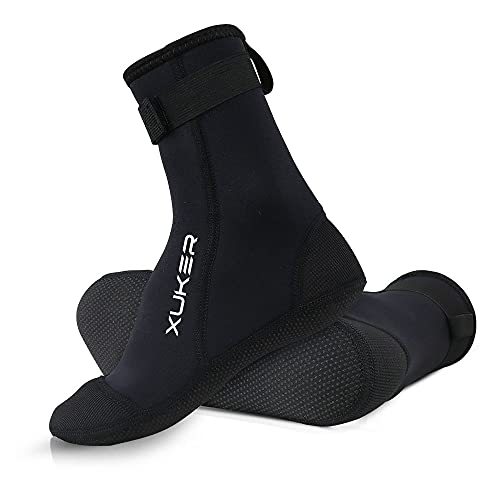
- Flexible 3MM neoprene helps retain warmth
- Abrasion-resistant coated soles add traction
- Suitable for water sports and beach activities
Best For: Beach activities and casual water sports needing flexible ankle coverage
Balanced Warm-Water Flexibility

- Stretchy 3MM neoprene supports comfortable movement
- Rubber sole helps protect against rough surfaces
- Rear heel design supports open-heel fin use
Best For: Warm-water divers and paddlers wanting lighter full-foot protection
Durable Tall Pick – Cressi 3mm Anti-Slip Sole Boots
Cressi Minorca Long 3 mm Crew Diving Boots, Black/Black, US Man's 8 • US Ladies' 9
Check Price On AmazonFor shoppers comparing wetsuit boots for warm water, the Cressi Minorca offers a practical balance of coverage, traction, and durability. Its 3mm neoprene construction, tall profile, rubber heel and toe caps, and zipper closure make it suitable for varied water activities.
Best For: Snorkeling, scuba diving, rafting, windsurfing, and other water sports where tall coverage and a durable sole are useful.
Pros:
- 3mm neoprene provides moderate coverage without the bulk of a thicker boot.
- Anti-slip sole plus rubber heel and toe caps support traction and durability.
- Full-height design and zipper make the boots practical for repeated use.
- Designed by Cressi, an established Italian diving-equipment brand.
Cons:
- The tall design may provide more coverage than needed for casual beach use.
- The listed fit-to-size sentiment is poor, so careful size selection is important.
- Machine washing may require extra care to preserve the neoprene and zipper.
The Cressi is a strong all-around option when you want warm-water boots with more ankle and lower-leg coverage than a low-cut water sock. Its protective details make it especially appealing for rocky entries and active water sports.
Warm-Water Movement Pick – O'Neill Superfreak 2mm Split Toe Boot
Among wetsuit boots for warm water, the O’Neill Superfreak stands out for its lightweight 2mm construction and split-toe shape. The anatomical design is intended to support natural movement while the textured rubber sole adds traction for surfing and other water activities.
Best For: Surfing, paddleboarding, kayaking, beach activities, and reef protection when flexibility and board feel matter.
Pros:
- Lightweight 2mm FluidFlex neoprene suits warmer conditions.
- Split-toe design promotes natural movement and enhanced feel.
- Textured rubber sole helps with traction and protection from rough surfaces.
- Cinch cord, forefoot strap, and heel pull tab help secure and manage the boot.
Cons:
- The 2mm thickness offers less insulation than thicker diving boots.
- The snug fit is intended to limit water entry, so sizing may feel close.
- Split-toe construction may not suit users who prefer a traditional rounded toe.
The Superfreak is a focused warm-water choice for users who prioritize mobility and traction over maximum insulation. Its split toe and low-profile seams make it particularly well matched to board sports.
Maximum Protection Pick – SCUBAPRO Delta 5mm Diving Boot
If your warm-water trips include rocky shorelines or boat decks, the SCUBAPRO Delta emphasizes protection and stability. Its 5mm neoprene, sturdy flexible outsole, rubberized armor, and YKK zipper create a more substantial boot than lightweight tropical options.
Best For: Divers needing stronger foot protection for rocky entries, shore diving, and non-marking traction on boat decks.
Pros:
- 5mm neoprene provides more coverage than thinner warm-water footwear.
- Rubberized protective armor helps shield the top and bottom of the foot.
- High-quality anti-slip tread supports steady walking on boat decks.
- Full-cut design accommodates wider-shaped feet with a potentially less cramped fit.
Cons:
- At 5mm and about 2 pounds, it is heavier and warmer than a minimal bootie.
- The more protective construction may feel excessive for simple beach swimming.
- The product information lists a specific 2X-Large size, so availability across sizes should be checked.
The Delta is best viewed as a protection-first diving boot rather than a barely-there warm-water sock. Choose it when terrain, deck traction, and foot coverage are more important than minimal weight.
Lightweight Water-Sock Pick – OMGear 3mm High-Cut Neoprene Socks
For a lighter, sock-like option among wetsuit boots for warm water, the OMGear 3mm high-cut water socks focus on flexibility and basic foot protection. Stretchy neoprene, an adjustable ankle strap, and a reinforced rubber-print sole make them useful for beach and water activities.
Best For: Swimming, snorkeling, beach activities, fin use, and users who prefer a flexible barefoot-style feel.
Pros:
- Soft 3mm neoprene with four-way stretch offers flexible comfort.
- High-cut design and adjustable strap help limit sand and small debris entry.
- Reinforced, anti-slip sole supports walking on sandy, rugged, or slippery surfaces.
- Flatlock stitching and pull-on construction keep the design simple.
Cons:
- Minimal cushioning may provide less support than a structured diving boot.
- Flatlock seams are not glued, so the socks are described as less suited to cold winter use.
- The water-sock format may offer less impact protection than boots with rubberized armor.
The OMGear is a sensible choice when comfort, packability, and a barefoot feel matter more than heavy-duty protection. It works well for warm-weather beach and snorkeling use, especially where sand control is helpful.
Reliable Fin Protection – Seaskin 3mm Diving Boots
Seaskin 3mm Neoprene Diving Boots Mens Womens | Anti-Slip Rubber Sole Wetsuit Boots for Water Sports
Check Price On AmazonFor shoppers comparing wetsuit boots for warm water, the Seaskin 3mm Neoprene Diving Boots offer a balance of lightweight insulation, foot protection, and fin compatibility. Their anti-slip soles and rubber heels make them practical for diving, snorkeling, and other water activities.
Best For: Divers and snorkelers who want supportive booties with fin-friendly rubber heels.
Pros:
- 3mm neoprene helps keep feet warm underwater.
- Anti-slip soles help protect against injuries and improve traction.
- Rubber heels are designed to fit securely with dive fins.
- Zipper closure makes them easier to put on and remove.
Cons:
- The 3mm construction may provide more insulation than needed in especially warm water.
- The listed package is a Men 7 / Women 8 size, so shoppers should verify sizing options carefully.
With glued blind stitching, a zipper, and fin-compatible heels, these boots are a practical choice for recreational divers who value protection and a secure fit.
Soft Warmth and Flexibility – XUKER Fleece-Lined Water Socks
Among wetsuit boots for warm water, the XUKER 3mm Neoprene Water Socks stand out for their fleece lining and flexible, sock-like design. They are suited to water sports and beach activities where lightweight comfort and some insulation matter.
Best For: Water-sport users who prioritize soft fleece warmth and flexible beach or in-water walking.
Pros:
- Soft fleece lining is designed to provide more warmth and comfort than regular nylon lining.
- Ergonomic construction helps reduce creasing across the instep.
- Coated anti-slip soles provide abrasion resistance for beaches and water activities.
- Suitable for swimming, snorkeling, kayaking, paddling, surfing, and similar activities.
Cons:
- These socks are not fully waterproof, so some water intrusion is possible.
- They may offer less structure and foot protection than traditional diving boots.
The fleece lining makes this lightweight option appealing when comfort is the priority, but shoppers seeking maximum boot structure or complete water exclusion may want a more substantial design.
All-Season Traction – 3mm Neoprene Water Socks
These 3mm Neoprene Water Socks are a versatile option for shoppers looking at wetsuit boots for warm water and varied water-sport use. Glued blind stitching helps minimize water entry, while the textured anti-slip bottom adds traction for activities such as snorkeling, kayaking, surfing, and paddle boarding.
Best For: Active users who want stretchy mid-calf water socks with traction for multiple water sports.
Pros:
- 3mm neoprene and 4-way stretch nylon provide insulation, flexibility, and durability.
- Glued blind stitching helps reduce water ingress.
- Textured non-slip soles improve traction and help protect against cuts and scratches.
- Mid-calf, elastic construction is designed for a regular, true-to-size fit.
Cons:
- Some water may enter through the seams and ankle area.
- The hard urethane rubber sole is not suitable for rock climbing or smooth boardwalks.
- Hand washing is required for care.
Its high-stretch construction and broad activity range make this a strong general-purpose choice, especially for users who value traction and coverage over a minimalist sock feel.
Rugged Warm-Water Coverage – Skyone 5MM Tall Dive Boots
For shoppers comparing wetsuit boots for warm water, the Skyone 5MM Dive Boots prioritize full-foot coverage and protection. Their thick neoprene construction, tall profile, zipper, and rubber sole suit activities where rocky beaches, coral, or fin straps are concerns.
Best For: Divers, snorkelers, surfers, and paddlers who want substantial foot protection and a secure fit for open-heel fins.
Pros:
- 5MM neoprene offers softness, stretch, and added insulation.
- Anti-slip rubber soles help protect against sharp rocks and coral.
- Heel-back design helps keep open-heel fin straps from slipping.
- Glued and blind-stitched seams support durability.
Cons:
- Thicker 5MM construction may feel warmer and bulkier than lighter booties.
- These are water-resistant dive boots, not completely waterproof.
- Available sizing is listed for US men’s 6–11 and women’s equivalents.
The Skyone 5MM boots are a protective choice when durability and coverage matter more than a minimalist feel. The zipper supports adjustability, while the sole and heel design make them practical for fin use and rough shore access.
Lightweight Beach Comfort – XUKER 3MM Neoprene Water Socks
The XUKER 3MM socks are a lighter option for shoppers seeking wetsuit boots for warm water and everyday beach activities. Their flexible neoprene blend, sand-resistant design, and coated anti-slip bottoms provide comfort and basic protection without the structure of a tall dive boot.
Best For: Beach volleyball, swimming, snorkeling, kayaking, paddling, and casual shoreline walking where flexible ankle-high coverage is preferred.
Pros:
- 3MM neoprene helps insulate feet in cooler water.
- Ergonomic design is intended to reduce wrinkling on the foot.
- Coated soles offer abrasion resistance and traction.
- Flat seams and smooth openings help limit water entry.
Cons:
- They are not 100% waterproof.
- Ankle-high socks provide less coverage than tall dive boots.
- Hand-wash care is recommended.
Choose these XUKER socks when flexibility and easy beach use are more important than heavy-duty protection. They cover a broad range of water and sand activities, but their sock-style construction is best suited to moderate conditions.
Balanced Warm-Water Flexibility – Skyone 3MM Dive Boots
For wetsuit boots for warm water that balance flexibility with protection, the Skyone 3MM Dive Boots are a practical middle ground. They use stretchy neoprene, a durable rubber sole, and a rear adjustment feature for fin-based activities and shore access.
Best For: Divers, snorkelers, kayakers, and surfers who want lighter boots than a 5MM model while retaining full-foot coverage.
Pros:
- 3MM neoprene offers a soft, stretchy, snug fit.
- Anti-slip rubber soles help shield feet from rocks and coral.
- Rear heel design helps stabilize open-heel fin straps.
- Glued and blind-stitched seams are designed for frequent use.
Cons:
- They are water-resistant rather than completely waterproof.
- They may provide less insulation than the 5MM Skyone model.
- The interior size marking uses women’s sizing, which may require extra checking.
The 3MM Skyone boots make sense for warm-water users who want protection without the additional thickness of heavier booties. Confirm the size chart carefully, especially because the interior marking follows women’s sizing.
How We Picked the Best Wetsuit Boots for Warm Water
We focused on the features that matter most in warm-water footwear: neoprene thickness, sole construction, traction, fit security, flexibility, and versatility. The lineup includes lightweight water socks for swimming and snorkeling, as well as taller boots with thicker neoprene and sturdier rubber soles for rocky entries, scuba diving, and cooler conditions.
We also considered practical details such as split-toe designs, zippers, sand resistance, anti-slip patterns, and compatibility with swim fins. Because foot shape and activity vary, the best choice depends on whether you prioritize minimal bulk, maximum protection, or added warmth.
Quick Comparison
| Best For | Typical Thickness | What to Look For |
|---|---|---|
| Snorkeling and swimming | 2–3mm | Flexible fit, low bulk, fin compatibility |
| Surfing and paddle sports | 2–3mm | Secure ankle fit and dependable grip |
| Rocky shore entries | 3–5mm | Rubber sole and reinforced foot protection |
| Scuba diving | 3–5mm | Structured sole, secure closure, fin-pocket fit |
| Cooler tropical water | 3–5mm | More neoprene coverage and a snug seal |
Key Buying Factors for Wetsuit Boots for Warm Water
Thickness and Warmth
For genuinely warm water, 2mm or 3mm neoprene usually provides enough protection while remaining flexible. Choose 5mm if you dive in cooler water, spend long periods submerged, or get cold easily. Thicker boots can feel restrictive and may require larger fin pockets.
Sole and Traction
Soft water socks are comfortable and pack easily, but they offer less protection from sharp rocks. A rubber or molded anti-slip sole is a better choice for shore dives, boat decks, and uneven beaches. Check that the tread suits wet surfaces rather than relying on thickness alone.
Fit, Closure, and Fin Compatibility
Boots should fit snugly without compressing your toes or creating heel movement. Zippers make thicker boots easier to put on, while slip-on socks offer greater flexibility. If you wear open-heel fins, confirm that the boot fits comfortably inside the fin pocket before buying.
Toe Design and Sand Control
Split-toe models can improve balance and reduce foot movement, while standard rounded toes may feel more natural for general use. For beaches and sandy launches, look for a close ankle opening and materials marketed as sand-resistant.
Who Should Buy Which Wetsuit Boots for Warm Water?
Choose lightweight 2–3mm water socks for snorkeling, swimming, beach activities, and warm-water paddling when flexibility and low bulk matter most.
Choose split-toe boots if you surf, windsurf, or want a more secure feel while standing on a board.
Choose taller 3–5mm dive boots with rubber soles for scuba diving, rocky entries, boat decks, and users who need stronger foot protection and additional warmth.
Choose fleece-lined or thicker options if your warm-water sessions run long or you are particularly sensitive to cold. Whatever style you select, measure your feet against the manufacturer’s chart and prioritize a snug, wrinkle-free fit.