The best dry bags for hiking protect clothing, food, electronics, and sleeping gear from rain, splashes, and accidental water exposure without adding unnecessary bulk. The right option depends on your pack size, loadout, and how often you expect to encounter serious moisture.
We selected 10 dry bags ranging from compact multipacks to heavy-duty roll-top backpacks, so you can match capacity, portability, and features to your hiking setup.
Best 10 Dry Bags for Hiking Picks for 2026
Best Multi-Size Set
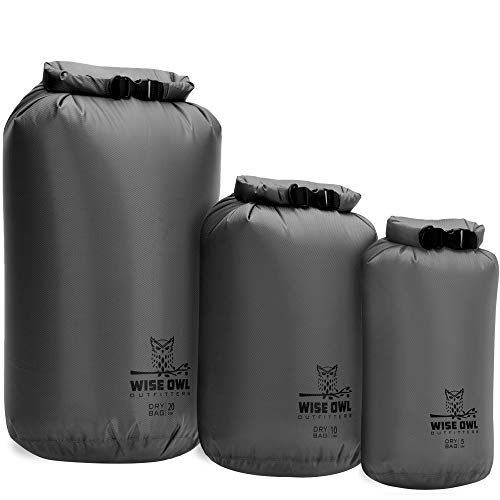
- Includes 5L, 10L, and 20L bags
- Lightweight ripstop nylon construction
- Roll-top closure with buckle and D-ring
Best For: Organizing varied hiking and camping gear
Best Budget Organization Set
Outdoor Products Ultimate Dry Sack 3-Pack
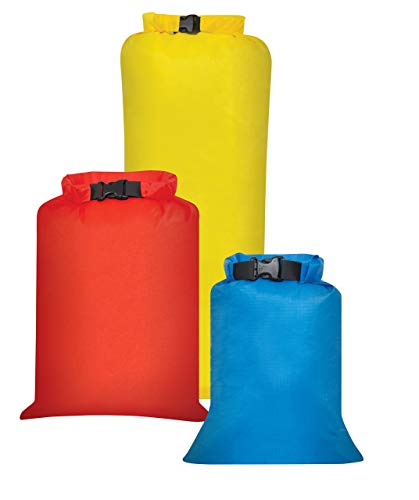
- Includes 2L, 4L, and 8L sacks
- Flexible ripstop fabric with roll-top closure
- Tape-sealed seams and lifetime guarantee
Best For: Simple organization inside a hiking backpack
Best Dry Bag Backpack
STOVER 25L Waterproof Dry Backpack

- 25L waterproof backpack design
- Padded straps and multiple carry options
- Includes IP58 phone case and reflective strip
Best For: Hands-free day hiking and active outdoor trips
Best Ultralight Organizer
Osprey Ultralight Waterproof Dry Sack

- Weighs only 27.22 grams
- Compact 3L rectangular design
- IPX5 waterproof fabric and seams
Best For: Lightweight organization of small hiking essentials
Best Value Multi-Pack
6-Piece Lightweight Dry Bag Set

- Six sizes from 1.5L to 8L
- Color-coded gear organization
- Lightweight foldable polyester design
Best For: Hikers organizing different types of gear
Best Backpack-Style Option
HEETA Waterproof Dry Bag Backpack
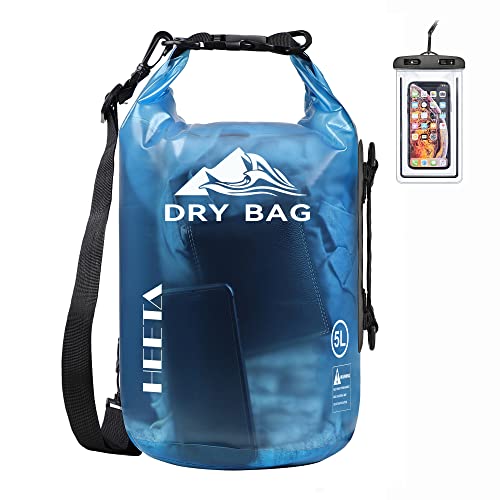
- Adjustable straps for hands-free carrying
- Transparent PVC makes gear easy to find
- Five capacities and phone case included
Best For: Hikers combining trail use with water activities
Best Lightweight Pair
Frelaxy 5L and 15L Dry Bag Set

- Two practical sizes: 5L and 15L
- Ripstop fabric with taped waterproof seams
- Ultralight design for backpacking
Best For: Weight-conscious hikers carrying separate gear loads
Versatile Pick
HEETA Waterproof Dry Bag Backpack

- PVC construction with a roll-top closure
- Five sizes from 5L to 40L
- Cross-body or backpack-style carrying
Best For: Hikers wanting flexible sizing and carrying options
Organization Pick
Frelaxy Ultralight Dry Bag 5 Pack
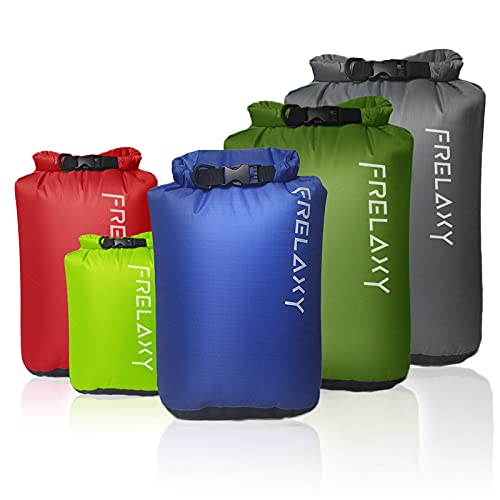
- Five color-coded sacks from 3L to 20L
- Lightweight tear-resistant polyester
- Taped seams and roll-top closures
Best For: Backpackers sorting clothing, food, and small gear
Best Multi-Size Set – Wise Owl 3-Pack Dry Bags
For hikers who organize gear by category, the Wise Owl Outfitters 3-pack is a flexible choice among dry bags for hiking. Its 5L, 10L, and 20L sizes let you separate clothing, electronics, food, or other essentials while keeping the load lightweight and compressible.
Best For: Hikers and campers who want multiple sizes for organizing gear in one pack.
Pros:
- Includes 5L, 10L, and 20L bags for versatile packing.
- Lightweight 190D ripstop nylon compresses easily in tight spaces.
- Roll-top closure, buckle clip, and D-ring support secure storage and attachment.
- Designed to float when properly sealed.
Cons:
- No shoulder straps for backpack-style carrying.
- The set may provide more capacity than solo hikers need.
This set is a practical pick when packing flexibility matters more than carrying a single dedicated day bag. The varied capacities also make it useful for separating wet and dry items.
Best Budget Organization Set – Outdoor Products Ultimate Dry Sack 3-Pack
The Outdoor Products Ultimate Dry Sack 3-Pack offers straightforward storage for hikers who want several compact dry bags without extra features. The 2L, 4L, and 8L sizes are useful for dividing clothing, food, and small essentials inside a backpack.
Best For: Backpackers seeking simple, lightweight dry bags for hiking and adventure travel.
Pros:
- Three useful capacities—2L, 4L, and 8L—support organized packing.
- Lightweight ripstop fabric is soft and flexible.
- Watertight roll-top closure and tape-sealed seams help protect contents.
- Backed by the Outdoor Products Plain + Simple Lifetime Guarantee.
Cons:
- Assorted colors may not match a coordinated gear setup.
- No dedicated carrying straps or exterior pockets are listed.
Choose this set for uncomplicated dry storage rather than standalone carrying. Its smaller sizes are especially convenient for keeping hiking essentials separated inside a larger pack.
Best Dry Bag Backpack – STOVER 25L Waterproof Dry Backpack
The STOVER 25L combines waterproof storage with backpack-style carrying, making it a substantial option among dry bags for hiking. Its padded shoulder straps, multiple compartments, and wet/dry front pocket suit day hikes and active trips where hands-free transport is useful.
Best For: Day hikers and multi-sport users who want a wearable waterproof pack with organized storage.
Pros:
- 25L interior provides substantial day-trip storage.
- Padded adjustable straps allow backpack, cross-body, or hand carry.
- High-frequency bonded seams and roll-top closure are designed for waterproof protection.
- Includes an IP58 waterproof phone case and reflective front strip.
Cons:
- At 0.67 kg, it is heavier than compact dry sacks.
- Its 25L format may be larger than needed for minimalist hikes.
This is the most convenient choice when the dry bag itself needs to function as a daypack. The storage organization and carrying options add practicality, though ultralight hikers may prefer a smaller sack.
Best Ultralight Organizer – Osprey Ultralight Waterproof Dry Sack
Weighing just 27.22 grams, the Osprey Ultralight Dry Sack is suited to hikers who prioritize minimal pack weight. Its 3L capacity, rectangular shape, and waterproof-coated fabric make it useful for organizing smaller essentials inside a larger backpack.
Best For: Ultralight hikers who need compact waterproof organization for small gear.
Pros:
- Extremely light at 27.22 grams.
- Rectangular shape supports efficient packing.
- Waterproof-coated fabric and seams with an IPX5 rating.
- D-ring allows drying or attachment.
Cons:
- 3L capacity is limited for bulky clothing or larger gear.
- IPX5 protection is waterproof but non-submersible.
- No shoulder straps or external compartments are listed.
This sack is best used as an internal pack organizer rather than a standalone hiking bag. Its low weight and compact capacity make it particularly appealing for small essentials and careful load planning.
Best Value Multi-Pack – 6-Piece Lightweight Dry Bag Set
If you want versatile dry bags for hiking, this six-piece set makes it easy to separate gear by size and color. The bags range from 1.5L to 8L and use a roll-top closure with a quick-release buckle for organizing smaller essentials, clothing, shoes, or electronics.
Best For: Hikers who want multiple lightweight bags for organizing gear across different pack compartments.
Pros:
- Includes six bags in assorted sizes from 1.5L to 8L.
- Color-coding helps identify contents quickly.
- Lightweight, foldable design is easy to pack and store.
- Seamlessly welded polyester construction and roll-top closure help protect contents from dirt, sand, and water.
Cons:
- The set does not provide a single large-capacity bag for bulky gear.
- The product details describe a top handle, but not backpack-style shoulder straps.
This set is a practical choice when organization matters more than carrying one large load. Its range of sizes is especially useful for separating clothing, accessories, and small personal items on day hikes or camping trips.
Best Backpack-Style Option – HEETA Waterproof Dry Bag Backpack
Among dry bags for hiking, the HEETA stands out for its backpack-style carrying options and transparent PVC construction. Adjustable shoulder straps, a side handle, multiple capacity choices, and an included waterproof phone case make it suited to hikes that may also involve boating, kayaking, or other water activities.
Best For: Outdoor users who want a wearable dry bag that can transition between hiking and water-based activities.
Pros:
- Adjustable shoulder straps support backpack-style carrying.
- Wear-resistant PVC has a thicker bottom and thinner sides for a balance of durability and weight.
- Transparent design makes stored items easy to locate.
- Available in 5L, 10L, 20L, 30L, and 40L sizes, with a touch-compatible waterproof phone case included.
Cons:
- The manufacturer cautions that it is not intended to remain submerged for extended periods.
- The 5L version has no separate pocket for organizing small items.
- The supplied notes include a California Proposition 65 warning for DEHP exposure.
The HEETA is a flexible choice for wet-weather outings and mixed land-and-water adventures. Its transparent body and backpack straps add convenience, while the broad size range lets you select capacity for anything from small essentials to larger loads.
Best Lightweight Pair – Frelaxy 5L and 15L Dry Bag Set
For hikers seeking lightweight dry bags for hiking, this two-pack combines a compact 5L bag with a larger 15L sack. Diamond ripstop polyester, a PU10000mm waterproof coating, taped seams, and a roll-top closure provide a gear-protection setup designed for backpacking and other outdoor activities.
Best For: Backpackers who want two purpose-specific dry sacks without adding much weight.
Pros:
- Includes useful 5L and 15L capacities for small and larger items.
- Diamond ripstop fabric, taped seams, and PU10000mm coating support waterproof protection.
- Very light, with listed weights of 1.5 ounces for the 5L bag and 2.1 ounces for the 15L bag.
- TPU roll-top closure, sturdy D-ring, and buckle are designed for repeated use and pack attachment.
Cons:
- The set offers only two bags and does not include an intermediate size.
- The bags use loop handles and roll-top closures rather than shoulder straps.
This set is a strong fit for weight-conscious hikers who want separate storage for clothing, shoes, or smaller personal gear. The two sizes complement each other, while the ripstop construction and taped seams add reassurance in wet conditions.
Versatile Pick – HEETA Waterproof Dry Bag Backpack
For hikers who want flexible carrying options, the HEETA is a practical choice among dry bags for hiking. Its PVC construction, roll-top closure, and multiple size options help protect essentials during rainy hikes, camping trips, and other outdoor activities.
Best For: Day hikes and outdoor adventures where you want a compact dry bag that can be carried cross-body or as a backpack, depending on the size.
Pros:
- Seamless construction and waterproof PVC material help keep contents dry in wet conditions.
- Available in 5L, 10L, 20L, 30L, and 40L sizes.
- Adjustable straps support cross-body or backpack-style carrying.
- Includes an emergency whistle and comes in multiple colors.
Cons:
- It is not intended for underwater use.
- The 5L and 10L versions use a cross-body strap rather than two backpack straps.
- There are no interior pockets or separate compartments.
The HEETA stands out for its size range and adaptable carry design. Choose a smaller model for personal essentials or a larger version when hiking gear needs more room, while keeping in mind its single-compartment layout.
Organization Pick – Frelaxy Ultralight Dry Bag 5 Pack
The Frelaxy five-pack is useful for hikers who prefer to divide gear into separate waterproof sacks. With five colors and capacities from 3L to 20L, these dry bags for hiking make it easier to organize clothing, food, and smaller equipment without adding much weight.
Best For: Backpackers and hikers organizing multiple categories of gear inside a larger pack.
Pros:
- Includes five sacks in 3L, 5L, 10L, 15L, and 20L sizes.
- Color assortment helps identify contents quickly.
- Lightweight 210T tear-resistant polyester adds minimal pack weight.
- Taped seams, roll-top closures, rectangular bases, and D-rings support practical packing.
Cons:
- The sacks are designed to avoid full submersion.
- They are storage sacks rather than standalone backpacks.
- Each sack has a single compartment.
Frelaxy is the strongest organizational option in this group. The assorted capacities work well for separating clothing, food, and accessories, while the lightweight design is suited to hikers who are careful about pack weight.
Heavy-Duty Pick – OSAH DRYPAK Waterproof Backpack
For demanding trips, the OSAH DRYPAK offers backpack-style carrying and a heavier-duty build. This option among dry bags for hiking uses 500D PVC, welded seams, and a roll-top closure, with features intended for longer hikes, wet conditions, and larger loads.
Best For: Multi-day hikes and rugged outdoor trips requiring substantial capacity, backpack harness support, and accessible storage features.
Pros:
- 500D PVC with high-frequency welded seams is designed for demanding conditions.
- Available in 25L, 35L, 55L, and 85L capacities.
- Breathable back padding, ergonomic shoulder straps, and a chest belt support carrying comfort.
- Includes inner zip pockets, side mesh bottle holders, a splash-proof front pocket, and bungee cords.
Cons:
- The heavyweight PVC construction may be less suitable for ultralight hikers.
- The larger capacities can be more than needed for short day hikes.
- The product information identifies the front pocket as splash-proof, so not every external area has the same waterproof protection as the main compartment.
The OSAH DRYPAK is the most feature-rich and capacity-oriented choice here. Its harness features and multiple storage areas make it better suited to extended or gear-heavy outings than minimalist day hikes.
How We Picked the Best Dry Bags for Hiking
We focused on practical differences that matter on the trail: capacity options, closure design, portability, material weight, organization, and intended use. Multipacks earned consideration for hikers who prefer separating clothing, food, and electronics, while backpack-style dry bags stand out for carrying larger loads or handling wetter environments.
We also considered whether each product is suited to everyday rain protection or more demanding activities such as kayaking and fishing. A dry bag can reduce water exposure, but no soft-sided bag should be treated as automatically submersible unless the manufacturer specifically supports that use.
Quick Comparison
| Type | Best For | Main Advantage | Potential Trade-Off |
|---|---|---|---|
| Small multipack | Organizing day-hike essentials | Several sizes for separate items | Less capacity per bag |
| Ultralight dry sack | Backpacking and weight-conscious kits | Low packed weight | Fewer comfort features |
| Roll-top dry backpack | Large or wet-weather loads | Hands-free carrying and higher capacity | Bulkier than a simple sack |
| Dry bag with accessories | Water activities and travel | Extras such as phone cases or whistles | Added features may increase weight |
Key Buying Factors for Dry Bags for Hiking
Capacity and Pack Fit
Choose capacity based on what you need to protect, not just the advertised maximum. Five- to 10-liter bags work well for layers, snacks, or electronics. Larger 20- to 40-liter models can hold bulkier clothing and camp equipment, while extra-large backpacks are better for substantial loads. Leave room for the roll-top closure rather than filling the bag completely.
Closure and Water Resistance
Roll-top closures are common because they compress contents and create a reliable seal when folded several times. Look for sturdy buckles and reinforced attachment points. If you hike in sustained rain, use the dry bag inside a pack liner or rain cover for additional protection.
Weight, Material, and Durability
Ultralight ripstop sacks save space and are convenient for backpacking, but heavy-duty materials may better tolerate abrasion, frequent handling, or contact with rough surfaces. Consider the trade-off between minimum weight and long-term durability.
Organization and Carrying Comfort
Multiple bags make it easier to separate wet and dry gear. Backpack-style designs are more comfortable for carrying larger loads, while simple sacks are usually lighter and easier to pack into existing compartments. Accessories such as phone cases can be useful, but they should not replace careful device protection.
Who Should Buy Which Dry Bags for Hiking?
Choose a multipack if you want flexible organization for clothing, toiletries, food, or electronics. Select an ultralight sack if every ounce matters and you already carry a backpack with comfortable straps. A dry backpack is the better choice for larger loads, hands-free transport, or frequent wet-weather travel. For demanding outdoor use, prioritize reinforced construction and a capacity that leaves enough room to seal the roll top securely.