Cold water changes how a bodyboard feels, how it floats, and how confidently you can paddle into waves. The right board can make sessions easier, more stable, and less tiring when conditions are brisk.
This roundup of the best bodyboards for cold water focuses on practical features that matter most: buoyancy, core construction, deck comfort, durability, and overall control in cooler surf.
Best 10 Bodyboards for Cold Water Picks for 2026
Cold-Water All-Rounder
THURSO SURF 42" Quill Bodyboard
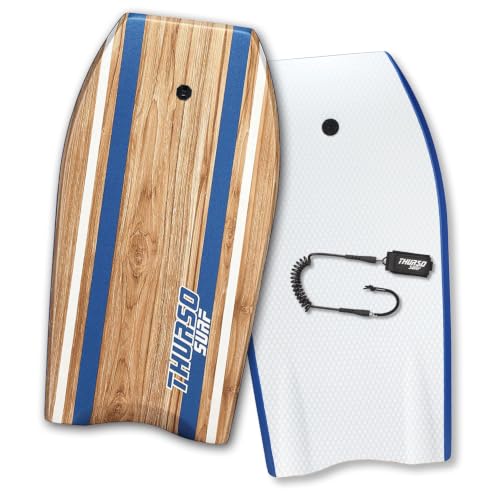
- EPS core with FRP stringer for buoyancy and flex
- Heat-laminated build with HDPE slick bottom
- Fits riders up to 210 lbs and includes a coiled leash
Best For: All-around riders wanting a stable, lightweight board
Float-First Pick

- Generous volume helps flotation and reduces drag
- Textured deck and grips improve ride security
- Includes wrist leash and slick bottom channels
Best For: Riders who want buoyancy and a secure feel
Lightweight Value Choice

- Lightweight EPS core with heat-laminated construction
- HDPE slick bottom, channels, and 60/40 rails
- Includes pro-quality leash with wristband
Best For: Casual riders wanting a light, simple board
Pro Performance Upgrade

- Zero-G polypro core for buoyancy and water resistance
- Surlyn slick and single stringer for responsiveness
- 8LB H-Cell deck adds durability and strength
Best For: Riders wanting a more responsive, performance-focused board
Best Performance Pick
Fundamental Bodyboard for Advanced Riders

- Zero-G polypro core for lightweight speed
- Surlyn slick and channels for control
- Built for advanced riders and stronger waves
Best For: Advanced adults who want speed, grip, and responsive handling
Best Beginner Pick

- Lightweight EPS core with FRP stringer
- Includes double-swivel coiled wrist leash
- Built for kids, teens, and beginners
Best For: Younger riders and beginners who want an easy, stable board
Cold-Water Power Pick

- Built for warm and cold water conditions
- EPS core with IXPE deck and HDPE slick
- Best for larger advanced riders
Best For: Advanced adults wanting a stable, fast cold-water board
Classic Cool-Water Performer

- PE core performs best in cool to moderate water
- Reinforced with a single Rex stringer
- Multiple sizes for intermediate and progressing riders
Best For: Intermediate riders seeking a proven cool-water board
Lightweight All-Conditions Choice

- Lightweight EPS core with reinforced HDPE bottom
- Includes wrist leash and plug
- Designed for all skill levels up to 200 lbs
Best For: Families wanting a lightweight all-conditions board
Cold-Water All-Rounder – THURSO SURF 42" Quill Bodyboard
If you want bodyboards for cold water that stay buoyant and easy to control, this 42-inch THURSO SURF board is a practical all-around choice. Its EPS core, FRP stringer, and heat-laminated construction are built for mixed wave conditions, while the HDPE slick bottom and dual channels help it move cleanly through the water.
Best For: Kids, teens, and adults who want a stable, lightweight board for varied surf conditions and riders up to 210 lbs.
Pros:
- Lightweight EPS core with FRP stringer adds buoyancy and flexibility.
- Heat-laminated deck and bottom improve durability versus basic glued boards.
- HDPE slick bottom, dual channels, crescent tail, and 60/40 rails support speed and control.
- Includes a stainless steel double-swivel coiled leash.
Cons:
- At 42 inches, it may feel large for smaller riders.
- Best suited to riders who want an all-around board rather than a specialized pro model.
Overall, this is a sturdy, user-friendly option if you want bodyboards for cold water with a balance of float, comfort, and responsiveness. It’s designed to work well across wave conditions without adding unnecessary complexity.
Float-First Pick – Wavestorm 40" Foam Bodyboard
For bodyboards for cold water, flotation and easy glide matter a lot, and this Wavestorm 40-inch board is built around both. Its generous volume, boxy rail, and rigid foam construction help keep riders above water, while the slick bottom and channels support smooth wave riding.
Best For: Youth to adult riders who want a light, buoyant board with secure deck traction and a wrist leash.
Pros:
- Generous volume and boxy rail improve flotation and reduce drag.
- Thermal-molded wrapped slick rail aims to strengthen construction and limit delamination.
- Textured deck with rail grips, nose grips, and elbow texture adds security.
- Includes a wrist leash and has a smooth slick bottom with channels.
Cons:
- Weight capacity is limited to 180 lbs.
- At 40 inches, it may feel less roomy than larger boards.
This is a straightforward choice if you want a light board that emphasizes float and ride security. For colder water sessions where staying buoyant and controlled matters, it covers the essentials well.
Lightweight Value Choice – RAYWER 41" EPS Body Board
If you’re shopping for bodyboards for cold water on a budget, this lightweight 41-inch RAYWER board covers the basics well. Its EPS core, heat lamination, and HDPE slick bottom are built for speed and durability, while the crescent tail and 60/40 rails help with maneuverability in all wave conditions.
Best For: Kids, teens, and adults who want a light, easy-to-carry board with a leash for casual beach, river, or water-park use.
Pros:
- EPS core with heat lamination adds impact strength, rigidity, and durability.
- HDPE slick bottom with channels supports speed and water resistance.
- Crescent tail and 60/40 rails improve maneuverability.
- Includes a pro-quality leash with wristband.
Cons:
- Product details list a 41-inch size, but item dimensions show 31″L x 2.2″W.
- Less feature-rich than higher-end boards built for advanced performance.
For buyers who want a simple, lightweight board that’s easy to use in a range of conditions, this is a practical option. It offers the core features most casual riders need without a lot of extra weight.
Pro Performance Upgrade – BZ Pro 42" Advanced Bodyboard
For riders looking at bodyboards for cold water with a more performance-focused build, the BZ Pro stands out with advanced materials and a stiff, fast feel. Its Zero-G polypro core, Surlyn slick, single stringer, and crescent tail are all aimed at buoyancy, control, and maneuverability in a serious ride setup.
Best For: Advanced riders who want a durable, high-performance board with a stiff core and responsive glide.
Pros:
- Zero-G polypro core is designed for buoyancy, durability, and water resistance.
- Surlyn slick balances flexibility and stiffness for maneuverability.
- 8LB H-Cell deck adds robust strength and durability.
- Single stringer and crescent tail support control, stiffness, and glide.
Cons:
- Listed as a beginner skill level, yet positioned for advanced riders in the product name.
- More specialized than basic boards for casual use.
This is the most performance-oriented option in the group, especially if you want materials associated with speed and control. It’s better suited to riders who care more about responsiveness than a basic entry-level feel.
Best Portable Pick – Inflatable Bodyboard for Adults
If you want bodyboards for cold water that are easy to pack and quick to set up, this inflatable model is built for simple use at the beach, pool, or while traveling. Its lightweight construction and adult weight range make it a practical choice for casual wave riding, swimming, or relaxing in the water.
Best For: Adults who want a lightweight, portable bodyboard for easy transport and relaxed all-around water use.
Pros:
- Lightweight inflatable design is easy to carry and store.
- Reinforced nylon construction with thermal seams and stitched contour edges.
- Push-button valve allows quick inflation and deflation.
- Suitable for adults from 50 to 220 lbs.
Cons:
- Not as performance-focused as rigid boards for advanced wave riding.
- Smaller 31.1 x 21.1 inch size may feel limited for larger riders.
This is a convenient option if portability matters more than high-performance surf features. For cold-water trips where storage and transport are important, the easy setup is a real advantage.
Best Performance Pick – Fundamental Bodyboard for Advanced Riders
For riders comparing bodyboards for cold water and looking for a performance-driven board, this BZ model focuses on speed, control, and durability. The zero-G polypro core, Surlyn slick, and channel design are all aimed at advanced riders who want a responsive ride in stronger surf.
Best For: Advanced adult riders who want a fast, responsive board with stronger construction and control features.
Pros:
- Zero-G polypro core keeps the board lightweight and agile.
- Surlyn slick is built for fast glides on the waves.
- 8 lb H-Cell deck adds grip and stability during maneuvers.
- Channels, VFS single stringer, and crescent tail support control and rigidity.
Cons:
- Designed for advanced riders, so it is not the best entry-level choice.
- At 43 inches, it may be more board than casual users need.
This board is the strongest performance option in the group if you already know how to ride. Its features are tuned for precision rather than easygoing beginner use.
Best Beginner Pick – 33-Inch Body Board with Leash
If you need bodyboards for cold water that are simple to ride and sized for younger users, this 33-inch Reed board is a straightforward option. Its EPS core, HDPE slick bottom, and included coiled wrist leash make it practical for kids, teens, and beginners learning in a range of wave conditions.
Best For: Kids, teens, and beginner riders who want a lightweight board with included leash support.
Pros:
- Lightweight EPS core with FRP stringer for buoyancy and flexibility.
- Heat-laminated construction helps resist bubbles and deformation.
- Dual channels, crescent tail, and 60/40 rails improve responsiveness.
- Includes a double-swivel coiled wrist leash for convenience.
Cons:
- 65-pound maximum capacity limits use for larger riders.
- 33-inch size is geared more toward kids than adults.
This is a good budget-friendly style of board for learning and casual surf sessions. The included leash and stable construction make it easy to recommend for younger riders.
Cold-Water Power Pick – WaveMaster Pro 44
If you’re shopping for bodyboards for cold water, this 44-inch WaveMaster Pro is built around a PE core alternative that’s specifically described as suitable for both warm and cold water conditions. It aims at riders who want more speed, stability, and durability without giving up easy maneuverability, especially for larger adults who ride prone or drop knee.
Best For: Advanced adult riders who want a durable cold-water-ready board with a stable, fast feel.
Pros:
- Super EPS core and heat-sealed IXPE deck help resist water infiltration.
- HDPE slick bottom and grooved channels are designed for speed and better wave hold.
- Grip rails and crescent tail improve control for spins and sharp turns.
- Includes a premium coiled wrist leash for added safety.
Cons:
- Best suited to riders over 5’6″ and 150-250 lbs., so it may feel oversized for smaller users.
- Advanced-focused shape may be more board than casual beginners need.
This is a strong pick if your priority is a cold-water bodyboard that emphasizes stiffness, control, and performance. The weight and construction details point toward a board meant for committed riders rather than occasional beach use.
Classic Cool-Water Performer – Morey Mach 7
For bodyboards for cold water, the Morey Mach 7 stands out because its PE core is described as performing especially best in cool to moderate water temperatures. It’s a proven shape for intermediate and progressing riders who want a trusted board with a responsive feel and durable construction.
Best For: Intermediate and progressing riders who want a classic cool-water bodyboard with proven performance.
Pros:
- PE core is noted as especially suited to cool to moderate water temperatures.
- Single Rex stringer adds reinforcement, flex control, and energy transfer.
- Graduated channels and crescent tail support speed, edge control, and stability.
- Available in multiple sizes to help match rider height and weight.
Cons:
- Not the lightest option, at 3511 g.
- Weight capacity maxes out at 180 pounds, which may limit some adult riders.
The Mach 7 makes sense if you want a board with a long track record and a core that’s specifically called out for cooler water use. It’s a practical choice for riders who value stability, comfort, and a predictable ride over flashy extras.
Lightweight All-Conditions Choice – BPS Storm PRO 42.5
If you want bodyboards for cold water that still work across changing conditions, the BPS Storm PRO is built around a lightweight EPS core with an IXPE deck and reinforced HDPE bottom. It’s designed for balance, maneuverability, and speed, making it a practical all-around option for kids and adults up to 200 lbs.
Best For: Families and casual riders who want a lightweight board for all-wave conditions, including colder water use.
Pros:
- Ultra-light EPS core helps keep the board easy to carry and handle.
- Fiberglass stringer and hex-mesh reinforced bottom add strength and speed.
- Includes a premium coiled wrist leash with neoprene cuff and Velcro.
- Designed for riders of all skill levels, up to 200 lbs.
Cons:
- Not specifically tuned for cold water the way a PE-core board is.
- Compact size may feel less ideal for larger riders looking for extra float.
The Storm PRO is a strong pick if you want a versatile board that’s easy to manage and built for broad use. While it isn’t as explicitly cold-water-focused as some PE-core options, its performance-oriented construction makes it a good fit for mixed beach conditions.
How We Picked the Best Bodyboards for Cold Water
We looked for boards that balance flotation, stiffness, comfort, and durability for colder sessions. The best Bodyboards for Cold Water tend to have reliable cores, responsive slick bottoms, and deck materials that feel comfortable when temperatures drop. We also favored options that suit a range of rider sizes and skill levels.
Quick Comparison
For most riders, the sweet spot is a lightweight board with enough volume to support your weight without feeling sluggish. Smaller boards can be easier to maneuver, while larger boards may offer more stability and easier paddling in choppy winter surf. Premium constructions usually provide better speed and hold, but simple EPS-core boards are often the most approachable for casual buyers.
Key Buying Factors for Bodyboards for Cold Water
Core and Float
A board’s core is the biggest factor in how it performs. EPS and polypro cores are both common, but the right choice depends on your priorities. Look for enough flotation to keep your chest up and reduce drag, especially if you wear a wetsuit and want a board that still feels lively.
Deck Comfort and Grip
Cold water often means more time in a wetsuit, so a comfortable deck surface matters. A softer or more padded deck can improve comfort during longer sessions and help you maintain control when conditions get rough.
Slick Bottom and Rails
An HDPE or Surlyn slick bottom helps the board glide faster across the water. Cleaner speed and better trim are especially useful in winter surf, where wave faces can be punchier and less forgiving. Stiffer rails can also improve hold and direction.
Size and Rider Fit
Match the board length to your height, weight, and skill level. Bigger boards offer more stability and easier wave entry, while smaller boards are generally more maneuverable. If you are shopping for kids, growing teens, or multiple users, choose a forgiving size first.
Who Should Buy Which Bodyboards for Cold Water?
Beginners and families should lean toward lightweight EPS-core boards with simple, stable shapes. Intermediate riders often benefit from a balanced all-around board that offers a mix of speed and control. Advanced riders looking for stronger performance in colder surf should prioritize higher-end core materials, slick bottom quality, and a design tuned for faster, more precise riding.
If you want the easiest choice, select a board sized for your body and built for dependable float and grip. If you want the best performance, focus on stiffness, bottom material, and overall shape rather than extras. That approach will help you choose Bodyboards for Cold Water that feel comfortable, responsive, and worth bringing into the winter lineup.