Cold-water diving demands boots that stay warm, fit securely, and work well with your fins. The right pair can make long sessions more comfortable and help you move with confidence.
Below, we’ve rounded up 10 strong options for different conditions, from thinner boots for mild cold to thicker designs for deeper winter use.
Best 10 Dive Boots for Cold Water Picks for 2026
Warmth-first Adventure Pick

- 5 mm neoprene for cooler water
- Hard rubber sole for rocky entry points
- Open-heel fin friendly heel design
Best For: Divers who want a warm, versatile 5 mm boot
Practical All-Rounder
- 5 mm neoprene for thermal protection
- Semi-rigid anti-slip sole
- Quick side-zip closure
Best For: Divers wanting a simple everyday 5 mm boot
Maximum Warmth Option

- 7 mm neoprene for colder water
- Hard rubber anti-slip sole
- Open-heel fin compatible heel
Best For: Cold-water divers who want extra insulation
Comfort-Boosted Fin Boot

- Thermoflare lining helps retain heat
- Arch support and heel cup included
- Reduced-volume fit for easier fins
Best For: Divers who want warmth with added support
Heavy-Duty Warmth
SEAC Pro HD 6mm Side-Zip Boots

- 6mm neoprene for cooler water insulation
- Rigid molded high-grip sole
- Side zipper and hook-and-loop closure
Best For: Divers needing warmer, more protective boots for cooler water
Versatile Water-Sport Boot
Cressi Minorca Anti-Slip Boots

- 3 mm neoprene for lighter insulation
- Anti-slip sole with heel and toe cap
- Zipper closure for easier on/off
Best For: Multi-sport users wanting a durable, easy-on boot with basic insulation
Balanced Cold-Water Pick
SEAC Basic HD 3mm and 5mm Boots

- Neoprene insulation for cold water
- Glued and sewn seams for durability
- Zipper and hook-and-loop secure fit
Best For: Divers wanting a secure, durable boot with thermal insulation and traction
Cold-Weather Comfort Pick

- 5mm neoprene for balanced warmth
- 8mm treaded sole with reinforced panels
- Non-corrosive YKK zipper for easy closure
Best For: Divers wanting extra warmth and protection in cold water
Balanced Everyday Choice
Mares Classic 3mm High Top Boots

- 3mm neoprene for cooler-water comfort
- Wide toecap and leveled sole improve fit and stability
- Side zip simplifies getting in and out
Best For: Divers who want a lighter boot for cool water
Most Adjustable Fit
BPS Adjustable Neoprene Dive Boots
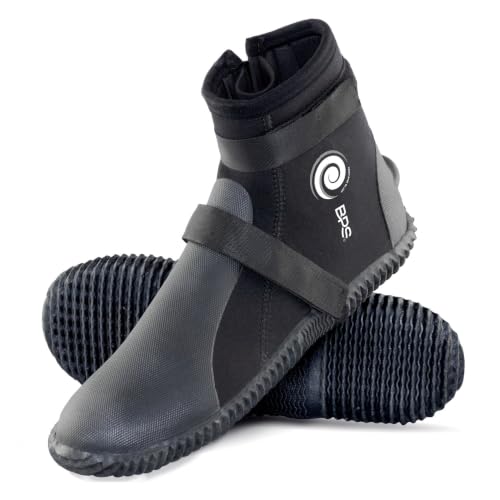
- Offered in 3mm, 5mm, and 7mm
- Dual Velcro straps help limit water entry
- Hard rubber sole adds wet-surface grip
Best For: Divers who want adjustable fit and thickness options
Warmth-first Adventure Pick – Cressi Crew Water Boots 5mm
If you want dive boots for cold water that still work beyond the boat, this 5 mm Cressi pair is built for warmth, grip, and all-around water use. The neoprene construction is meant to keep feet comfortable in lower temperatures, while the hard rubber sole adds protection for rocky entries and wet surfaces.
Best For: Divers, snorkelers, and watersports users who want a warm 5 mm boot with a sturdy walking sole.
Pros:
- 5 mm neoprene helps keep feet warm in colder water
- Hard rubber sole is anti-slip and useful on rocks or pebbles
- Heel shape is designed to work with open-heel fins
- Side zipper makes them easier to put on and remove
Cons:
- 5 mm insulation may be less suitable than 7 mm for very cold conditions
- Built-in sole can feel bulkier than softer booties
This is a practical cold-water boot if you split time between diving and shore walking. It leans toward comfort and versatility rather than maximum insulation.
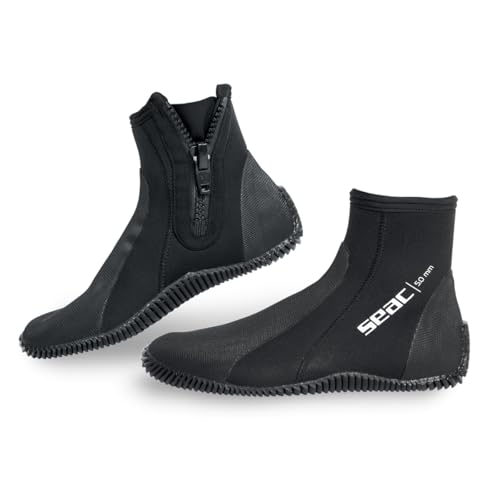
Practical All-Rounder – SEAC Regular Boots 5mm
The SEAC Regular is a straightforward choice if you need dive boots for cold water with a simple, functional design. Its 5 mm neoprene build adds thermal protection, while the semi-rigid anti-slip sole helps when you are walking between the car, dock, and water.
Best For: Adult divers who want a basic 5 mm boot with quick on-and-off convenience.
Pros:
- 5 mm neoprene provides thermal protection in lower temperatures
- Anti-slip semi-rigid sole improves comfort when walking
- Side zip is practical for quick entry and exit
- Available in multiple sizes for a better fit range
Cons:
- No special fin-specific heel design is mentioned
- 5 mm insulation may not be enough for the coldest water
This boot keeps the focus on utility: warmth, grip, and easy wear. It is a solid pick if you want a dependable cold-water boot without extra complexity.
Maximum Warmth Option – Cressi Crew Water Boots 7mm
When cold water is the priority, this 7 mm version gives you more insulation than the 5 mm alternative while keeping the same durable, practical design. It is made for scuba, snorkeling, and other water sports, with a hard rubber sole that supports shore walking and rocky entries.
Best For: Divers who want a thicker 7 mm boot for colder conditions and extra foot protection.
Pros:
- 7 mm neoprene offers more insulation for cold water
- Hard rubber sole helps on rocks, pebbles, and wet surfaces
- Heel shape is designed for open-heel fins
- Super elastic neoprene aims to improve comfort
Cons:
- Thicker construction may feel less nimble than 5 mm boots
- Hand wash care is less convenient than machine-wash options
If you dive in colder water often, the extra thickness is the main reason to choose this model. It trades a bit of flexibility for more warmth and protection.
Comfort-Boosted Fin Boot – Tilos TruFit 7mm Boot
For dive boots for cold water that also prioritize fit and walking comfort, the Tilos TruFit stands out with built-in arch support, a heel cup, and insulation-focused lining. The reduced-volume design also helps limit excess water inside the boot, which can improve warmth and fin feel.
Best For: Divers who want a warmer, more supportive boot with a low-volume fit.
Pros:
- Thermoflare lining is designed to retain heat and dry moisture
- Built-in arch support and heel cup improve comfort and stability
- Reduced volume over the instep can help keep water exchange lower
- Puncture-resistant sole adds protection on shore and dock
Cons:
- 7 mm version may feel bulkier than thinner booties
- Water-resistant rating is not the same as a fully waterproof claim
This is a strong option if you care about foot support as much as insulation. It looks well suited to colder dives where comfort in and out of the water matters.
Heavy-Duty Warmth – SEAC Pro HD 6mm Side-Zip Boots
If you’re looking for dive boots for cold water, the SEAC Pro HD 6mm boots are built for cooler conditions where extra insulation matters. The 6mm neoprene construction, rigid molded sole, and reinforced closure make them a practical choice for divers who want warmth, support, and dependable footing.
Best For: Divers and water sports users who want warmer, more protective boots for cooler water between about 50 and 60°F.
Pros:
- 6mm neoprene offers strong thermal protection for cooler water.
- Rigidly molded high-grip sole adds traction and protection.
- Side zipper with hook-and-loop closure makes them easier to put on and secure.
- Excellent arch support and a heel air bubble help reduce stress.
Cons:
- 6mm thickness may feel bulky compared with thinner boots.
- More insulation can mean less flexibility than lighter options.
Overall, this is a straightforward cold-water boot for divers who prioritize warmth and support over a minimal feel. The build focuses on comfort, grip, and protection, which makes it a solid pick for cooler dives and active use around wet surfaces.
Versatile Water-Sport Boot – Cressi Minorca Anti-Slip Boots
Cressi Minorca Long 3 mm Crew Diving Boots, Black/Black, US Men's 12 • US Ladies' 13
Check Price On AmazonFor dive boots for cold water when you still want a lighter, versatile feel, the Cressi Minorca uses 3 mm neoprene with an anti-slip sole. It is designed for a range of water sports, so it works well if you want one boot for scuba, snorkeling, free diving, and similar activity.
Best For: Multi-sport users who want a durable, easy-on boot with basic insulation and grip.
Pros:
- 3 mm neoprene keeps the boot relatively flexible and lightweight.
- Anti-slip sole helps with traction in and out of the water.
- Rubber heel and toe cap add durability.
- Zipper closure makes them easier to wear.
Cons:
- 3 mm thickness provides less warmth than thicker cold-water boots.
- Best suited for milder cold-water use rather than the coldest dives.
This is a practical all-around boot if you want a reliable water-sport option with some insulation but not maximum warmth. It stands out more for versatility and durability than for heavy thermal protection.
Balanced Cold-Water Pick – SEAC Basic HD 3mm and 5mm Boots
If you want dive boots for cold water with a more balanced feel, the SEAC Basic HD line combines neoprene insulation with a semi-rigid sole and secure closure. The product notes emphasize warmth, durability, and traction, making it a sensible option for divers who want protection without moving all the way to a very thick boot.
Best For: Divers who want a secure, durable boot with thermal insulation and good traction.
Pros:
- Neoprene construction provides thermal insulation for cold water conditions.
- Glued and sewn seams improve durability for frequent use.
- Zipper plus hook-and-loop fastener creates a snug, adjustable fit.
- Soft sole design offers traction on slippery surfaces.
Cons:
- The notes highlight a 3 mm style, so warmth may be more moderate than heavy-duty options.
- Not as insulated as thicker 6 mm boots.
In practice, this boot is aimed at divers who value a secure fit and reliable footing as much as insulation. It looks like a strong middle-ground choice for colder water sessions where flexibility and durability still matter.
Cold-Weather Comfort Pick – AQUALUNG Superzip 5mm Boots
If you want dive boots for cold water that prioritize warmth without feeling bulky, the AQUALUNG Superzip is built around a 5mm neoprene body and a snug, water-reducing seal. It adds extra protection in the sole, toe, heel, and upper, making it a practical choice when you’re dealing with cold entries, rough surfaces, or repeated shore use.
Best For: Divers who want a warmer, supportive boot with extra protection for cold-water conditions.
Pros:
- 5mm neoprene construction helps deliver balanced warmth in cooler water.
- 8mm treaded sole plus reinforced toe, heel, and upper panels add durability and protection.
- Ergo-shaped footbed and low-seam design aim to improve comfort and reduce chafing.
- Non-corrosive YKK zipper supports easy on and off after saltwater use.
Cons:
- Thicker build may feel less minimal than 3mm alternatives.
- Pricier construction details may be more than casual snorkelers need.
Overall, this is the most cold-water-focused option in the group if you value warmth, structure, and foot protection. The tradeoff is a bulkier feel than lighter boots, but the added insulation and reinforcement make sense for harsher conditions.
Balanced Everyday Choice – Mares Classic 3mm High Top Boots
For dive boots for cold water that still keep things lightweight, the Mares Classic uses 3mm neoprene for insulation and flexibility. Its wide toecap, leveled sole, and side zip make it a straightforward pick for divers who want comfort and stability without moving to a thicker boot.
Best For: Divers who want a comfortable 3mm boot for cooler waters and easy entry and exit.
Pros:
- 3mm neoprene offers a lighter insulated feel for cooler-water diving.
- Wide toecap helps reduce pressure points and improves toe room.
- Leveled sole adds stability and traction on slippery surfaces.
- Side zip makes donning and doffing simple.
Cons:
- 3mm thickness is less insulating than 5mm or 7mm options.
- Not as heavily reinforced as more rugged cold-water boots.
This is a sensible middle-ground boot for divers who want some warmth without too much weight or stiffness. If your cold water is cool rather than frigid, the Mares Classic keeps the package simple and comfortable.
Most Adjustable Fit – BPS Adjustable Neoprene Dive Boots
If you need dive boots for cold water that try to limit water flushing, the BPS boot stands out with adjustable Velcro straps and a fin-friendly heel ridge. It comes in 3mm, 5mm, and 7mm versions, so you can choose more insulation when conditions get colder, while the hard rubber sole adds grip for wet entries and exits.
Best For: Divers who want an adjustable boot with multiple thickness options, including colder-water use.
Pros:
- Available in 3mm, 5mm, and 7mm versions for different water temperatures.
- Two Velcro straps help reduce water entry and improve fit.
- Hard-wearing vulcanized rubber sole provides grip and control.
- Fin-friendly heel ridge helps keep swim fins from slipping off.
Cons:
- All dive booties let some water in, according to the product notes.
- Fit depends heavily on using the size chart correctly.
This is the most adaptable option here if you want to tune warmth and fit for your conditions. The strap system is especially useful when minimizing water movement matters, though the right thickness choice will do most of the cold-water work.
How We Picked the Best Dive Boots for Cold Water
We focused on practical features that matter most in cold water: neoprene thickness, sole stiffness, ankle support, zipper quality, and overall comfort with common fin pockets. We also favored boots with solid traction and designs that are easy to get on and off after a dive.
Quick Comparison: What Matters Most
As a general rule, 3mm boots suit cooler water and lighter thermal needs, 5mm is the most versatile middle ground, and 6mm to 7mm is better for colder conditions or longer exposure. A more rigid sole helps on rocky entries and boat decks, while a flexible boot can feel better if you need more fin sensitivity.
Key Buying Factors for Dive Boots for Cold Water
Neoprene Thickness
Thickness is the biggest warmth factor. If your dives are consistently chilly, choose a thicker boot, but remember that extra insulation can reduce flexibility and make fit in some fins tighter. Match boot thickness to both water temperature and your fins.
Sole Grip and Stiffness
Look for a sole that balances traction with support. A hardier sole is useful on wet rocks, ladders, and boat decks, while a semi-rigid sole can improve control without feeling overly bulky.
Closure and Sealing
Side zippers, elastic cuffs, and snug ankle designs can help reduce flushing and make boots easier to wear. In cold water, a boot that minimizes water exchange can feel warmer than one with the same neoprene thickness but a looser fit.
Fit with Fins
Boots should fit securely inside your fins without pinching. If you use full-foot fin alternatives, double-check boot volume and toe shape. A poor fin-to-boot match can be more limiting than warmth alone.
Who Should Buy Which Dive Boots for Cold Water?
If you dive in mildly cold water or want maximum flexibility, 3mm to 5mm boots are often the best starting point. If you regularly dive in colder temperatures, choose 6mm or 7mm for more insulation. Divers who walk over rough entries should prioritize tougher soles and protective uppers, while boat divers may prefer easier-entry zip designs.
For most buyers, the best cold-water dive boots are the ones that balance warmth, traction, and fit for your typical dive conditions. Start with your water temperature, then choose the thickest boot you can comfortably pair with your fins.